Get your free personalized podcast brief
We scan new podcasts and send you the top 5 insights daily.
The real, market-shattering disruption is not companies adding AI features, but the advent of autonomous agents. Jerry Murdock emphasizes that this is a fundamental shift, creating an entirely new class of product and user, which is far more significant than bolting AI onto existing software.

Related Insights
Sam Altman believes incumbents who just add AI features to existing products (like search or messaging) will lose to new, AI-native products. He argues true value comes not from summarizing messages, but from creating proactive agents that fundamentally change user workflows from the ground up.

The true disruption from AI is not a single bot replacing a single worker. It's the immense leverage granted to individuals who can deploy thousands of autonomous AI agents. This creates a massive multiplication of productivity and economic power for a select few, fundamentally altering labor market dynamics from one-to-one replacement to one-to-many amplification.
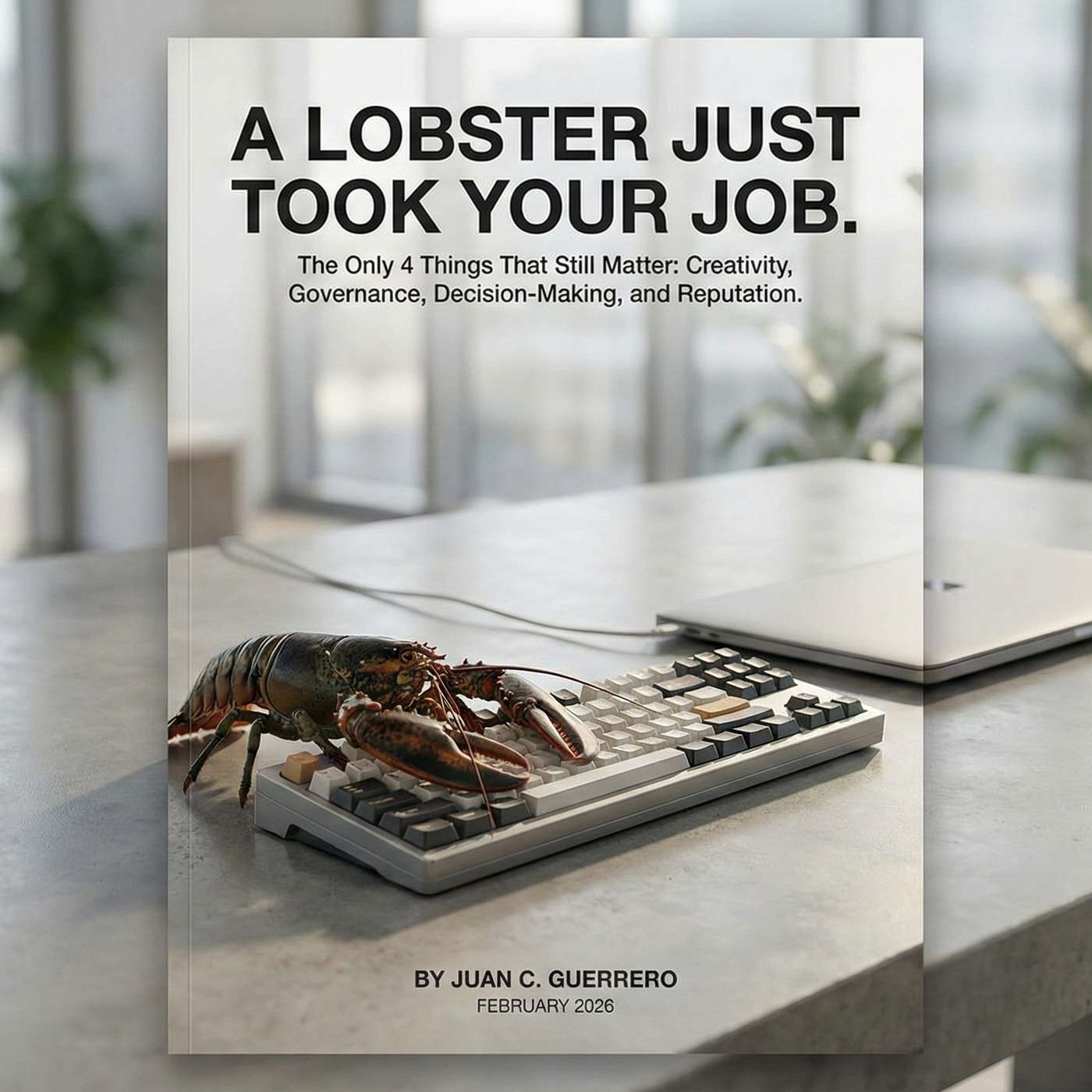
The focus on AI automating existing human labor misses the larger opportunity. The most significant value will come from creating entirely new types of companies that are fully autonomous and operate in ways we can't currently conceive, moving beyond simple replacement of today's jobs.

The most significant gains from AI will not come from automating existing human tasks. Instead, value is unlocked by allowing AI agents to develop entirely new, non-human processes to achieve goals. This requires a shift from process mapping to goal-oriented process invention.

Simply adding a generative AI co-pilot is now table stakes for SaaS companies. The founder argues the next evolution is 'agentic AI' — systems that don't just provide insights but autonomously perform tasks and make decisions for the user, like qualifying and actioning a sales lead.

Elias Torres argues that the current AI paradigm, which focuses on tools that assist humans (e.g., summarizers, drafters), is fundamentally limited. He believes true value is unlocked when you can instruct an AI to perform a task *infinitely* on its own, without requiring a human to type into a chat box for every action.

The future of software isn't just AI-powered features. It's a fundamental shift from tools that assist humans to autonomous agents that perform tasks. Human roles will evolve from *doing* the work to *orchestrating* thousands of these agents.
The common analogy of AI being "like a website" that every company must adopt may be misleading. The real transformative power of AI could be in enabling entirely new, AI-native businesses that leapfrog incumbents, rather than simply being a feature tacked onto existing products.

The transition from AI as a productivity tool (co-pilot) to an autonomous agent integrated into team workflows represents a quantum leap in value creation. This shift from efficiency enhancement to completing material tasks independently is where massive revenue opportunities lie.

The paradigm shift with AI agents is from "tools to click buttons in" (like CRMs) to autonomous systems that work for you in the background. This is a new form of productivity, akin to delegating tasks to a team member rather than just using a better tool yourself.