Get your free personalized podcast brief
We scan new podcasts and send you the top 5 insights daily.
The technology behind new cell cryopreservatives also enables short-term (3-5 days), ice-free cold storage of complex structures like organoids and organs. This overcomes a major hurdle in their transportation and use, as they traditionally cannot be frozen or held for long periods.

Related Insights
The brief viability of organs creates a logistical nightmare. Surgeons fly on chartered jets to retrieve organs, while recipients must remain within a small radius of the hospital, unable to travel. Cryopreservation's immediate impact would be to remove time as a variable, allowing for scheduled surgeries and a more humane patient experience.
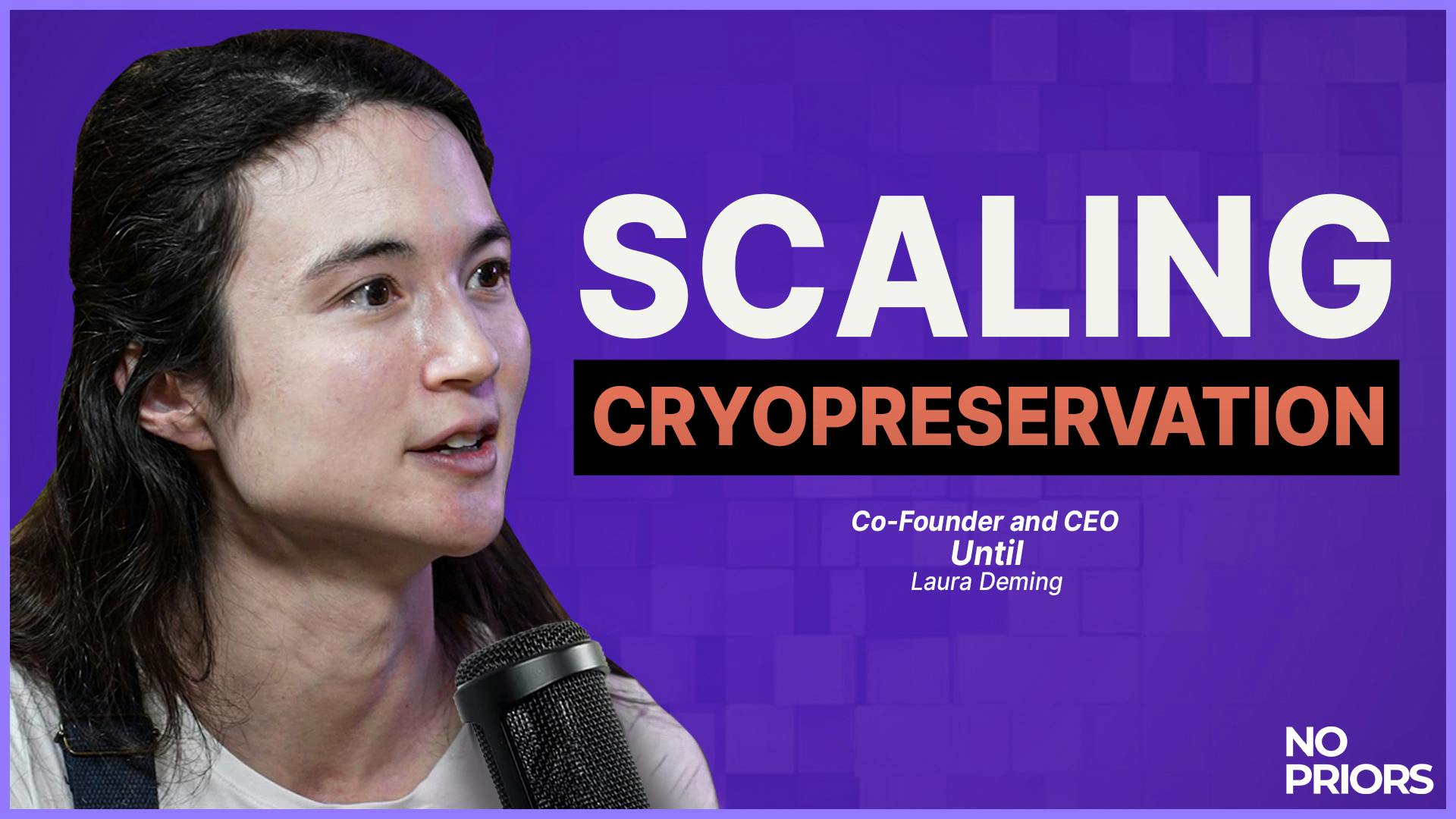
The core scientific challenge in cryopreservation isn't achieving low temperatures, but avoiding the formation of ice. When water freezes, it expands and shatters cells. The goal is vitrification: cooling tissue so rapidly that it turns into a stable, glass-like state without forming destructive ice crystals.

Innovation in cryopreservation is turning to biomimicry by modeling new solutions on proteins found in Arctic fish. These natural proteins protect cells by binding to and inhibiting the growth of damaging ice crystals. This mechanism offers a non-toxic alternative that can be replicated synthetically in molecules like peptoids.
The problem is unique because engineering improvements, like faster temperature modulation, can lessen biological hurdles. For instance, more rapid cooling reduces the time spent in the 'danger zone' for ice crystal formation, thereby lowering the required concentration of potentially toxic cryoprotectant agents. This creates powerful leverage not common in biology.
Unlike DMSO which requires rapid processing within hours, new solutions allow cells to be held for up to 24 hours before freezing without viability loss. This significantly simplifies scheduling and logistics for large-volume cell therapy manufacturing, reducing workflow pressures.
By converting his blood cells into pluripotent stem cells and growing them into 'organoids' (mini versions of his heart, liver, etc.), Bryan Johnson can test the effects and side effects of new molecules on his own tissues in a petri dish, accelerating and de-risking his longevity experiments.

The initial, highly valuable application for reversible organ cryopreservation is not futuristic hibernation but solving the urgent logistical crisis in organ transplantation. Extending an organ's viability from a few hours to days transforms an emergency process involving private jets into a schedulable, cost-effective operation.
Reversible cryopreservation is already a reality for human embryos, which have remained viable after 30 years in storage. The central challenge for companies like Until is not a fundamental scientific breakthrough, but rather solving the complex engineering problems of applying this proven concept to larger biological systems like organs.
Instead of tackling whole-body cryopreservation directly, Until focuses on the tangible market of organ transplantation. This provides a clear product roadmap, addresses an immediate medical need, and serves as an essential technological proof point. Success here is a non-negotiable prerequisite for the more ambitious long-term mission.
The non-toxic nature of new cryopreservation agents allows direct injection post-thaw, removing the need for a wash step required with DMSO. This reduces contamination risk, simplifies workflows, and facilitates easier distribution and administration of cell therapies at the point of care.