Get your free personalized podcast brief
We scan new podcasts and send you the top 5 insights daily.
AI knowledge is commoditized and dated. The writer's crucial role is to provide the "fresh ingredients"—recent data, personal experience, and unique research—that close the gap between the AI's general knowledge and compelling, original content.

Related Insights
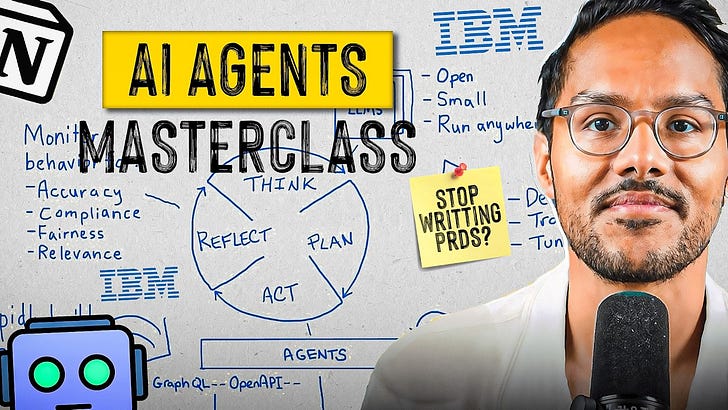
While AI tools once gave creators an edge, they now risk producing democratized, undifferentiated output. IBM's AI VP, who grew to 200k followers, now uses AI less. The new edge is spending more time on unique human thinking and using AI only for initial ideation, not final writing.
To rise above AI-generated content, writers should follow the advice given to photographers: 'put more interesting stuff in front of the camera.' Focus on unique, real-world experiences and experiments, as purely analysis-based content is now the domain of machines.

As AI democratizes the technical aspects of content creation, the ability to guide it with unique perspective, craft, and taste becomes the key differentiator. AI is a powerful tool for experts to scale their vision, but it cannot replace the vision itself.

AI excels at replicating patterns from its training data. However, top-tier authors provide value by subverting expectations and introducing surprising connections—a skill rooted in creative, pattern-breaking thought that AI struggles with. The act of writing is the act of thinking, which can't be outsourced.

While AI lowers the barrier to content creation for everyone, it simultaneously increases the value of uniquely human contributions. As AI-generated content becomes commoditized, attributes like lived experience, distinct perspective, and true originality will become the key differentiators for creators.

Even powerful AI tools don't produce a final, polished product. This "last mile" problem creates an opportunity for humans who master AI tools and then refine, integrate, and complete the work. These "finisher" roles are indispensable as there is no single AI solution to rule them all.

The most effective way to use AI in creative fields is not as an automaton to generate final products, but as a tireless, hyper-knowledgeable writing partner. The human provides taste and direction, guiding the AI through back-and-forth exchanges to refine ideas and overcome creative blocks.

The most effective AI content strategists don't just prompt and publish. They use AI for the first 70% of the work, then dedicate their time to the final 30%—editing for distinction, adding unique insights, and feeding improvements back into the AI. This creates a brand-specific content engine that improves over time.
The value of AI training data has a short shelf-life, becoming stale within weeks. This high depreciation rate forces AI companies to constantly hunt for new, unique, and timely data. This dynamic ensures that human creativity and new ideas remain a critical and valuable input for the AI ecosystem.
As AI becomes a commodity, companies that let it do everything will become indistinguishable. True innovation arises from blending the unique human perspective with AI's capabilities, creating a third, original viewpoint that drives differentiation.