Get your free personalized podcast brief
We scan new podcasts and send you the top 5 insights daily.
As AI becomes a commodity, companies that let it do everything will become indistinguishable. True innovation arises from blending the unique human perspective with AI's capabilities, creating a third, original viewpoint that drives differentiation.

Related Insights
Delegate the mechanical "science" of innovation—data synthesis, pattern recognition, quantitative analysis—to AI. This frees up human innovators to focus on the irreplaceable "art" of innovation: providing the judgment, nuance, cultural context, and heart that machines lack.

While AI tools once gave creators an edge, they now risk producing democratized, undifferentiated output. IBM's AI VP, who grew to 200k followers, now uses AI less. The new edge is spending more time on unique human thinking and using AI only for initial ideation, not final writing.
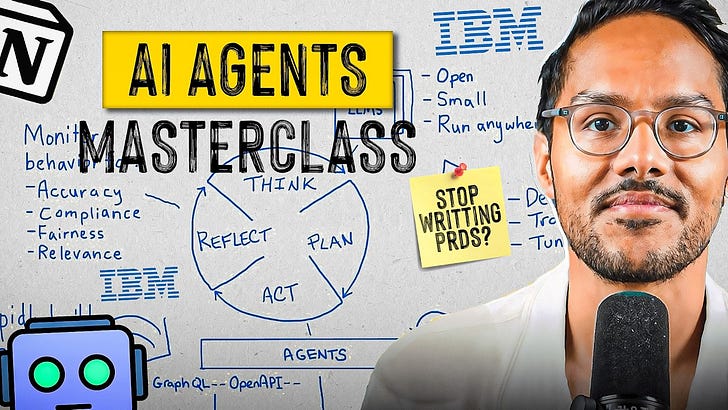
AI agents will automate execution tasks at machine speed, nullifying the old business mantra that "execution is strategy." A firm's value will no longer come from *doing* things efficiently, but from the uniquely human ability to think big picture, choose the right goals, and make high-quality strategic judgments.
AI agents are powerful for execution, like growing a social media account with a known playbook. However, they struggle with creativity and original thought. This means future competitive advantage will shift from execution ability to the quality of the initial human idea and access to unique distribution channels, which agents cannot replicate.

As AI democratizes the technical aspects of content creation, the ability to guide it with unique perspective, craft, and taste becomes the key differentiator. AI is a powerful tool for experts to scale their vision, but it cannot replace the vision itself.

Companies primarily use AI for chores like writing emails. While efficient, this focus on automation without a parallel emphasis on creative problem-solving can lead to every brand sounding and looking the same, stifling true innovation.

Despite AI's capabilities, it lacks the full context necessary for nuanced business decisions. The most valuable work happens when people with diverse perspectives convene to solve problems, leveraging a collective understanding that AI cannot access. Technology should augment this, not replace it.

The primary path to success with AI isn't blind adoption, but critical resistance. Professionals who question, refine, and go beyond AI's initial 'easy button' outputs will produce differentiated, high-value work and avoid the trap of generic, AI-generated mediocrity.

While AI lowers the barrier to content creation for everyone, it simultaneously increases the value of uniquely human contributions. As AI-generated content becomes commoditized, attributes like lived experience, distinct perspective, and true originality will become the key differentiators for creators.
As AI makes it incredibly easy to build products, the market will be flooded with options. The critical, differentiating skill will no longer be technical execution but human judgment: deciding *what* should exist, which features matter, and the right distribution strategy. Synthesizing these elements is where future value lies.
