Get your free personalized podcast brief
We scan new podcasts and send you the top 5 insights daily.
American Housing Corp focuses its innovative "miracle" on manufacturing. The real estate development and financing arms of the business are kept traditional ("vanilla") to de-risk the venture. This strategy of focusing on one core innovation at a time increases the odds of success in complex, capital-intensive businesses.

Related Insights
To de-risk innovation, teams must avoid the trap of building easy foundational parts (the "pedestal") first. Drawing on Alphabet X's model, they should instead tackle the hardest, most uncertain challenge (the "monkey"). If the core problem is unsolvable, the pedestal is worthless.
A startup's success depends on many factors working in concert. Founders often default to their strengths (e.g., an engineer building the product). The correct, de-risking approach is to first tackle the biggest uncertainty or personal weakness, such as customer acquisition.

Instead of building its final passenger jet, Boom first developed a smaller, sub-scale prototype to prove its Mach 2.2 technology. This startup-like, sequential approach proves the core concept at a much lower cost, making the capital-intensive project more manageable and fundable.

Instead of starting with easy MVP features, PointOne built its complex AI time capture before manual entry. This strategy validates the core technical moat and riskiest assumption upfront, preventing wasted effort on a product that is ultimately not viable.

Rahul Aras learned from his first venture that combining a novel target, a new modality (gene therapy), and a unique delivery device created too many unknowns. At Iterion, he prioritized minimizing such variables to create a more manageable risk profile for investors and partners, focusing on a single core innovation.

American Housing Corp's first factory was built for flexibility to iterate on the product, not for automated efficiency. They believe automation is the final step, implemented only after a process is validated and de-risked manually. Trying to automate an unproven process is a common and costly mistake.
When expanding a fund's investment thesis, avoid making multiple changes simultaneously, such as moving from venture to growth stage AND from software to hardware. Making more than one 'leap' at a time dramatically increases risk and magnifies blind spots. Instead, change one variable at a time, like moving to a later stage within a familiar sector, to manage risk effectively.
Legacy players like homebuilders are resistant to adopting new technologies. To implement first-principles innovation, American Housing Corporation had to vertically integrate and become a homebuilder itself, rather than trying to sell its system to existing ones, which proved to be a failed strategy.
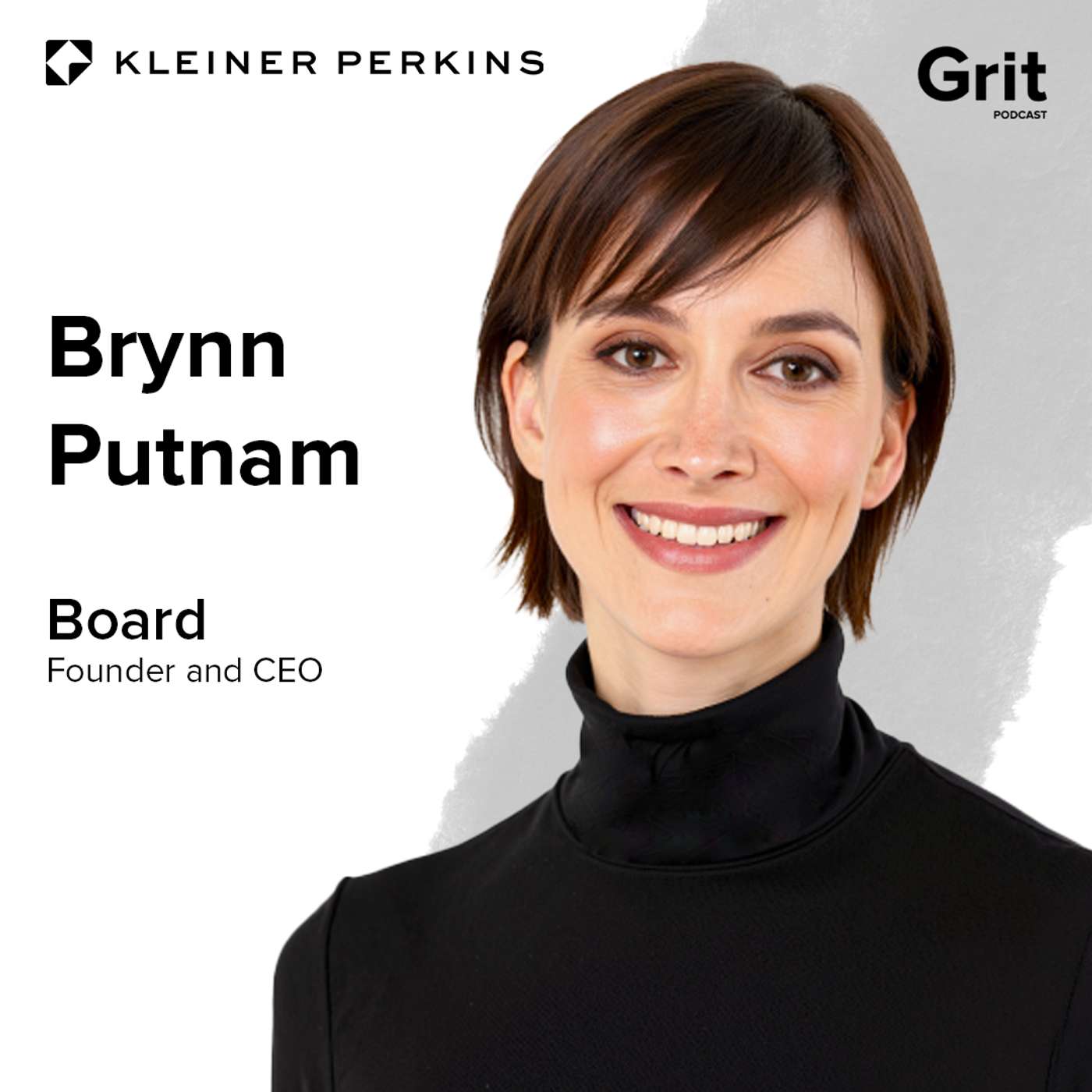
Bryn Putnam de-risks her complex hardware businesses by using commodity components ("withered technology"). The core innovation and defensible IP are built in the software layer, avoiding the massive capital expense and manufacturing risk of creating novel hardware from scratch.
AHC rejects the "micro-factory" trend for a centralized "Gigafactory" model. This allows massive investment in automation and keeps engineers close to production for rapid iteration. To make this viable, their building components are designed to fit in standard shipping containers, enabling cost-effective national distribution.