Get your free personalized podcast brief
We scan new podcasts and send you the top 5 insights daily.
Platform companies like Uber lobby for 'hybrid' autonomous vehicle models not just for safety, but to manage their existing human workforce. A sudden shift to full automation would cause a mass exodus of current drivers, crippling the service before a robotic fleet is ready to scale.

Related Insights
Uber is investing in multiple autonomous vehicle partners (Rivian, Lucid, Waymo) because it believes there won't be one "foundation model to rule them all" for physical-world AI. This diversified, supply-led approach aims to onboard every safe robot driver, mirroring their strategy with human drivers.
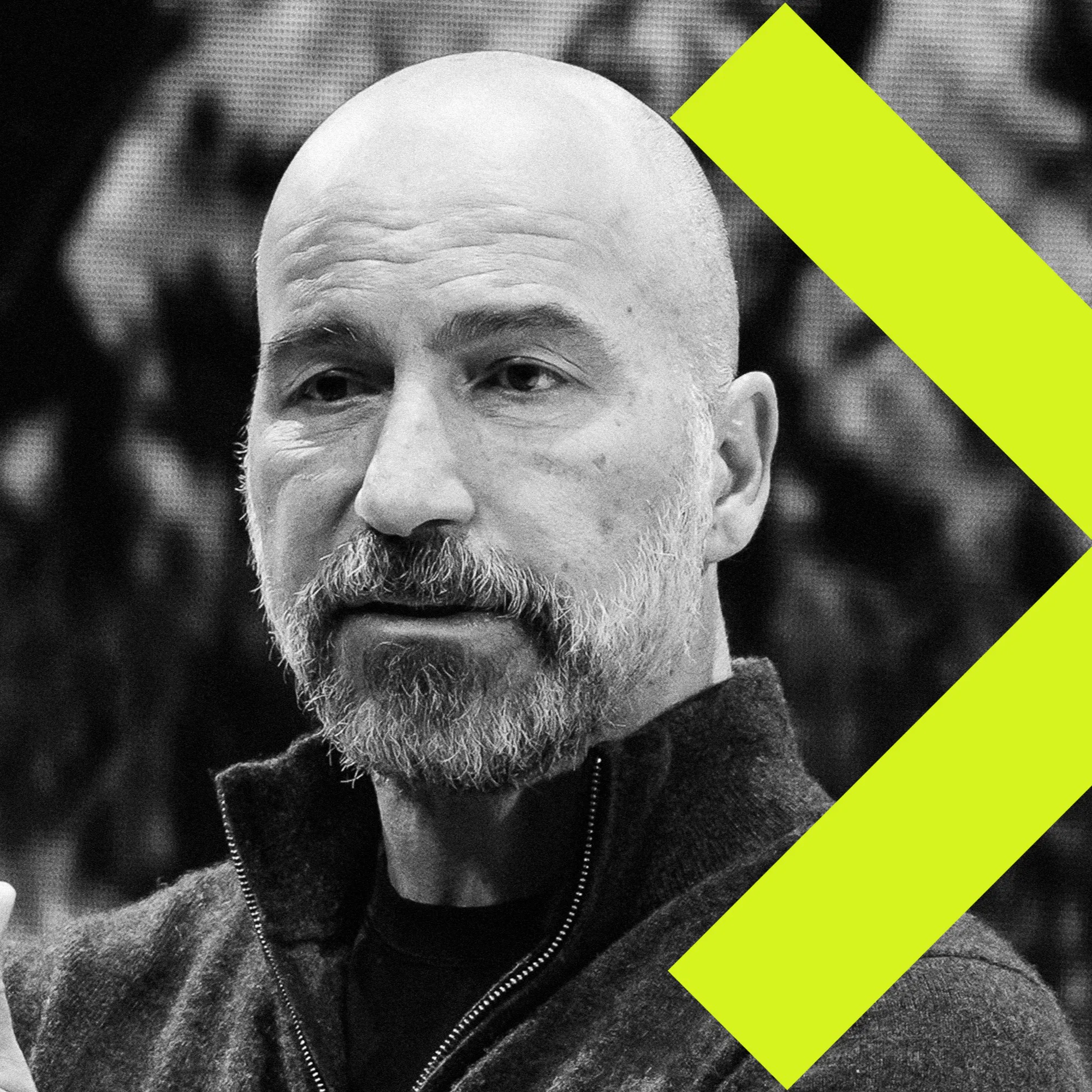
Uber is not developing its own self-driving cars. Instead, it's pursuing a 'Switzerland' strategy by partnering with and investing in multiple autonomous vehicle companies like Rivian. This allows Uber to be the dominant platform for robo-taxis without bearing the immense cost and risk of hardware R&D.

After a fatal accident with its own AV program, Uber pivoted. Instead of building cars, its long-term strategy is to be the essential demand-generation platform for every AV manufacturer, aiming to maximize the utilization and revenue of any "box with wheels" from any company.

David Risher predicts a long transition to autonomous vehicles, not a sudden replacement. The future is a "hybrid network" where expensive AVs handle baseline demand, while human drivers remain crucial for managing peak hours and satisfying specific customer needs for at least another decade.

Ride-sharing CEOs predict a hybrid human-AI future for decades because autonomous fleets can't handle demand spikes from events like concerts or games. Human drivers will remain essential for these high-margin "surge" moments, delaying a full AV takeover until at least 2046.
To secure a future for human drivers, Uber is expanding into use cases too complex for current automation. They turned the user "hack" of asking couriers to shop for them into an official "personal shopper" service, creating a pathway for drivers to migrate to more intricate work.
While many see autonomous vehicles as a threat to Uber's ride-hailing, its delivery segment may be more important and defensible. Automating last-mile delivery of goods from varied locations is significantly more complex and less economical than automating passenger transport, providing a durable moat.
The market's bear case on Uber centers on the threat from autonomous vehicles (AVs). The contrarian view is that Uber will thrive by becoming the essential hybrid network. AV fleets alone won't be able to satisfy peak demand, forcing them to partner with Uber's existing driver network to provide a complete service.

The transition to AVs won't be a sudden replacement of human drivers. Uber's CEO argues that for the next two decades, a hybrid network where humans and AVs coexist will be a more efficient and effective solution, allowing for a responsible transition while serving diverse customer preferences.
Uber believes the autonomous vehicle space will have multiple winners, not one. Their strategy is not to build the best "digital driver" but to become the indispensable demand aggregator and ecosystem provider—offering fleet management, charging, and insurance—for all AV companies, ensuring their relevance regardless of who wins the technology race.
![Dara Khosrowshahi - Uber's Bet on AVs, AI, and Building a Super-App - [Invest Like the Best, EP.476] thumbnail](https://megaphone.imgix.net/podcasts/ef669774-cccd-11ed-889b-c36caad6646f/image/158efdddfb983d2678b3530d484e8aa2.jpg?ixlib=rails-4.3.1&max-w=3000&max-h=3000&fit=crop&auto=format,compress)