Get your free personalized podcast brief
We scan new podcasts and send you the top 5 insights daily.
Bending Spoons finds value in acquiring legacy brands because their user bases have survived decades of competition. These customers are 'self-selected' and highly resilient, reducing the risk of disruption compared to investing in a fast-growing but unproven company that has yet to face significant market challenges.

Related Insights
Instead of slowly competing against local driving schools with decades of history, Coastline Academy acquires them. This strategy provides an exit for retiring owners and allows the acquirer to instantly absorb a loyal, multi-generational customer base and its associated brand trust.

When considering acquiring their failing competitor, Paperbell realized a key truth: migrating customers from a different tech stack is complex and costly. Because their products were so similar, many of the competitor's customers would be forced to find a new solution and would likely discover Paperbell organically, making an acquisition unnecessary.

Bending Spoons' M&A strategy came from realizing that creating a startup from scratch (zero-to-one) is heavily luck-dependent. In contrast, scaling an existing business (one-to-N) relies on functional skills like engineering and marketing that can be systematically mastered and applied across acquisitions.
![Luca Ferrari - Building Bending Spoons - [Invest Like the Best, EP.446] thumbnail](https://megaphone.imgix.net/podcasts/b29cbd80-b93a-11f0-a1b7-2b977c9469a2/image/39f7864ea628f71a81b94662bd4a86df.jpg?ixlib=rails-4.3.1&max-w=3000&max-h=3000&fit=crop&auto=format,compress)
Bending Spoons operates as a tech-focused version of Berkshire Hathaway, acquiring digital businesses like Evernote and AOL with the intent to hold and operate them forever. They use a large, in-house team of technical and product experts to radically transform these assets, funding new acquisitions from their balance sheet rather than operating as a traditional private equity fund that buys to flip.

Brands that have survived for 50-100 years are likely to survive another 50 (the 'Lindy Effect'). Their audiences feel a sense of ownership, making them incredibly loyal and forgiving. This creates a durable, defensible asset that is hard to kill, even with mistakes.

A powerful go-to-market strategy is for an AI company to buy a legacy business (e.g., a debt collector) with existing clients but declining revenue. This allows the startup to bypass the difficult early sales process, immediately deploy and refine its AI, and use the acquired firm's client roster as a launchpad.

Unlike PE firms that flip companies, Bending Spoons acquires digital businesses to own permanently. Their model focuses on deep operational overhauls—rebuilding software, redesigning UI, and restructuring organizations—rather than making shallow management changes, creating long-term value through operational excellence.
Italian firm Bending Spoons is successfully acquiring beloved but struggling internet brands like Evernote and Vimeo. By cutting costs, raising prices, and consolidating back-end operations, they create a profitable portfolio of SaaS companies with strong recurring revenue, proving a value-investing model works for tech.

A core GSP diligence criterion is ensuring an industry has off-the-shelf tech for multi-unit management. This avoids "dis-synergies," a hard-learned lesson where each new acquisition requires adding G&A instead of leveraging a central platform, destroying value.

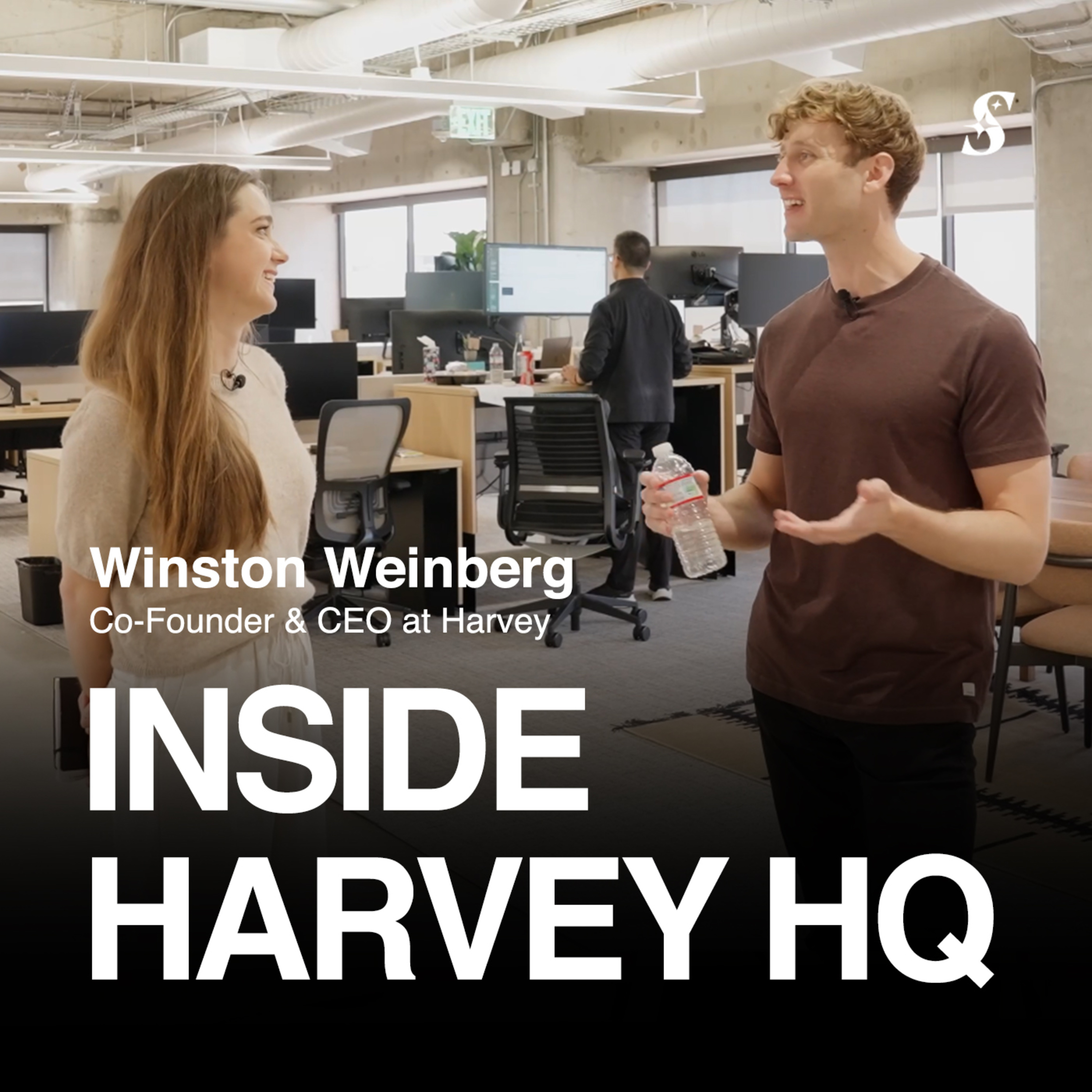
Harvey AI's M&A strategy prioritizes acquiring talented teams over buying existing tech, even from outside its industry. The rationale is that great talent can build new products much faster with modern AI tools, making the team the more valuable asset.