Get your free personalized podcast brief
We scan new podcasts and send you the top 5 insights daily.
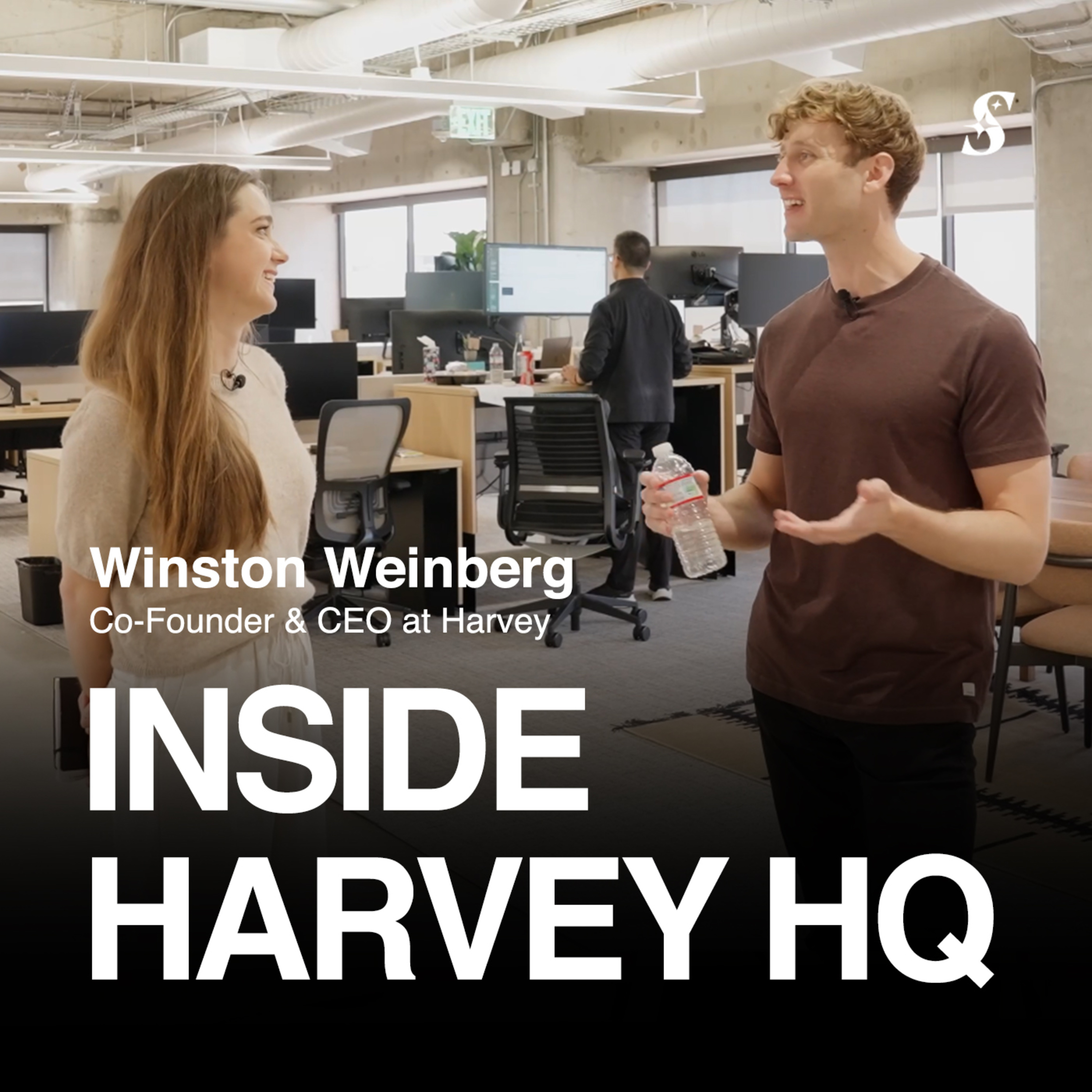
Harvey AI's M&A strategy prioritizes acquiring talented teams over buying existing tech, even from outside its industry. The rationale is that great talent can build new products much faster with modern AI tools, making the team the more valuable asset.
Related Insights
Fresh off a major funding round, AI infrastructure firm Modal Labs is pursuing an acquisition strategy focused on small, technically excellent teams that haven't found commercial success. This approach allows it to quickly onboard deep expertise in specialized areas like reinforcement learning, accelerating its product roadmap.

Counter to the adage that "startups shouldn't buy startups," Cursor successfully uses M&A as a core recruiting strategy. They acquire small, talented teams working on complementary problems, viewing acquisitions as a way to onboard the best people who happen to already be working on their own companies.

The success of an AI roll-up hinges on effective technology implementation. Therefore, the primary filter for acquiring a company is not just its financials but whether its leadership and culture are genuinely eager to adopt AI and transform their operations. This cultural fit is non-negotiable.

In AI M&A, recency is key. Companies pre-ChatGPT often had to rewrite their entire stack and relearn skills, making their experience less relevant. Acquiring a company with post-ChatGPT experience ensures their tech and knowledge are current, not already obsolete.
Strategic acquirers are prioritizing M&A targets that have already implemented agentic AI. The goal isn't just to buy technology, but to acquire the culture and processes to catalyze AI transformation across their broader, slower-moving organizations.

Amplitude's CEO acquired multiple founder-led companies as a deliberate strategy to counteract the inherent slowness of a large SaaS business. This injects a startup's pace and an AI-native mindset directly into the organization to accelerate its AI transformation.

Deel's M&A strategy prioritizes bringing in teams with years of deep, obsessive experience in a specific product area. This allows them to instantly add product depth that would take years to build internally, viewing it as more valuable than just acquiring revenue or general talent.

For AI giants with billions in capital, elite talent is far more valuable and scarce than money. Acquiring a promising YC startup is a highly efficient way to recruit a top-tier team. This M&A dynamic underpins the seemingly irrational, sky-high valuations for early-stage AI companies.

When pursuing an acqui-hire, frame the conversation around the strength of the team. Selling technology invites the question, "If it's so good, why aren't people buying it?" Selling a top-tier team that will get hired anyway is a position of strength.

In contrast to OpenAI's larger deals, Anthropic's M&A strategy is to write smaller checks (under $500 million) for companies with exceptional talent or promising technology. The acquisition of biotech startup Coefficient Bio exemplifies this approach: using targeted M&A to acquire specialized teams that can help them expand into new verticals like drug discovery.