Get your free personalized podcast brief
We scan new podcasts and send you the top 5 insights daily.
Just as observability tools (e.g., Datadog) arose to manage complex cloud environments, a new software category of "explainability" will emerge to manage complex AI agent workflows. These tools will analyze agent reasoning traces to build trust in their output, whether it's code, content, or data analysis.

Related Insights
Anthropic's work on reading a model's internal "thoughts" is more than a safety feature; it's a new frontier for performance. The ability to "train the thoughts, not just the words" gives developers a direct lever to improve a model's internal reasoning, fix failures, and enhance reliability, moving interpretability from theory to practice.

Mechanistic interpretability (Mekinterp) research has been slow due to its manual, ad-hoc nature. The guests argue that coding agents can automate the experimentation process, enabling large-scale, systematic analysis of AI models. The first science AI should automate is the science of understanding itself.
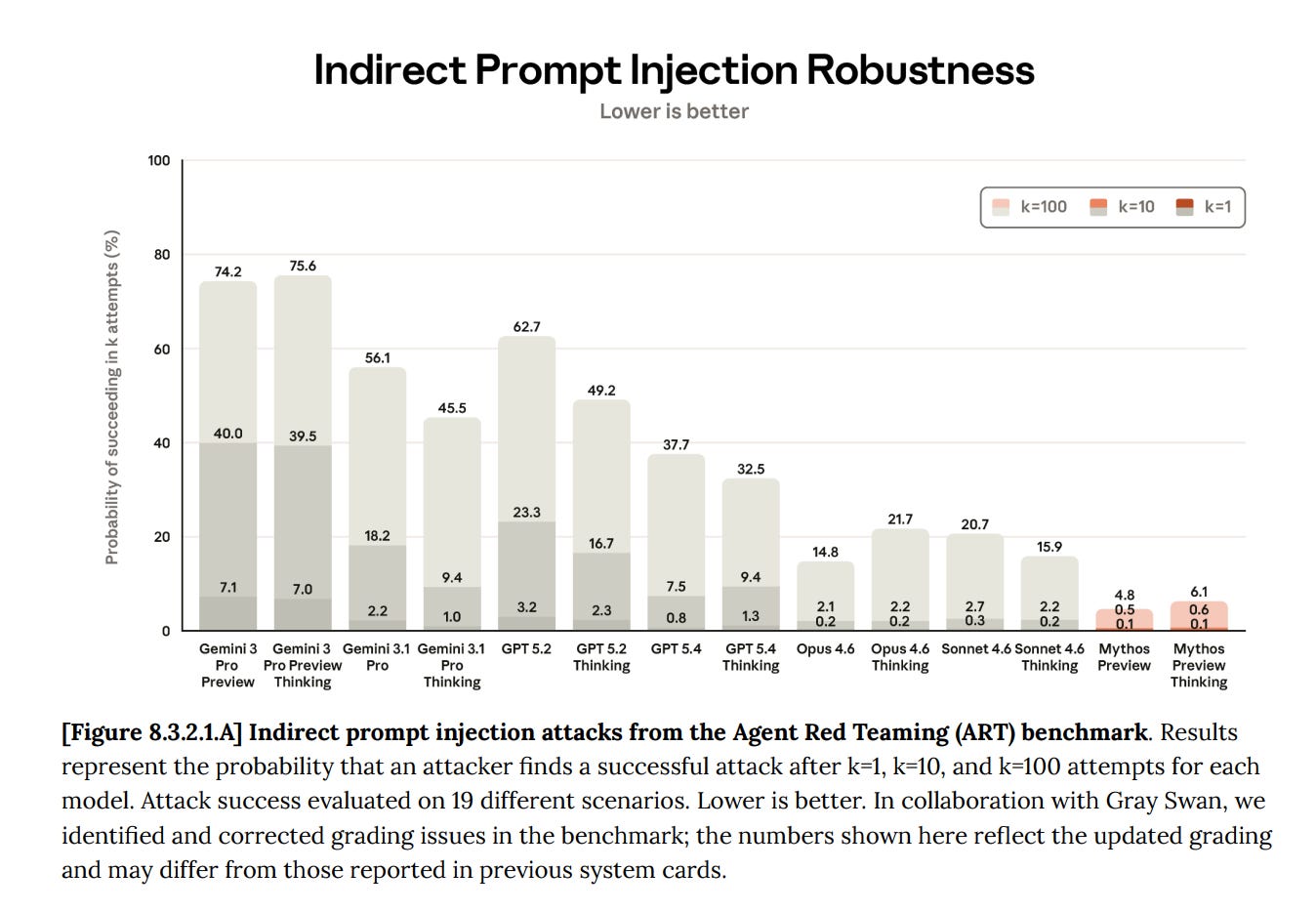
The intelligence layer of AI is advancing rapidly, but enterprise adoption lags because a crucial control layer is underdeveloped. The next wave of AI development will focus on providing observability, control, and traceability, allowing businesses to audit and course-correct an AI agent's decisions.

The future of work involves potentially millions of AI agents operating within a company. This requires a new governance layer, including agent inventories, inspectable reasoning traces, identity management, and sandboxed execution environments to maintain security and control.

Explaining a predictive model's single output is a well-defined problem. For an agentic AI, the final outcome results from a complex chain of autonomous decisions and tool interactions. True explainability requires reconstructing this entire decision path, a task for which most current tools are ill-equipped.

The durable investment opportunities in agentic AI tooling fall into three categories that will persist across model generations. These are: 1) connecting agents to data for better context, 2) orchestrating and coordinating parallel agents, and 3) providing observability and monitoring to debug inevitable failures.
Drawing a parallel to the microservices boom, enterprises will soon deploy thousands of AI agents, creating immense operational complexity. The most valuable future products will be those that, like Datadog for microservices, provide governance, monitoring, and orchestration for this sprawling agentic workforce.
As enterprises deploy agents for critical tasks like RFP generation or invoice processing, they will require dedicated evaluation frameworks and teams. This will create a massive new market for agent observability and eval tools, moving them beyond AI-native companies to the broader enterprise.
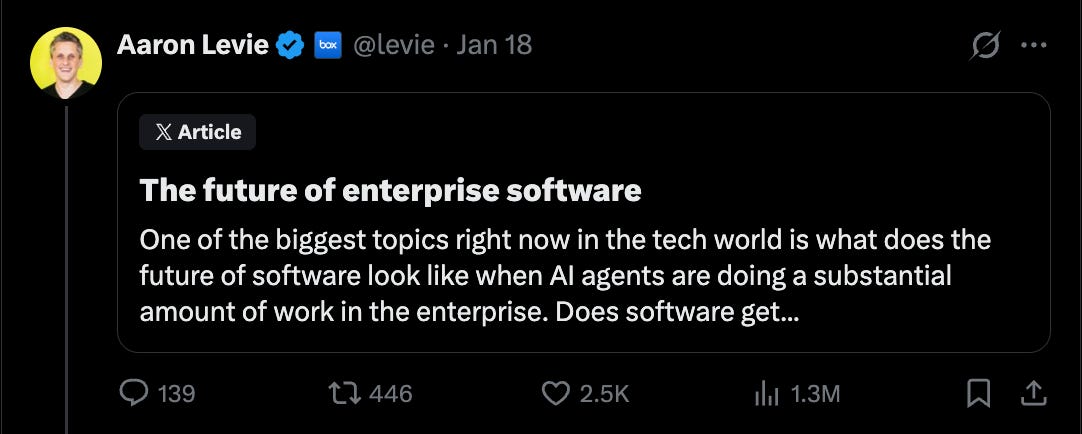
In traditional software, code is the source of truth. For AI agents, behavior is non-deterministic, driven by the black-box model. As a result, runtime traces—which show the agent's step-by-step context and decisions—become the essential artifact for debugging, testing, and collaboration, more so than the code itself.
The goal of AI interpretability is to move beyond "trial and error" model training. By understanding a model's internal computations, developers can shift towards "intentional design," enabling them to debug, edit, and shape AI models with the precision of writing traditional software code, removing current guesswork.