Get your free personalized podcast brief
We scan new podcasts and send you the top 5 insights daily.
Despite their success, both Dan Loeb and David Sacks confess to the vexing problem of selling winning stocks too early after an IPO. Sacks cites selling Palantir in its twenties as a "huge mistake," highlighting a universal psychological trap for even the most elite investors.

Related Insights
Gaonkar identifies her biggest error with NVIDIA wasn't selling too early, but failing to re-evaluate and buy back in later. The psychological pain of "sunk cost bias" makes it incredibly difficult to re-enter a position at a higher price, even when the fundamental thesis has improved.

In the early days, even wildly successful companies like Palantir viewed their potential future valuations (e.g., $50 billion) as a joke. This highlights that the journey to unicorn status never feels inevitable and is fraught with difficulty, a feeling shared by most founders regardless of eventual outcome.

First-time fund managers may feel pressure to sell shares in breakout companies early to prove they can return capital (DPI) to LPs. This is often a mistake driven by insecurity. While most LPs will praise the liquidity, the most sophisticated ones will recognize it as prematurely de-risking a massive winner.

Daniel Mahr's first investing experience was successfully flipping dot-com IPOs. However, turning those wins into giant losses by straying from his original thesis taught him a formative lesson about the dangers of overconfidence and the necessity of a disciplined, systematic approach.

Even professional venture capitalists struggle to predict their breakout hits. Morgan Housel notes that at his fund, the companies that became their biggest winners were not the ones they initially expected to succeed, while their 'obvious' bets often failed.

Investors who lose money in a sector develop an emotional aversion, causing them to irrationally pass on the next great company in that space. This 'learning from mistakes' becomes a liability, prioritizing avoiding small losses (commission) over capturing huge wins (omission).

Investors often focus on losses, but the biggest financial mistakes come from selling compounding winners like Costco too early. This happens when short-term IRR calculations, heavily dependent on unpredictable exit multiples, overshadow the long-term value of a great business.

Gaonkar admits a major mistake wasn't just selling NVIDIA too early, but failing to re-evaluate it later. The sunk cost bias makes it psychologically difficult to revisit past decisions, especially ones that were wrong, causing investors to miss out on significant future gains.

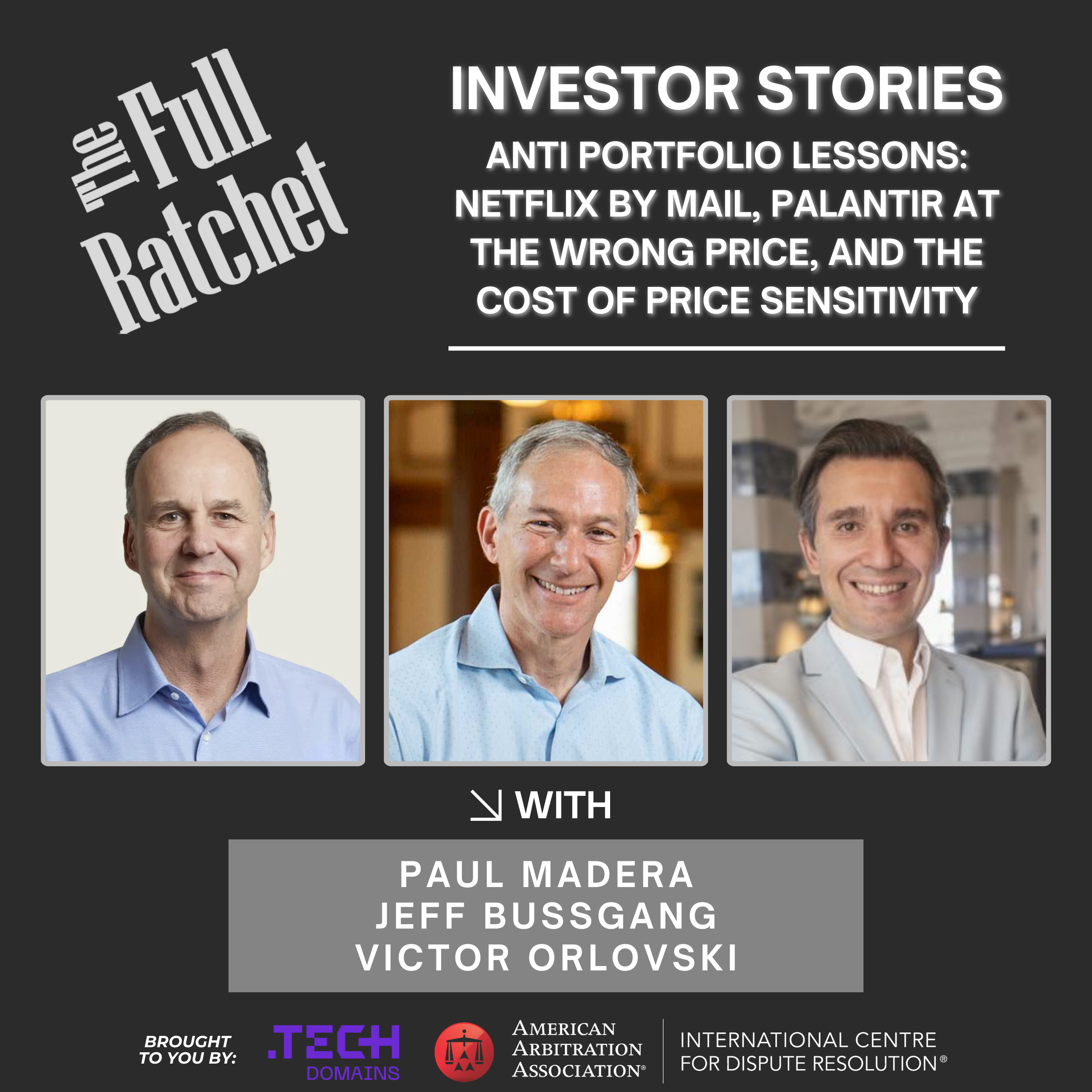
Paul Madera of Meritech passed on Palantir four times. Despite being introduced early, his firm repeatedly concluded the price was "out of line," causing them to miss what became the highest multiple software company. This shows how strict valuation discipline can blind investors to category-defining outliers.
Wilson advised against trying to perfectly time the peak of a successful company's dominance. Competition will eventually emerge, but anticipating its impact is futile and often leads to premature selling. He believed you can make a fortune by riding a winner for years before the problems become acute.