Get your free personalized podcast brief
We scan new podcasts and send you the top 5 insights daily.
Newspaper accounts described the 756 newly freed people as physically broken, sick, and emaciated from the rice fields. Yet, as they paraded through Beaufort, they were "beaming with pride," showing that the psychological triumph of freedom was immediate and profound.

Related Insights
Quaker activists opportunistically leveraged the political language of the American Revolution. As colonists argued for their 'natural rights' against British rule, abolitionists like Anthony Benezet co-opted this discourse, pointing out the hypocrisy and applying the same logic to the rights of enslaved people, forcing the issue into the public sphere.
The proclamation was not just a moral act but a calculated strategy. By making the war explicitly about ending slavery, Lincoln made it politically impossible for abolitionist nations like Great Britain to support the Confederacy, cutting off their resources.
A fight for survival is primal and can sideline complex emotions. In contrast, a fight to maintain one's quality of life is fraught with heightened emotions, uncertainty, and grief for what might be lost, making it a more difficult psychological battle.

The fact that slavery abolition was a highly contingent event demonstrates that moral progress isn't automatic. This shouldn't be seen as depressing, but empowering. It proves that positive change is the direct result of deliberate human choices and collective action, not a passive trend. The world improves only because people actively work to make it better.
Psychiatrist and dissident Semyon Gluzman reported feeling the "same keen sense of freedom" in the punishment cells of a Soviet labor camp as in his Kyiv apartment during wartime blackouts. This reveals a profound paradox: for him, true freedom was an internal state of resistance, most acutely felt when external liberties were stripped away.
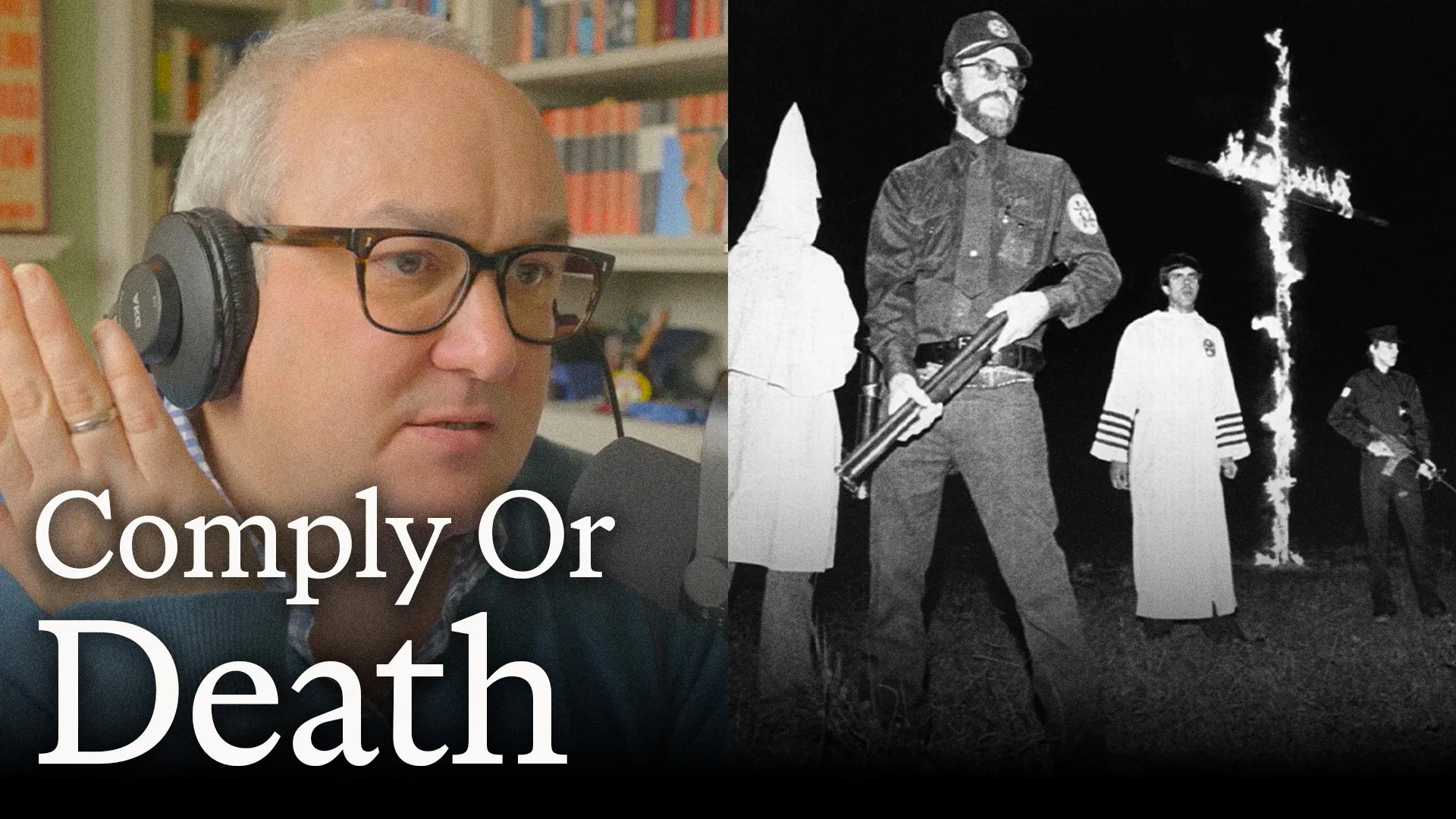
The story of York County, South Carolina, provides a powerful counter-narrative of what was possible during Reconstruction. When President Grant finally suspended habeas corpus and flooded the region with troops, the mass arrests effectively dismantled the Klan's power structure. This demonstrates that federal force, when applied decisively, could work.
The morning after being freed in the Combahee River Raid, 150 men immediately enlisted in the Union Army. This demonstrates a rapid shift from being subjects of liberation to active agents in the fight for others' freedom, challenging passive victim narratives.
88-year-old Minus Hamilton described the armed Black liberators as "presumptuous" not as a criticism, but to express his awe. The word captured the shocking sight of Black men who held their heads high and defied the subservient roles forced upon them.
Bryan Stevenson argues that beyond the physical brutality, slavery's most damaging legacy is the narrative of racial difference created to allow enslavers to see themselves as moral. This ideology of racial hierarchy persists today, enabling moral disengagement and perpetuating injustice.

Author Shaka Senghor posits that internal prisons built from negative emotions like grief, shame, and trauma are more powerful and restrictive than literal ones. Overcoming them requires deep internal work, not a change in external circumstances.