Get your free personalized podcast brief
We scan new podcasts and send you the top 5 insights daily.
AI is more capable at coding than writing because code provides objective feedback—it either works or it doesn't. This clear success/failure signal is easier for an AI to learn from compared to the subjective nature of what constitutes "good" writing.

Related Insights
Andrej Karpathy's 'Software 2.0' framework posits that AI automates tasks that are easily *verifiable*. This explains the 'jagged frontier' of AI progress: fields like math and code, where correctness is verifiable, advance rapidly. In contrast, creative and strategic tasks, where success is subjective and hard to verify, lag significantly behind.

AI excels at replicating patterns from its training data. However, top-tier authors provide value by subverting expectations and introducing surprising connections—a skill rooted in creative, pattern-breaking thought that AI struggles with. The act of writing is the act of thinking, which can't be outsourced.

AI labs deliberately targeted coding first not just to aid developers, but because AI that can write code can help build the next, smarter version of itself. This creates a rapid, self-reinforcing cycle of improvement that accelerates the entire field's progress.

AI models excel at coding because correctness is easy to evaluate. Design is harder because "good" is subjective and tied to human taste, making it difficult to create a training feedback loop. Furthermore, design values novelty and cultural context, whereas software engineering prefers established, reliable patterns.

AI's ability to code seems like advanced reasoning, but it's actually just navigating the most complete archive of human knowledge ever created. Programming's version control, documentation, and forums provide a perfectly mapped territory for AI to search, not a complex problem for it to solve through intelligence.
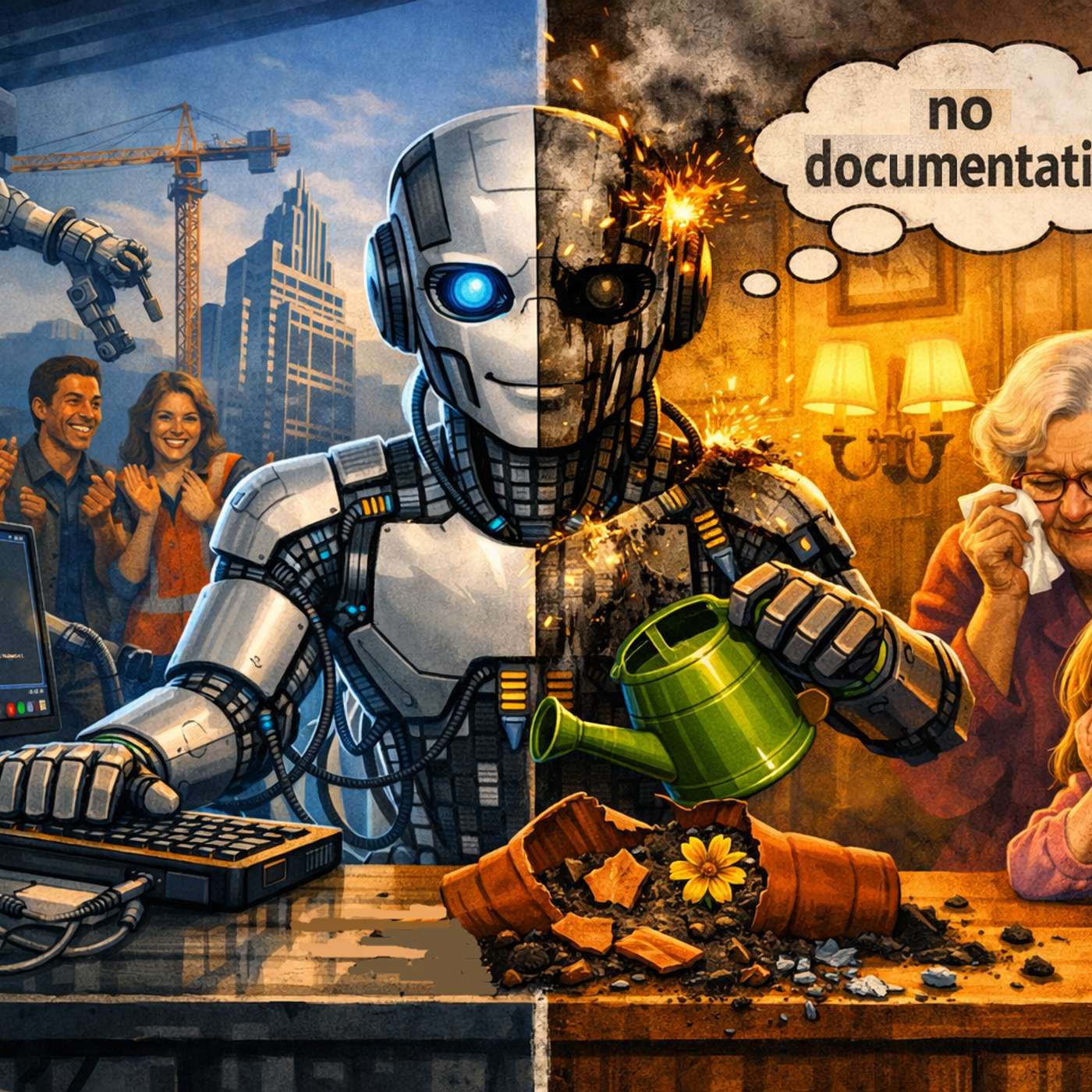
AI models improve dramatically in domains with objective feedback, like coding (unit tests) or science (lab results). Progress is slower in subjective fields like creative writing where feedback is opinion-based, explaining the uneven impact of AI across different types of knowledge work.

To get the best results from an AI agent, provide it with a mechanism to verify its own output. For coding, this means letting it run tests or see a rendered webpage. This feedback loop is crucial, like allowing a painter to see their canvas instead of working blindfolded.

To effectively interact with the world and use a computer, an AI is most powerful when it can write code. OpenAI's thesis is that even agents for non-technical users will be "coding agents" under the hood, as code is the most robust and versatile way for AI to perform tasks.

Unlike medicine or engineering where mistakes are costly and feedback is slow, programming offers a learning environment that is safe, cheap, and provides instant, precise feedback via error messages. This creates a perfect loop for AI to assist, as both the problems and the errors are highly formalized.
A policy analyst found AI-generated article drafts to be "unusable garbage," even with extensive prompting. However, he successfully used a coding assistant to create a complex video game, a task far beyond his own elementary programming skills. This highlights the practical maturity of coding tools over writing tools for non-experts.
