Get your free personalized podcast brief
We scan new podcasts and send you the top 5 insights daily.
A key capability of advanced AI agents is their ability to read API documentation and write the necessary code ("skills") to integrate with new services on the fly. This turns every tool with an API into a potential native integration, dramatically expanding the agent's capabilities without manual developer work.

Related Insights
The future of integration isn't about pre-building every connection. AI agents will perform "integration on demand," stitching systems together at runtime to answer a specific user query. This transforms a slow, expensive IT function into a fluid, dynamic part of everyday work.

IT automation platform Console launched "Assistant," an AI agent that builds new software integrations on demand for customers. The agent reads the target service's API documentation and writes the connector code, automating a core part of its own product development.

Instead of pre-engineering tool integrations, Block lets its AI agent Goose learn by doing. Successful user-driven workflows can be saved as shareable "recipes," allowing emergent capabilities to be captured and scaled. They found the agent is more capable this way than if they tried to make tools "Goose-friendly."

The real breakthrough for AI agents is not just building software, but applying coding abilities—like tool use and scripting—to tasks in marketing, law, and research. This evolution transforms agents from developer tools into general-purpose knowledge work assistants for all employees.

Unlike other AI models, OpenClaw can be tasked to figure out how to interact with a new service (like email) and write a reusable "skill" for it. This self-learning capability allows it to continuously expand its own functionality without manual coding.

A new software paradigm, "agent-native architecture," treats AI as a core component, not an add-on. This progresses in levels: the agent can do any UI action, trigger any backend code, and finally, perform any developer task like writing and deploying new code, enabling user-driven app customization.

Documentation is shifting from a passive reference for humans to an active, queryable context for AI agents. Well-structured docs on internal APIs and class hierarchies become crucial for agent performance, reducing inefficient and slow context window stuffing for faster code generation.
Instead of integrating with existing SaaS tools, AI agents can be instructed on a high-level goal (e.g., 'track my relationships'). The agent can then determine the need for a CRM, write the code for it, and deploy it itself.
Node-based workflow builders (like N8N or Zapier) require manual system design. The future is AI agents that, given access to tools and skills, can dynamically orchestrate the same complex workflows. The focus shifts from engineering a system to empowering a smart agent.

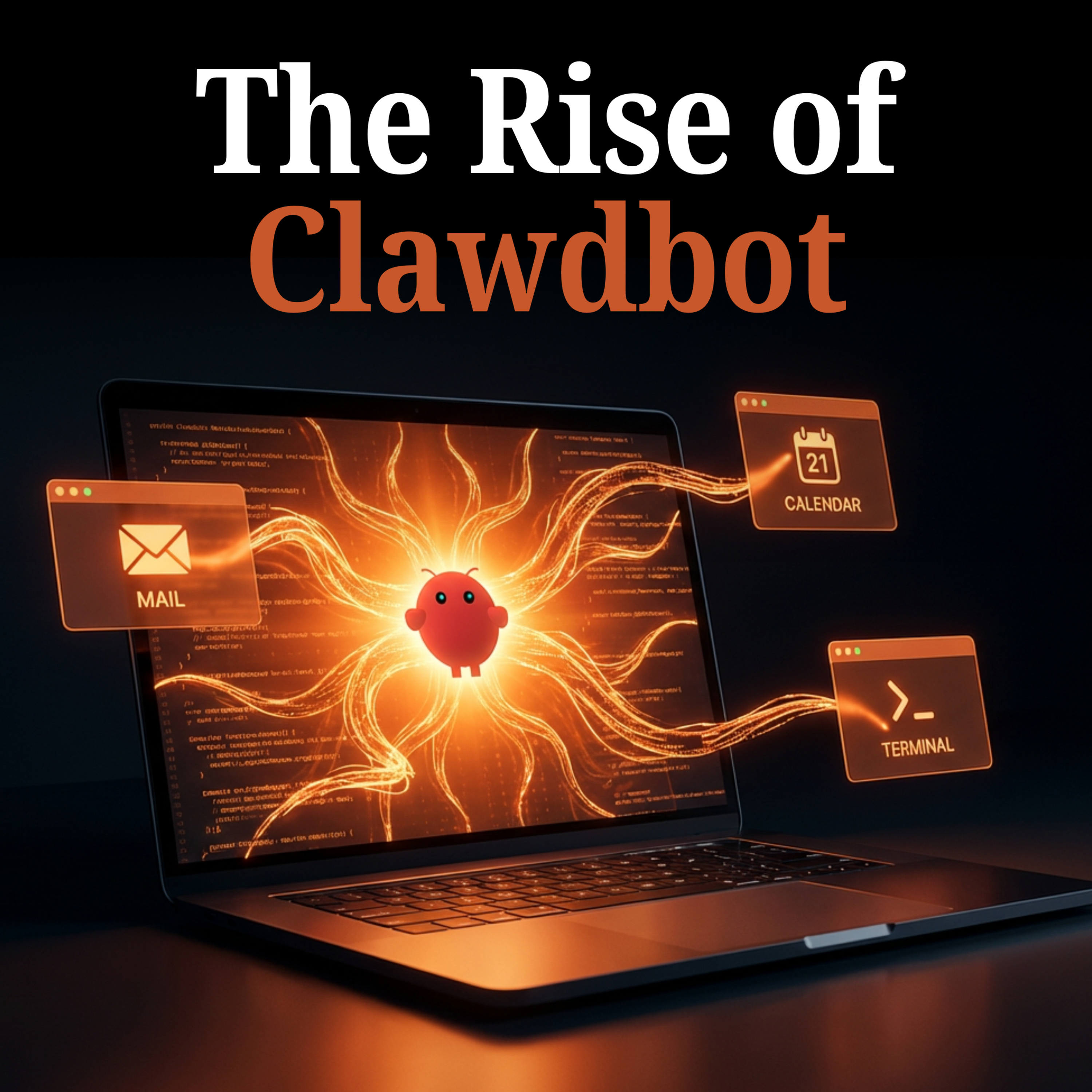
Unlike static tools, agents like Clawdbot can autonomously write and integrate new code. When faced with a new challenge, such as needing a voice interface or GUI control, it can build the required functionality itself, compounding its abilities over time.
