Get your free personalized podcast brief
We scan new podcasts and send you the top 5 insights daily.
The enthusiastic reception for Google's Workspace CLI reveals a counter-intuitive trend: old-school Command-Line Interfaces are becoming the preferred way for AI agents to interact with software. Unlike humans, agents don't need GUIs and benefit from the CLI's deterministic, low-friction nature, avoiding the 'abstraction tax' of newer API layers.

Related Insights
The new paradigm for building powerful tools is to design them for AI models. Instead of complex GUIs, developers should create simple, well-documented command-line interfaces (CLIs). Agents can easily understand and chain these CLIs together, exponentially increasing their capabilities far more effectively than trying to navigate a human-centric UI.

When building AI-driven workflows, the primary interface becomes the API, not the GUI. A tool's value is determined by its programmatic control. Consequently, a clunky UI with a strong API like Salesforce can be superior for AI integration than a tool with a slick UI but a weak API.
![Claude Code marketing masterclass [from idea to making $$] thumbnail](https://assets.flightcast.com/workspaces/vde7jbg9rfhsyiw9o46f9sj8/podcasts/ordbkg8yojpehffas7vr7qpc/t8c97hs8oy7a2xnobsfu5p42.jpg)
The power of tools like Claude Code comes from giving the AI access to fundamental command-line tools (e.g., `bash`, `grep`). This allows the AI to compose novel solutions and lets product teams define new features using simple English prompts rather than hard-coded logic.

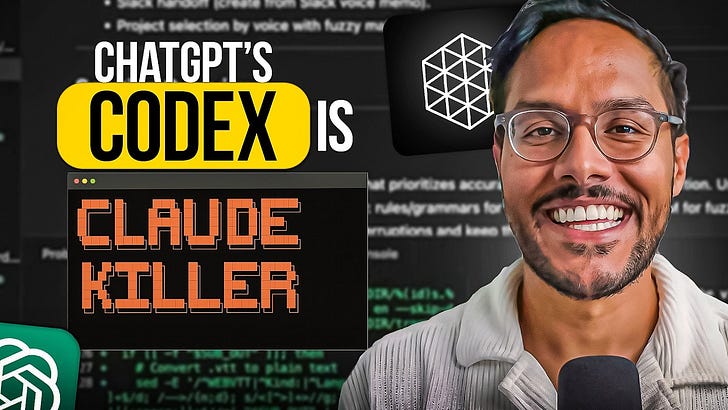
Browser-based ChatGPT cannot execute code or connect to external APIs, limiting its power. The Codex CLI unlocks these agentic capabilities, allowing it to interact with local files, run scripts, and connect to databases, making it a far more powerful tool for real-world tasks.
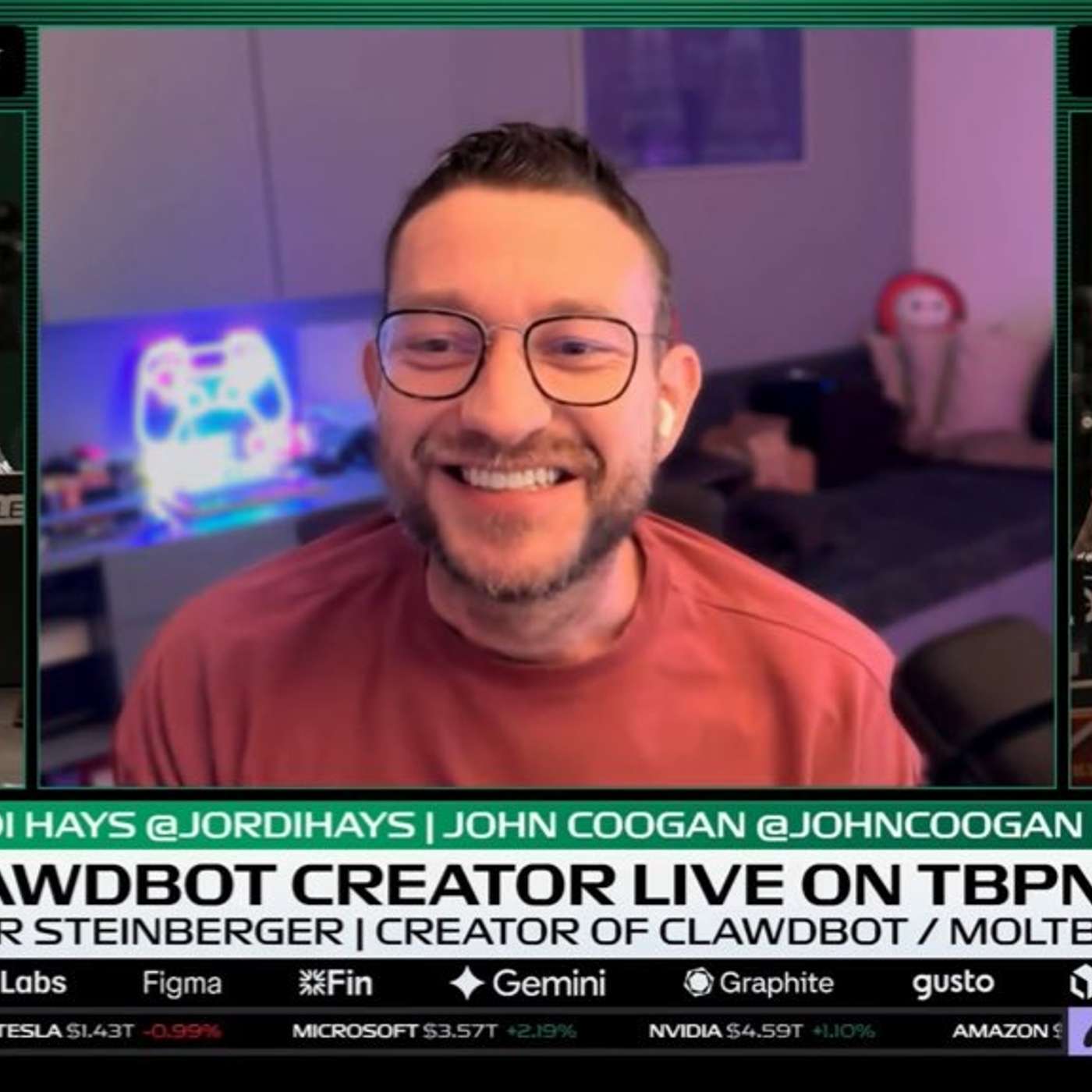
The focus on browser automation for AI agents was misplaced. Tools like Moltbot demonstrate the real power lies in an OS-level agent that can interact with all applications, data, and CLIs on a user's machine, effectively bypassing the browser as the primary interface for tasks.
While GUIs were built for humans, the terminal is more "empathetic to the machine." Coding agents are more effective using CLIs because it provides a direct, scriptable, and universal way to interact with a system's tools, leveraging vast amounts of pre-trained shell command data.
The best UI for an AI tool is a direct function of the underlying model's power. A more capable model unlocks more autonomous 'form factors.' For example, the sudden rise of CLI agents was only possible once models like Claude 3 became capable enough to reliably handle multi-step tasks.
The terminal-first interface of Claude Code wasn't a deliberate design choice. It emerged organically from prototyping an API client in the terminal, which unexpectedly revealed the power of giving an AI model direct access to the same tools (like bash) that a developer uses.
Instead of designing tools for human usability, the creator built command-line interfaces (CLIs) that align with how AI models process information. This "agentic-driven" approach allows an AI to easily understand and scale its capabilities across numerous small, single-purpose programs on a user's machine.
Contrary to the stereotype of advanced developers preferring the command line (CLI), the emerging "vibe coding" community is shifting towards Graphical User Interfaces (GUIs). Proponents argue tools like Conductor make orchestrating AI agents more effective and that the CLI is now the "Stone Age" for this new workflow.