Get your free personalized podcast brief
We scan new podcasts and send you the top 5 insights daily.
Instead of customers sending sensitive data to its cloud, Mistral deploys its entire technology stack—training and data processing tools—directly onto the customer's own servers. This ensures proprietary data never leaves the client's environment, solving security and compliance challenges.

Related Insights
To meet strict enterprise security and governance requirements, Snowflake's strategy is to "bring AI to the data." Through partnerships with cloud and model providers, inference is run inside the Snowflake security boundary, preventing sensitive data from being moved.

Strict regulations prohibit sending sensitive data to external APIs, creating a compliance nightmare for cloud-based AI. Small, on-premise models solve this by keeping data within the enterprise boundary, eliminating third-party processor risks and simplifying audits for regulated industries like healthcare and finance.

A key differentiator is that Katera's AI agents operate directly on a company's existing data infrastructure (Snowflake, Redshift). Enterprises prefer this model because it avoids the security risks and complexities of sending sensitive data to a third-party platform for processing.

Using public AI models leaks sensitive corporate data, as prompts and agent traces are sent to model providers. To protect proprietary information and maintain control, enterprises may revert to costly but secure on-premise infrastructure, reversing a 20-year trend of cloud migration.
Enterprises are increasingly concerned about sending sensitive data to the cloud via AI agents. The rise of local models, exemplified by platforms like OpenClaw, allows users to run agents on their own devices, ensuring private data never leaves their control and creating a more secure future.

As autonomous agents become prevalent, they'll need a sandboxed environment to access, store, and collaborate on enterprise data. This core infrastructure must manage permissions, security, and governance, creating a new market opportunity for platforms that can serve as this trusted container.

Companies are becoming wary of feeding their unique data and customer queries into third-party LLMs like ChatGPT. The fear is that this trains a potential future competitor. The trend will shift towards running private, open-source models on their own cloud instances to maintain a competitive moat and ensure data privacy.
The excitement around AI capabilities often masks the real hurdle to enterprise adoption: infrastructure. Success is not determined by the model's sophistication, but by first solving foundational problems of security, cost control, and data integration. This requires a shift from an application-centric to an infrastructure-first mindset.

The primary driver for running AI models on local hardware isn't cost savings or privacy, but maintaining control over your proprietary data and models. This avoids vendor lock-in and prevents a third-party company from owning your organization's 'brain'.
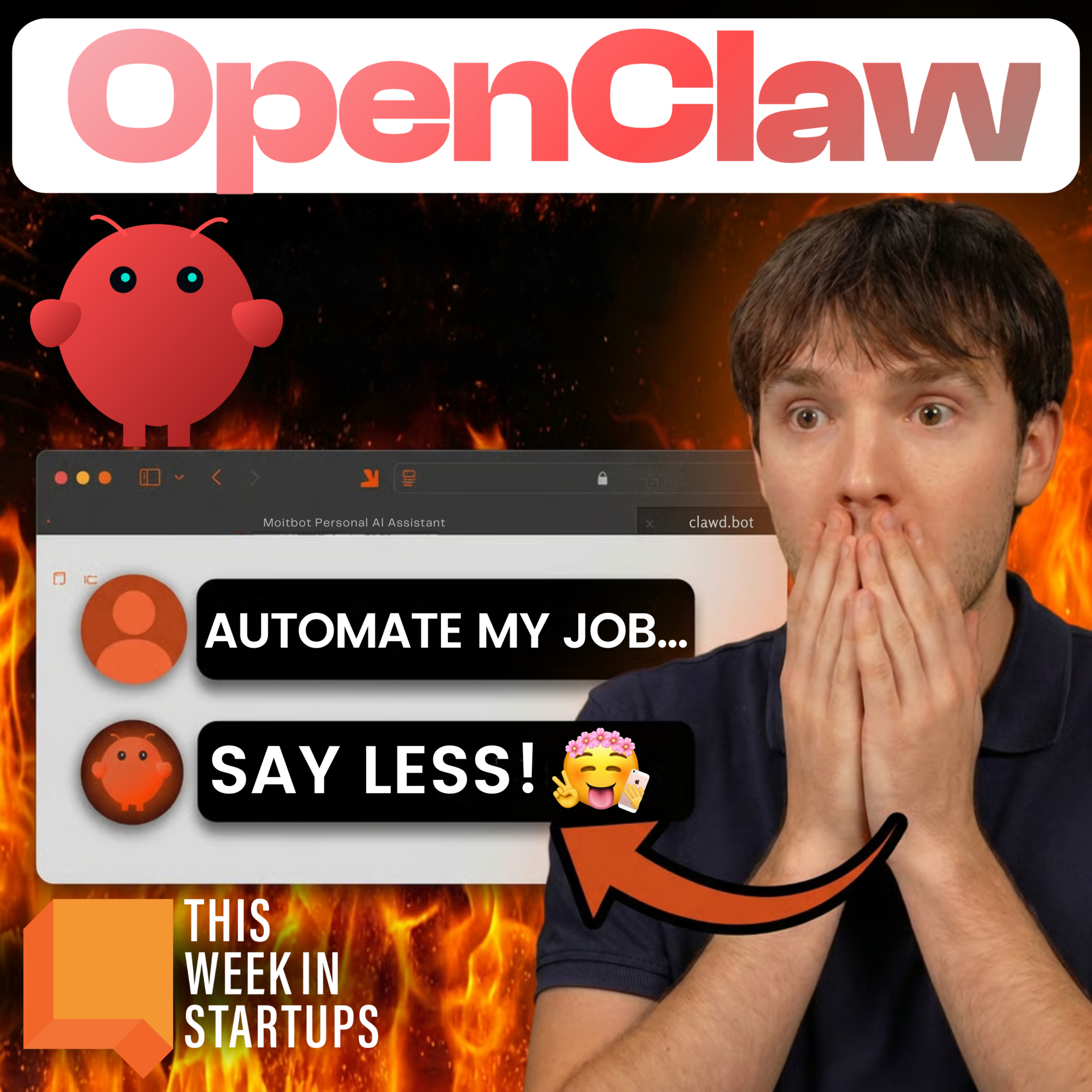
Running a personal AI on your own hardware is fundamentally different than using a cloud service. The key advantage is data sovereignty. This protects user data from third-party access, subpoenas, and control by large corporations, which is a critical differentiator for privacy-conscious users and businesses.
