Get your free personalized podcast brief
We scan new podcasts and send you the top 5 insights daily.
The convergence of AI, robotics, and other exponential technologies will create a world by 2030 that operates on principles we can't currently comprehend. Traditional economic models and predictions will become obsolete, creating an "economic singularity."

Related Insights
The most immediate AI milestone is not singularity, but "Economic AGI," where AI can perform most virtual knowledge work better than humans. This threshold, predicted to arrive within 12-18 months, will trigger massive societal and economic shifts long before a "Terminator"-style superintelligence becomes a reality.

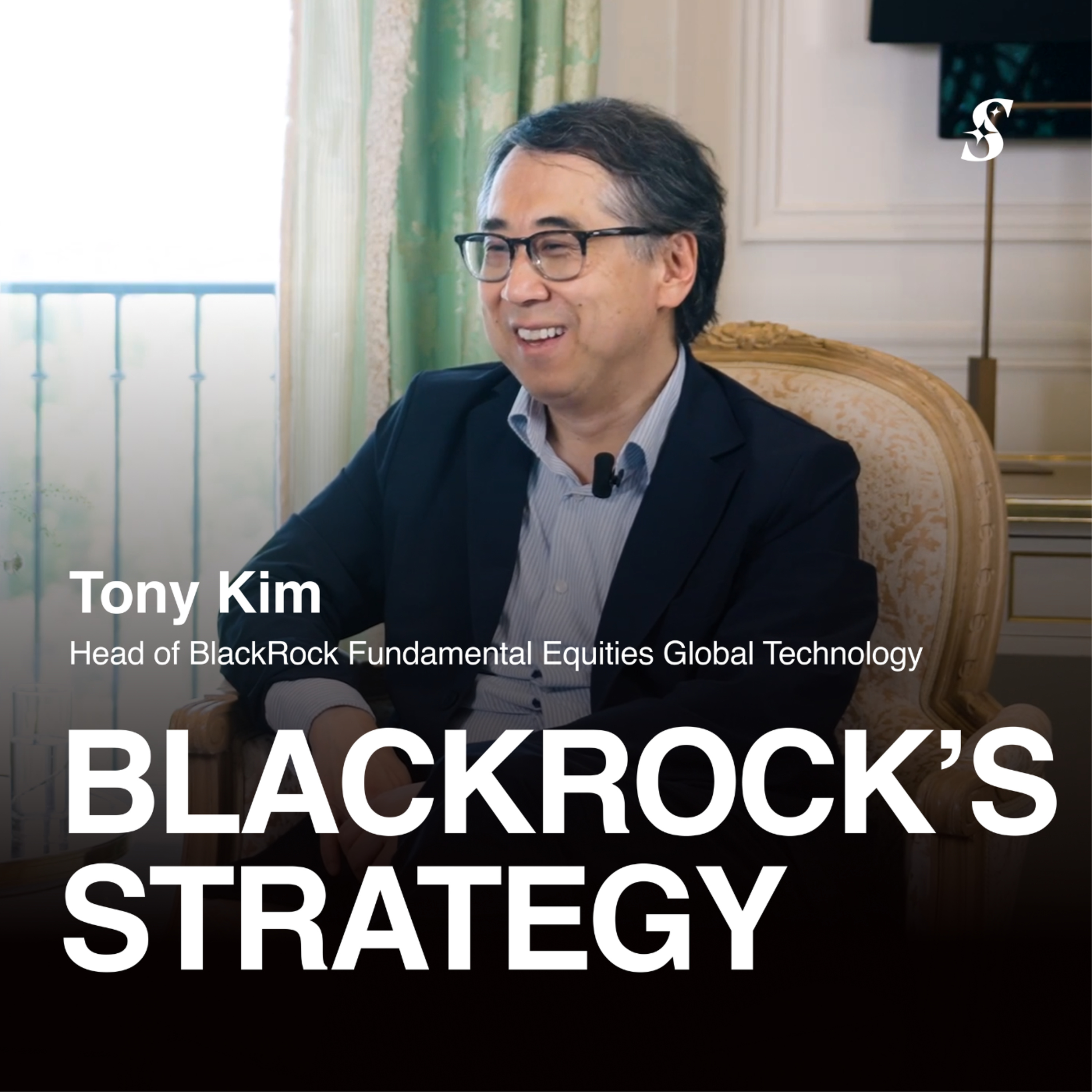
BlackRock's Tony Kim observes that many frontier technologies, from quantum computing and AGI to small nuclear reactors and data centers in space, are independently targeting 2030 for major breakthroughs. This convergence suggests a potential step-change in technological capabilities around that time.
The potential for an AI-driven, post-capitalist world of abundance is real. However, the path there will likely be as destructive as a world war, as the rapid upending of the economic order will throw society into chaos before stability is achieved.

For the first time in history, AI could create a world where our ability to produce goods and services outstrips our capacity to consume them. This poses a fundamental challenge to traditional economic models built on scarcity and resource allocation.

Elon Musk theorizes that if 'applied intelligence' is a direct proxy for economic growth, the exponential advancement of AI could lead to unprecedented double-digit GDP growth within 18 months and potentially triple-digit growth in five years. This frames AI not just as a tool, but as the primary driver of a new economic golden era.

Elon Musk predicts that in a future where AI and robotics can produce any good or service on demand, money becomes irrelevant. The ultimate currency becomes energy, as it's a fundamental physical resource that cannot be legislated into existence.

Unlike past technological shifts, AI's ultimate impact is subject to violent disagreement among the world's top experts, including Nobel laureates. The spectrum of potential outcomes ranges from global utopia to human extinction, representing a historically unprecedented level of uncertainty that makes investment and planning exceptionally difficult.

Karpathy pushes back against the idea of an AI-driven economic singularity. He argues that transformative technologies like computers and the internet were absorbed into the existing GDP exponential curve without creating a visible discontinuity. AI will act similarly, fueling the existing trend of recursive self-improvement rather than breaking it.

Raoul Pal posits that Artificial General Intelligence (AGI) represents the replacement of the 'Apex Intelligence.' Consequently, it will be the last technology of scale that humans invent, as all future innovation will be driven by AI itself, marking a fundamental turning point for humanity.

Beyond automating tasks, Emad Mostaque's "Intelligence Theory" suggests AI's deepest impact is shifting the foundational axiom of economics. Instead of scarcity, the new core principle is persistence: how complex systems (like firms or AIs) maintain themselves by accurately modeling and predicting reality.