Get your free personalized podcast brief
We scan new podcasts and send you the top 5 insights daily.
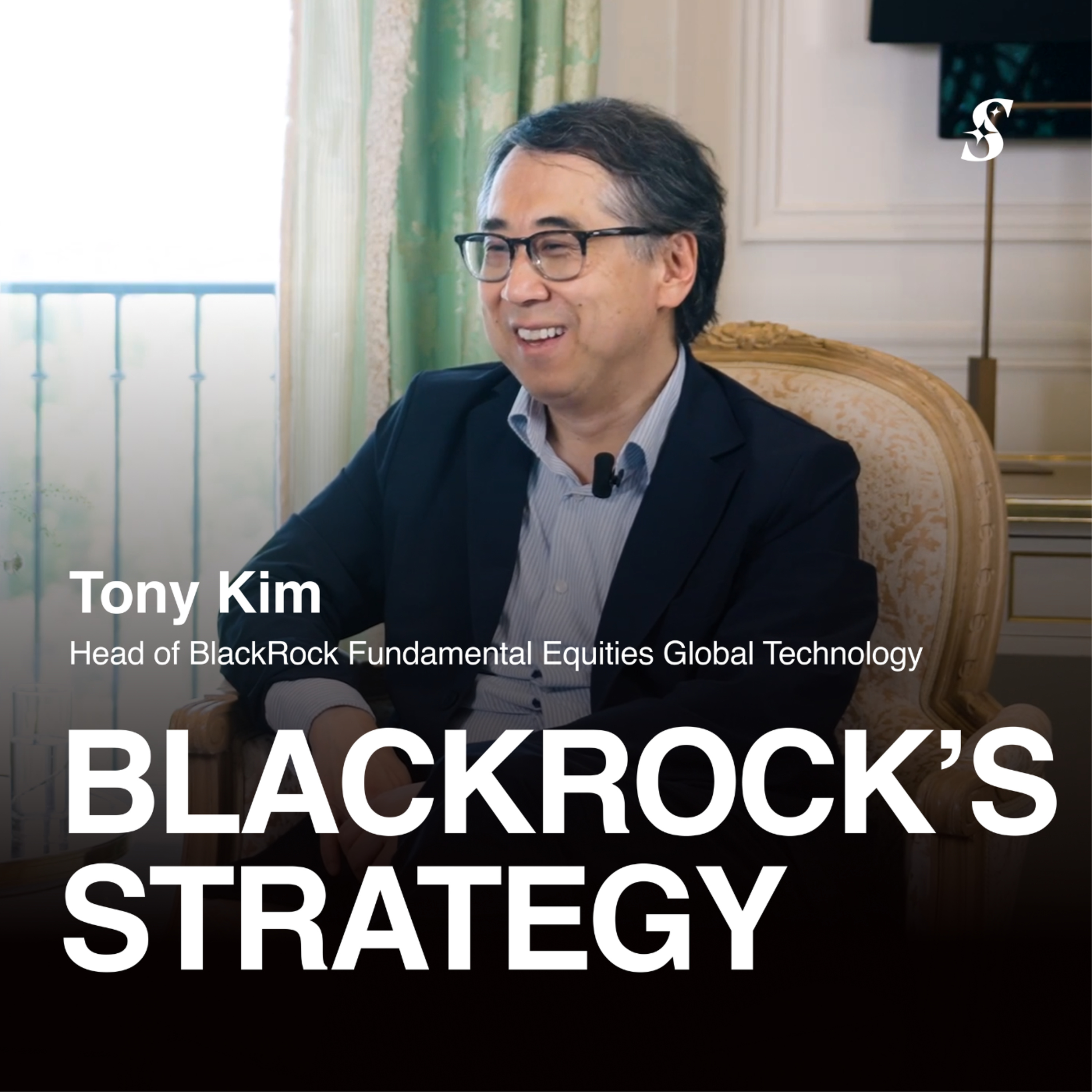
BlackRock's Tony Kim observes that many frontier technologies, from quantum computing and AGI to small nuclear reactors and data centers in space, are independently targeting 2030 for major breakthroughs. This convergence suggests a potential step-change in technological capabilities around that time.
Related Insights
Dylan Patel predicts that while orbital data centers are irrelevant for the next 3-5 years, by 2040 they will be essential. The sheer scale of AI's power demand (terawatts) will make terrestrial power and land the primary bottleneck, forcing new compute deployments into space.

Investor Shaun Maguire posits that the hardware industry is moving beyond the silicon-centric scaling of Moore's Law. The next wave of innovation will branch into entirely new "tech trees" such as humanoid robotics, silicon photonics, and orbital data centers, creating decades of new progress and distinct from semiconductor advancements.

Despite significant geopolitical risks, an equally plausible optimistic scenario exists. Transformative general platform technologies like AGI, quantum computing, and synthetic biology are nearing commercial scale, potentially creating a productivity boom that could offset debt headwinds and turbocharge the economy.

No longer just a theoretical concept, quantum computing has transitioned from a physics problem to an engineering and scaling challenge. With multiple qubit modalities and error correction now proven, meaningful results that solve currently intractable problems in chemistry and logistics are expected within this decade.

The current pace of AI development is not just accelerating progress, it's a time compression event. Innovations previously projected for the 2030s and 2040s are being realized now, fundamentally shortening strategic planning horizons and forcing companies to adapt at an unprecedented speed.

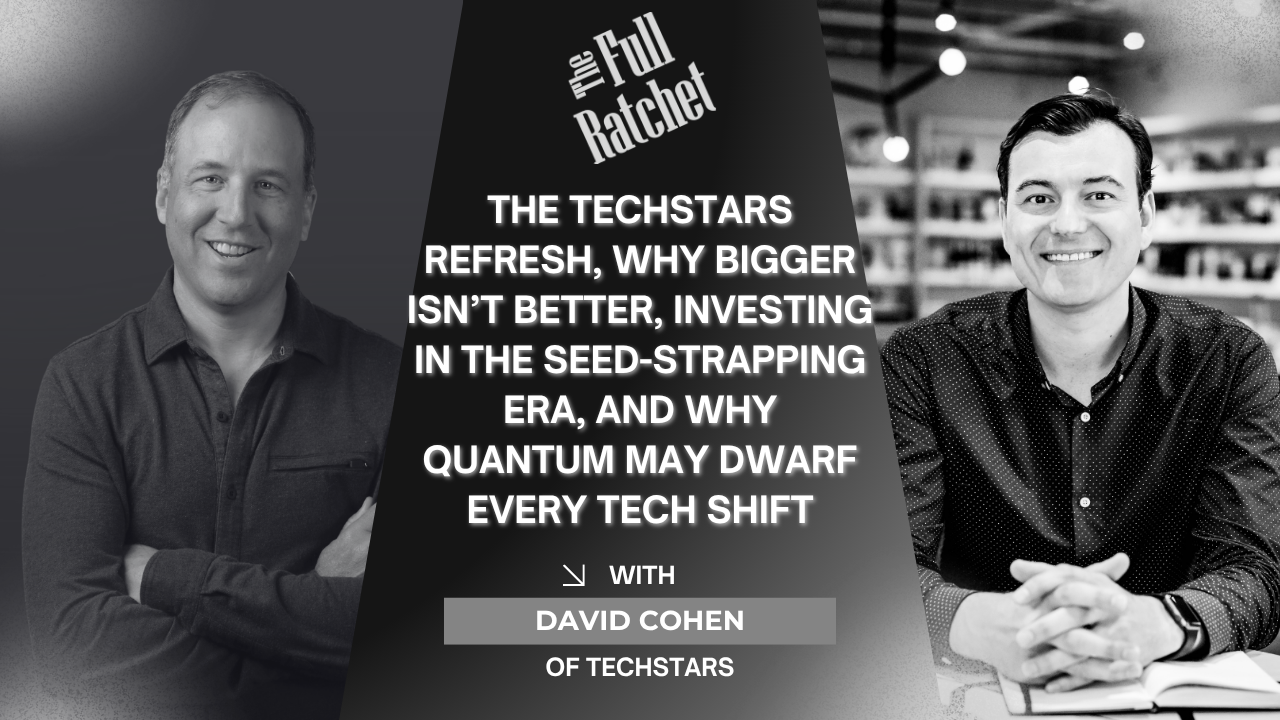
While AI dominates current conversations, Techstars' David Cohen believes Quantum Computing represents a far larger future paradigm shift. He posits that a single quantum computer will eventually surpass the combined power of all AI-driven classical computers. The "killer app" for this new era will be in healthcare, enabling truly personalized medicine.
Nvidia CEO Jensen Huang's public stance on quantum computing shifted dramatically within months, from a 15-30 year timeline to calling it an 'inflection point' and investing billions. This rapid reversal from a key leader in parallel processing suggests a significant, non-public breakthrough or acceleration is underway in the quantum field.
Leaders from Google, Nvidia, and SpaceX are proposing a shift of computational infrastructure to space. Google's Project Suncatcher aims to harness immense solar power for ML, while Elon Musk suggests lunar craters are ideal for quantum computing. Space is becoming the next frontier for core tech infrastructure, not just exploration.

Arvind Krishna expresses 100% confidence that quantum computers will be useful between 2028-2030. He frames the challenge as a manageable 10x improvement in both scale and error correction from today's prototypes, projecting a 'hundreds of billions' market opportunity for IBM.

Driven by rapid advances in AI agents, top tech CEOs are now publicly predicting the arrival of Artificial General Intelligence (AGI) or superintelligence within the next 2-5 years. This is a significant acceleration from previous estimates that often cited a decade or more.
