Get your free personalized podcast brief
We scan new podcasts and send you the top 5 insights daily.
Despite shortcomings in other areas, Google's Gemini models are highlighted as exceptionally proficient at multimodal tasks. Their ability to handle and transform various file types, particularly video, is a key differentiator compared to competitors. This strength is foundational to their more creative and consumer-focused AI product releases.

Related Insights
Google's NotebookLM now generates "cinematic video overviews," a leap beyond simple slideshows. By orchestrating its Gemini models to act as a "creative director" for narrative and style, Google is strategically demonstrating its leadership in multimodal AI with a practical, high-value application that differentiates it from competitors.

Historically criticized for poor productization, Google is showing a turnaround. Gemini features like 'Dynamic View,' which creates interactive presentations from prompts, demonstrate a newfound ability to translate powerful AI into novel, user-centric products, challenging OpenAI's lead in product-led growth.

While today's focus is on text-based LLMs, the true, defensible AI battleground will be in complex modalities like video. Generating video requires multiple interacting models and unique architectures, creating far greater potential for differentiation and a wider competitive moat than text-based interfaces, which will become commoditized.

When building AI workflows that process non-text files like PDFs or HTML, consider using Google's Gemini models. They are specifically strong at ingesting and analyzing various file types, often outperforming other major models for these specific use cases.

The Gemini project originated from a one-page memo by Jeff Dean arguing Google was fragmenting its best people, compute, and ideas across separate projects in Google Brain and DeepMind. He advocated for a unified effort to build a single powerful multimodal model, leading to the strategic merger that created Gemini.
The primary advantage is not in individual AI tools, but in an integrated ecosystem. Seamlessly moving from design (Stitch) to development (AI Studio) and using a central creative partner (Gemini) allows for building complex apps, websites, and video content in hours, not weeks.
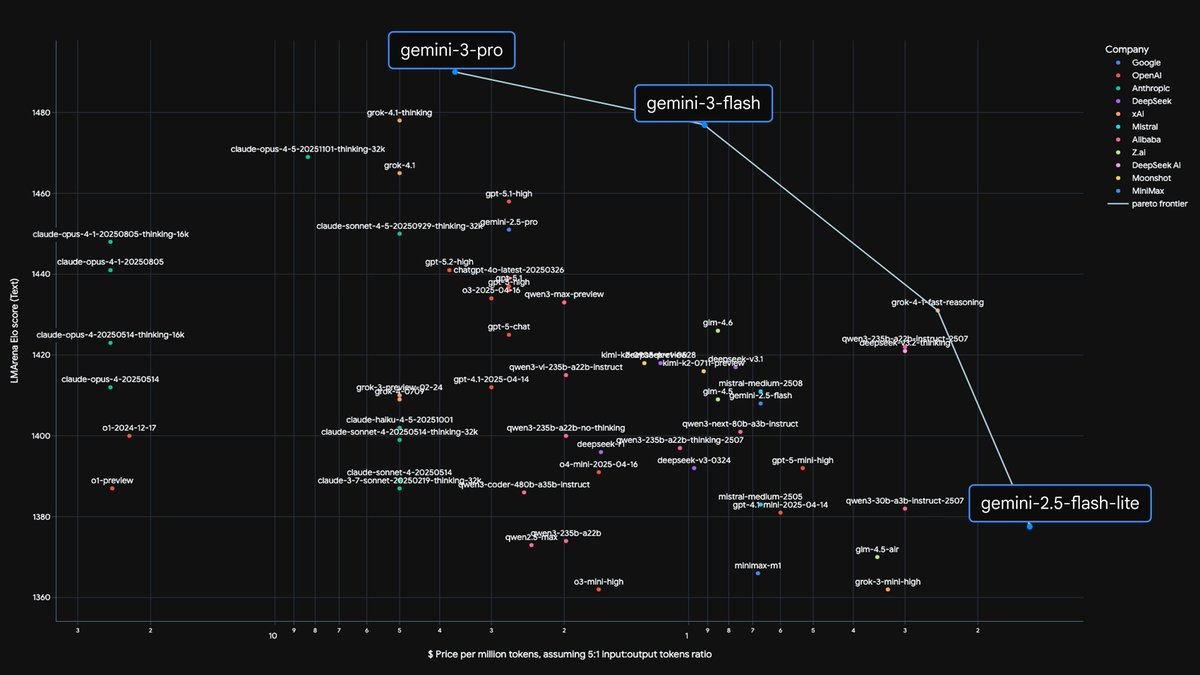
Google's Gemini models show that a company can recover from a late start to achieve technical parity, or even superiority, in AI. However, this comeback highlights that the real challenge is translating technological prowess into product market share and user adoption, where it still lags.
Google is sidestepping a direct confrontation with ChatGPT's text-based dominance. Instead, it's leveraging viral, multimodal models like NanoBanana to drive user acquisition through creative use cases, a domain where OpenAI was previously seen as the leader.

Google's strategy involves building specialized models (e.g., Veo for video) to push the frontier in a single modality. The learnings and breakthroughs from these focused efforts are then integrated back into the core, multimodal Gemini model, accelerating its overall capabilities.
Google's AI, Gemini, is positioned to win the AI race against first-mover ChatGPT. Similar to how Internet Explorer leveraged Microsoft's ecosystem to beat Netscape, Gemini's integration with Google's vast search and YouTube data gives it an insurmountable long-term competitive advantage.