Get your free personalized podcast brief
We scan new podcasts and send you the top 5 insights daily.
While YOLO26 is stable and maintained, its successor, YOLO11n, offers superior speed and accuracy. The primary reason to choose YOLO26 is for compatibility with existing production systems. For all new development, YOLO11n is the recommended architecture to achieve better performance.

Related Insights
As chip manufacturers like NVIDIA release new hardware, inference providers like Base10 absorb the complexity and engineering effort required to optimize AI models for the new chips. This service is a key value proposition, saving customers from the challenging process of re-optimizing workloads for new hardware.

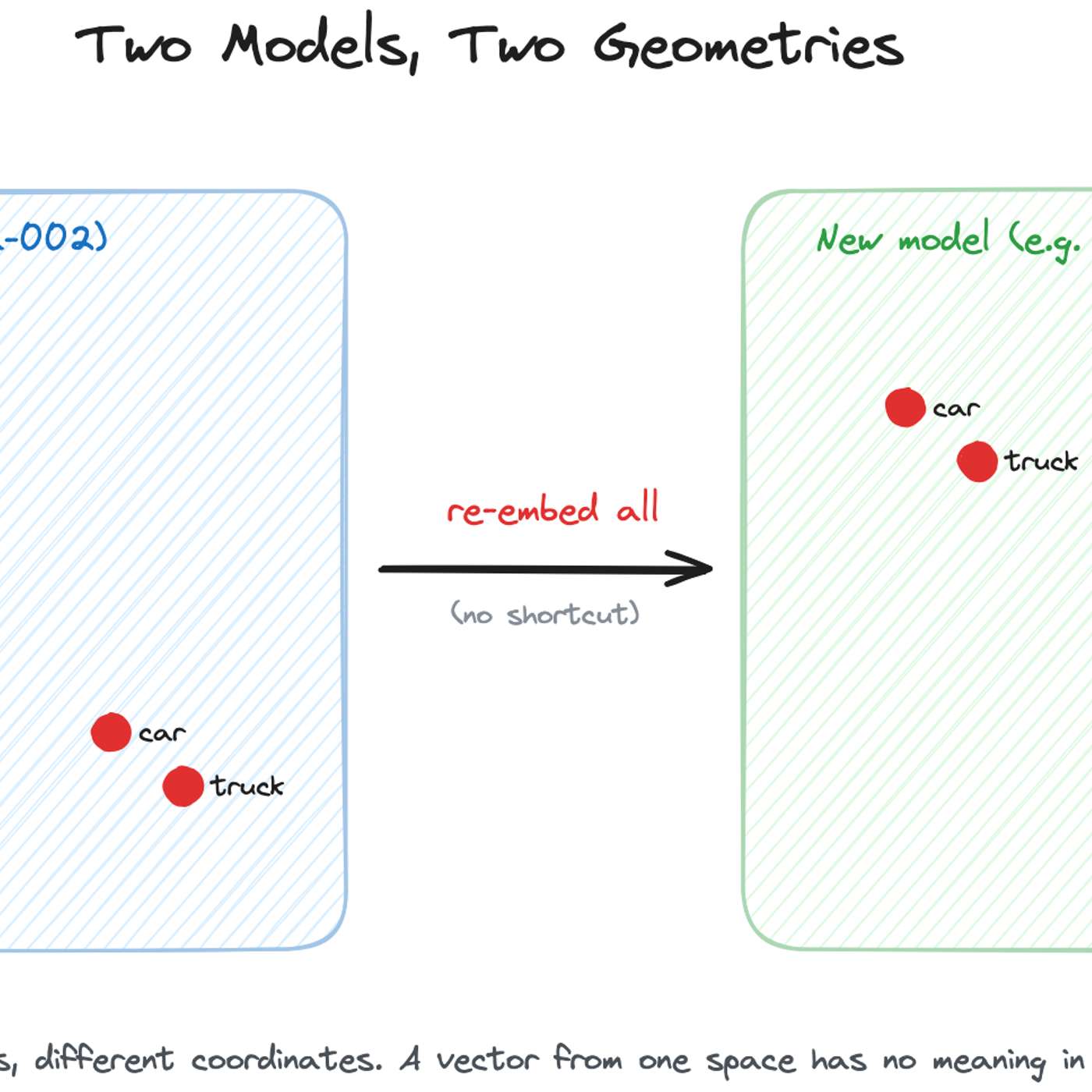
To avoid frantic, high-pressure migrations when an embedding model is deprecated, teams should treat model selection as a dependency that requires planned updates, like any other software library. This mindset shifts the process from an emergency scramble to routine, planned maintenance, making upgrades predictable and manageable.
Model architecture decisions directly impact inference performance. AI company Zyphra pre-selects target hardware and then chooses model parameters—such as a hidden dimension with many powers of two—to align with how GPUs split up workloads, maximizing efficiency from day one.

The choice between expensive frontier models and cheaper open-source ones depends on use case maturity. Enterprises should use powerful, general frontier models to discover new applications. Once a workflow is defined, they can migrate to a smaller, fine-tuned open model for efficiency.

Contrary to relying on a single frontier model, companies in production use a diverse portfolio of, on average, 32 different models. They switch between them to optimize for cost and performance on specific tasks, fueled by the rise of capable open-weight models.
An emerging rule from enterprise deployments is to use small, fine-tuned models for well-defined, domain-specific tasks where they excel. Large models should be reserved for generic, open-ended applications with unknown query types where their broad knowledge base is necessary. This hybrid approach optimizes performance and cost.

The performance improvement when scaling YOLO26 model sizes is not linear. The accuracy jump from the Nano to the Small variant is more significant than from Small to Medium, identifying the 'Small' model as the optimal trade-off point for many applications.
Open-weight models are often a generation behind the frontier. The correct comparison isn't against the latest proprietary model but its predecessor. On that basis, open models are now achieving parity, making them highly effective and cost-efficient for a majority of tasks.
SambaNova defines "premium inference" along two axes: running the largest models for maximum accuracy and doing so with low latency. This contrasts with services that achieve speed by only running smaller, less accurate models or by quantizing larger ones, which sacrifices precision.

Adopting a single, unified architecture for both vision and generation tasks simplifies the engineering lifecycle. This approach reduces the cost and complexity of maintaining, updating, and deploying multiple specialized models, accelerating development.