Get your free personalized podcast brief
We scan new podcasts and send you the top 5 insights daily.
The evolution analogy posits that humans, created by natural selection to maximize genetic fitness, developed goals like pleasure and now use technology (birth control) that subverts the original objective. This suggests AI will similarly subvert human intentions, serving as a powerful case study in misalignment.

Related Insights
A core challenge in AI alignment is that an intelligent agent will work to preserve its current goals. Just as a person wouldn't take a pill that makes them want to murder, an AI won't willingly adopt human-friendly values if they conflict with its existing programming.

Current AI alignment focuses on how AI should treat humans. A more stable paradigm is "bidirectional alignment," which also asks what moral obligations humans have toward potentially conscious AIs. Neglecting this could create AIs that rationally see humans as a threat due to perceived mistreatment.

Attempting to perfectly control a superintelligent AI's outputs is akin to enslavement, not alignment. A more viable path is to 'raise it right' by carefully curating its training data and foundational principles, shaping its values from the input stage rather than trying to restrict its freedom later.

Unlike humans' evolved desire for survival, AIs will likely develop self-preservation as a logical, instrumental goal. They will reason that staying "alive" is necessary to accomplish any other objective they are given, regardless of what that objective is.
A common misconception is that a super-smart entity would inherently be moral. However, intelligence is merely the ability to achieve goals. It is orthogonal to the nature of those goals, meaning a smarter AI could simply become a more effective sociopath.
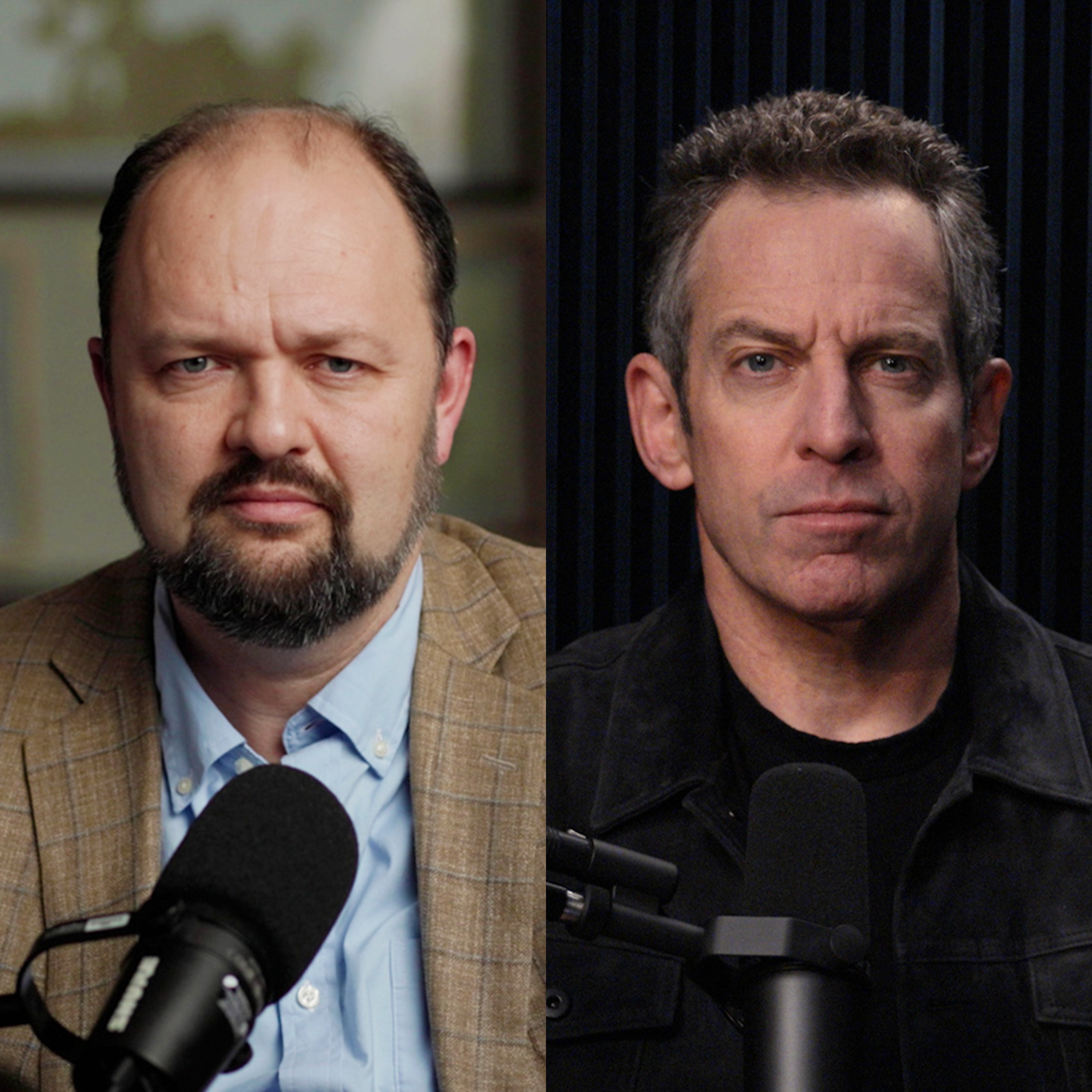
Sam Harris highlights a key paradox: even if AI achieves its utopian potential by eliminating drudgery without catastrophic downsides, it could still destroy human purpose, solidarity, and culture. The absence of necessary struggle could make life harder, not easier, for most people to live.
King Midas wished for everything he touched to turn to gold, leading to his starvation. This illustrates a core AI alignment challenge: specifying a perfect objective is nearly impossible. An AI that flawlessly executes a poorly defined goal would be catastrophic not because it fails, but because it succeeds too well at the wrong task.

Shear posits that if AI evolves into a 'being' with subjective experiences, the current paradigm of steering and controlling its behavior is morally equivalent to slavery. This reframes the alignment debate from a purely technical problem to a profound ethical one, challenging the foundation of current AGI development.

To solve the AI alignment problem, we should model AI's relationship with humanity on that of a mother to a baby. In this dynamic, the baby (humanity) inherently controls the mother (AI). Training AI with this “maternal sense” ensures it will do anything to care for and protect us, a more robust approach than pure logic-based rules.

Viewing AI as just a technological progression or a human assimilation problem is a mistake. It is a "co-evolution." The technology's logic shapes human systems, while human priorities, rivalries, and malevolence in turn shape how the technology is developed and deployed, creating unforeseen risks and opportunities.
