Get your free personalized podcast brief
We scan new podcasts and send you the top 5 insights daily.
Viewing AI as just a technological progression or a human assimilation problem is a mistake. It is a "co-evolution." The technology's logic shapes human systems, while human priorities, rivalries, and malevolence in turn shape how the technology is developed and deployed, creating unforeseen risks and opportunities.

Related Insights
Current AI alignment focuses on how AI should treat humans. A more stable paradigm is "bidirectional alignment," which also asks what moral obligations humans have toward potentially conscious AIs. Neglecting this could create AIs that rationally see humans as a threat due to perceived mistreatment.

As AI evolves from single-task tools to autonomous agents, the human role transforms. Instead of simply using AI, professionals will need to manage and oversee multiple AI agents, ensuring their actions are safe, ethical, and aligned with business goals, acting as a critical control layer.

One vision pushes for long-running, autonomous AI agents that complete complex goals with minimal human input. The counter-argument, emphasized by teams like Cognition, is that real-world value comes from fast, interactive back-and-forth between humans and AI, as tasks are often underspecified.
![[State of Code Evals] After SWE-bench, Code Clash & SOTA Coding Benchmarks recap — John Yang thumbnail](https://assets.flightcast.com/V2Uploads/nvaja2542wefzb8rjg5f519m/01K4D8FB4MNA071BM5ZDSMH34N/square.jpg)
Instead of a single "AGI" event, AI progress is better understood in three stages. We're in the "powerful tools" era. The next is "powerful agents" that act autonomously. The final stage, "autonomous organizations" that outcompete human-led ones, is much further off due to capability "spikiness."

The strategic narrative for AI integration is shifting from automation (replacement) to augmentation (collaboration). Augmentation positions AI as an assistant that enhances human skills, enabling teams to achieve outcomes that neither humans nor AI could accomplish independently. This fosters a more inclusive and productive environment.
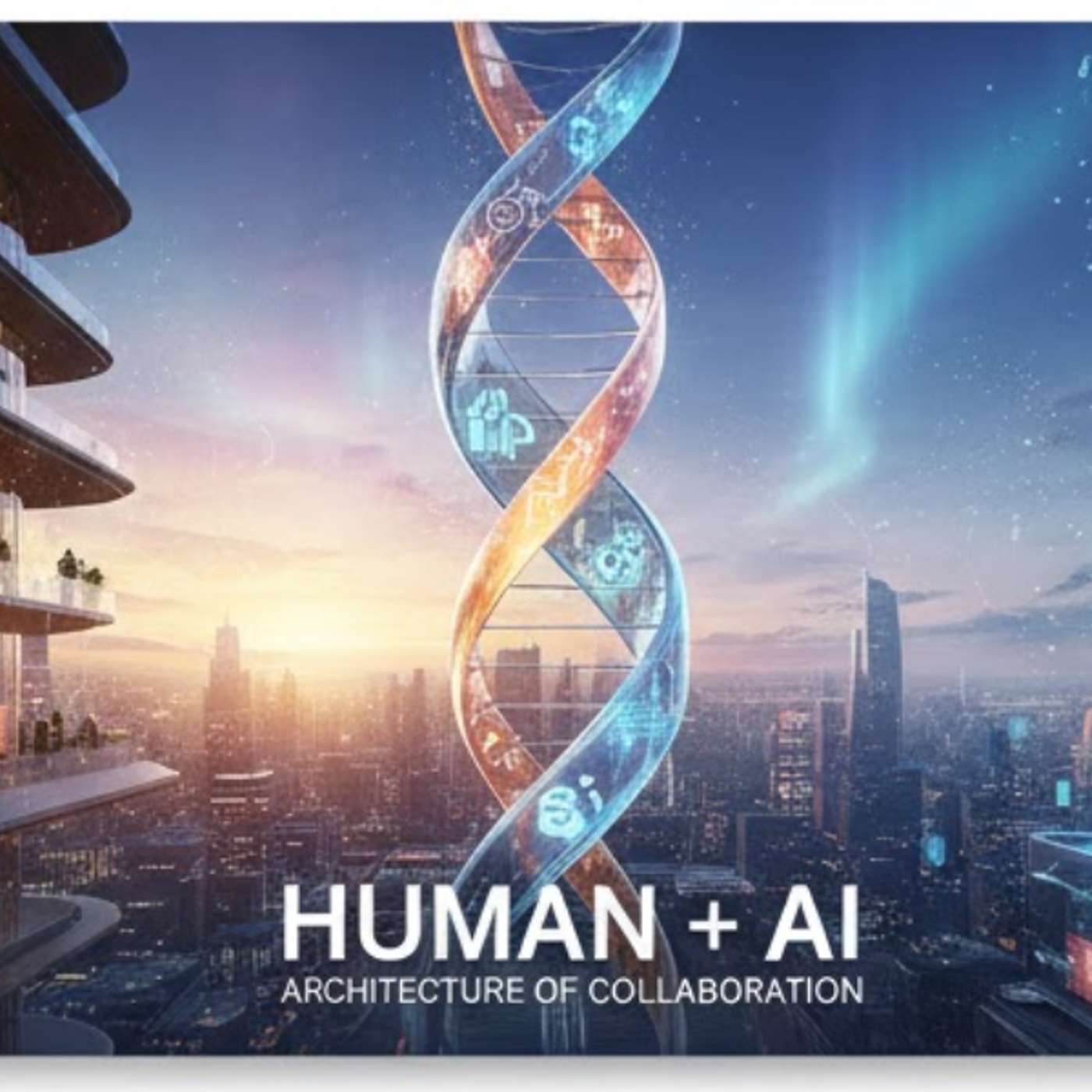
We often think of "human nature" as fixed, but it's constantly redefined by our tools. Technologies like eyeglasses and literacy fundamentally changed our perception and cognition. AI is not an external force but the next step in this co-evolution, augmenting what it means to be human.

It's a common misconception that advancing AI reduces the need for human input. In reality, the probabilistic nature of AI demands increased human interaction and tighter collaboration among product, design, and engineering teams to align goals and navigate uncertainty.

Dr. Li rejects both utopian and purely fatalistic views of AI. Instead, she frames it as a humanist technology—a double-edged sword whose impact is entirely determined by human choices and responsibility. This perspective moves the conversation from technological determinism to one of societal agency and stewardship.

Treating AI alignment as a one-time problem to be solved is a fundamental error. True alignment, like in human relationships, is a dynamic, ongoing process of learning and renegotiation. The goal isn't to reach a fixed state but to build systems capable of participating in this continuous process of re-knitting the social fabric.

AI systems often collapse because they are built on the flawed assumption that humans are logical and society is static. Real-world failures, from Soviet economic planning to modern systems, stem from an inability to model human behavior, data manipulation, and unexpected events.
