Get your free personalized podcast brief
We scan new podcasts and send you the top 5 insights daily.
Internally divided societies rarely come together on their own. Unity is almost exclusively forged when a common external, existential threat emerges. This was seen after 9/11 and during the Cold War, where the fear of an outside enemy overshadowed internal political disagreements, forcing cooperation.

Related Insights
Leaders maintain power by ensuring the population is divided. When people are fighting amongst themselves (e.g., left vs. right), they are not uniting to challenge the ruling class. A king and queen 'high-five' when they see their subjects fighting because it means the citizens are not focused on storming the castle walls.

While people form strong ideological tribes online, these virtual communities offer no protection from physical threats. During societal instability, geography becomes paramount, as people self-select into physically safe locations, reinforcing regional divides.

When a political movement is out of power, it's easy to unify against a common opponent. Once they gain power and become the establishment, internal disagreements surface, leading to factions and infighting as they debate the group's future direction.

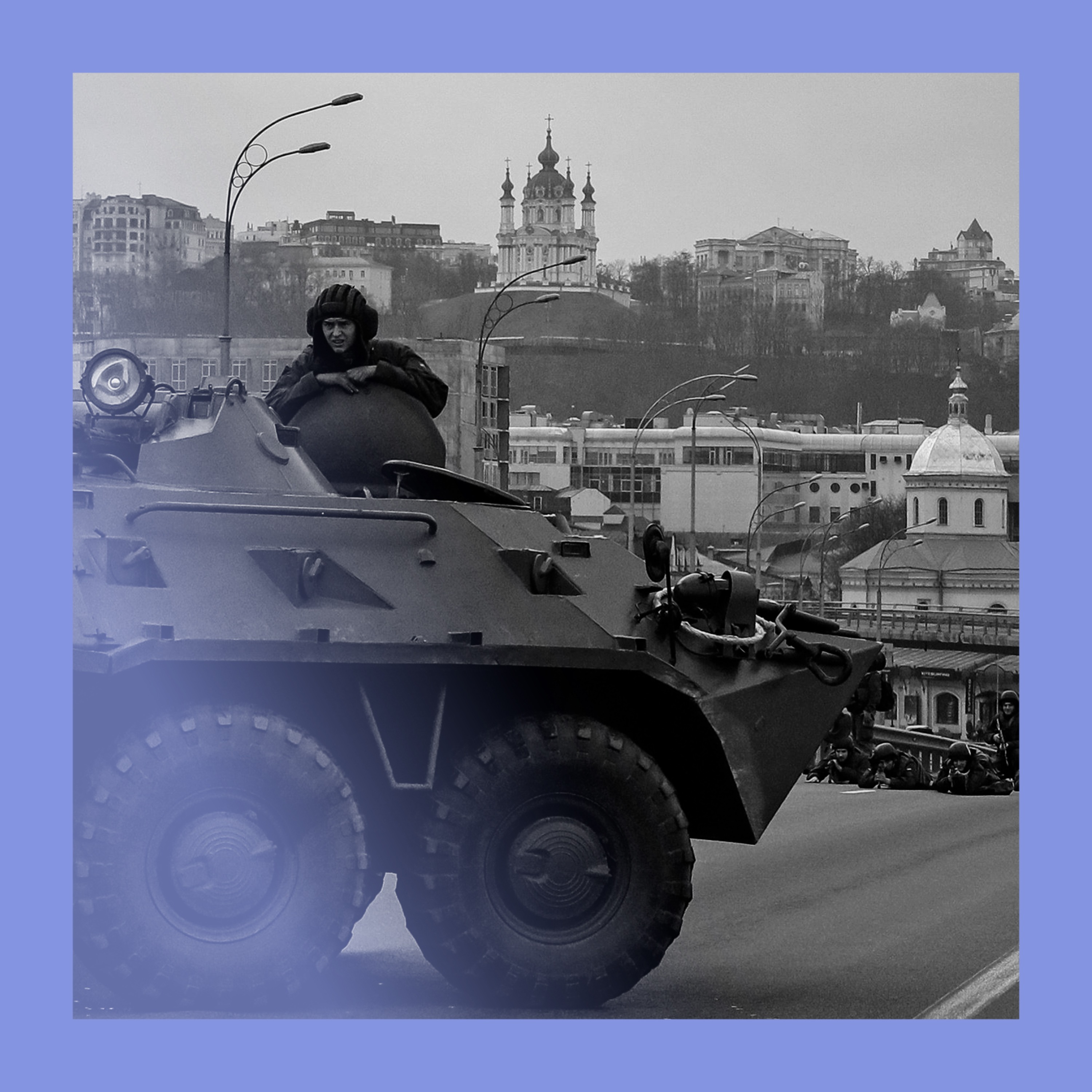
The initial unity of Ukrainian society has eroded after years of war. Deep divisions are emerging between those who stayed versus those who fled, and those who fought versus those who did not. These fractures will likely be exploited politically and complicate post-war nation-building.
A political system is in jeopardy when its citizens and leaders prioritize their ideological causes above the system's rules and stability. This creates irreconcilable differences, making compromise impossible and leading to internal conflict and eventual breakdown, a pattern observed repeatedly throughout history.

Constant exposure to global crises like political polarization causes a 'collective amygdala hijack,' putting society into a chronic defensive state that impairs higher-order thinking and empathy. In this state, we lose nuance, become more prone to tribalism, and are easier to control.

An obsessive focus on internal political battles creates a critical geopolitical vulnerability. While a nation tears itself apart with divisive rhetoric, strategic adversaries like China benefit from the distraction and internal weakening. This domestic infighting accelerates the erosion of the nation's global influence and power.

Despite widespread internal protests and instability, history shows that an external attack is one of the few things that can unify the Iranian population. A potential Israeli strike, meant to weaken the regime, could backfire by creating a 'rally 'round the flag' effect that shores up support for the Ayatollah.

The true danger isn't partisan bickering but the collapse of shared cultural institutions like family, faith, and community. These provided a common identity and purpose that held the nation together, and their erosion leaves a void that politics cannot fill, removing the nation's "center of gravity."

Society functions because humans cooperate based on shared beliefs like values or religion. These systems act as a shorthand for trust and alignment, allowing cooperation between strangers. This makes the erosion of a common value set the most significant threat to societal cohesion.
