Get your free personalized podcast brief
We scan new podcasts and send you the top 5 insights daily.
Despite the potential business impact, Palmer Luckey argues that when a company is funded by taxpayers, the public has the right to impose restrictions, including executive salary caps. This view champions accountability for the "war fighter" over complete corporate freedom, a nuanced stance for a tech founder.

Related Insights
Tesla's proposed 10-year, performance-based compensation plan is more than just a paycheck. It's a strategic mechanism designed to secure Elon Musk's long-term commitment and focus his attention exclusively on achieving Tesla's hyper-aggressive growth targets, like an $8 trillion valuation.

After backlash to his CFO's "backstop" comments, CEO Sam Altman rejected company-specific guarantees. Instead, he proposed the government should build and own its own AI infrastructure as a "strategic national reserve," skillfully reframing the debate from corporate subsidy to a matter of national security.

Trump's call to cap defense executive pay at $5M primarily targets the high cash salaries at legacy primes. Newer firms like Anduril, where founders and executives have lower salaries but significant equity, would be less impacted, potentially giving them a talent and operational advantage.
The controversy over OpenAI seeking government loan guarantees highlights a key founder responsibility: maximizing shareholder value by securing any available public funds, even if it creates poor optics. Lobbying for handouts is framed as a strategic best practice, not a moral failing.
The company's leadership philosophy, borrowed from Palantir, is to hire highly opinionated and sometimes difficult talent. While this feels chaotic, these individuals are essential for innovation and adaptation, unlike talent that merely optimizes existing, stable systems.
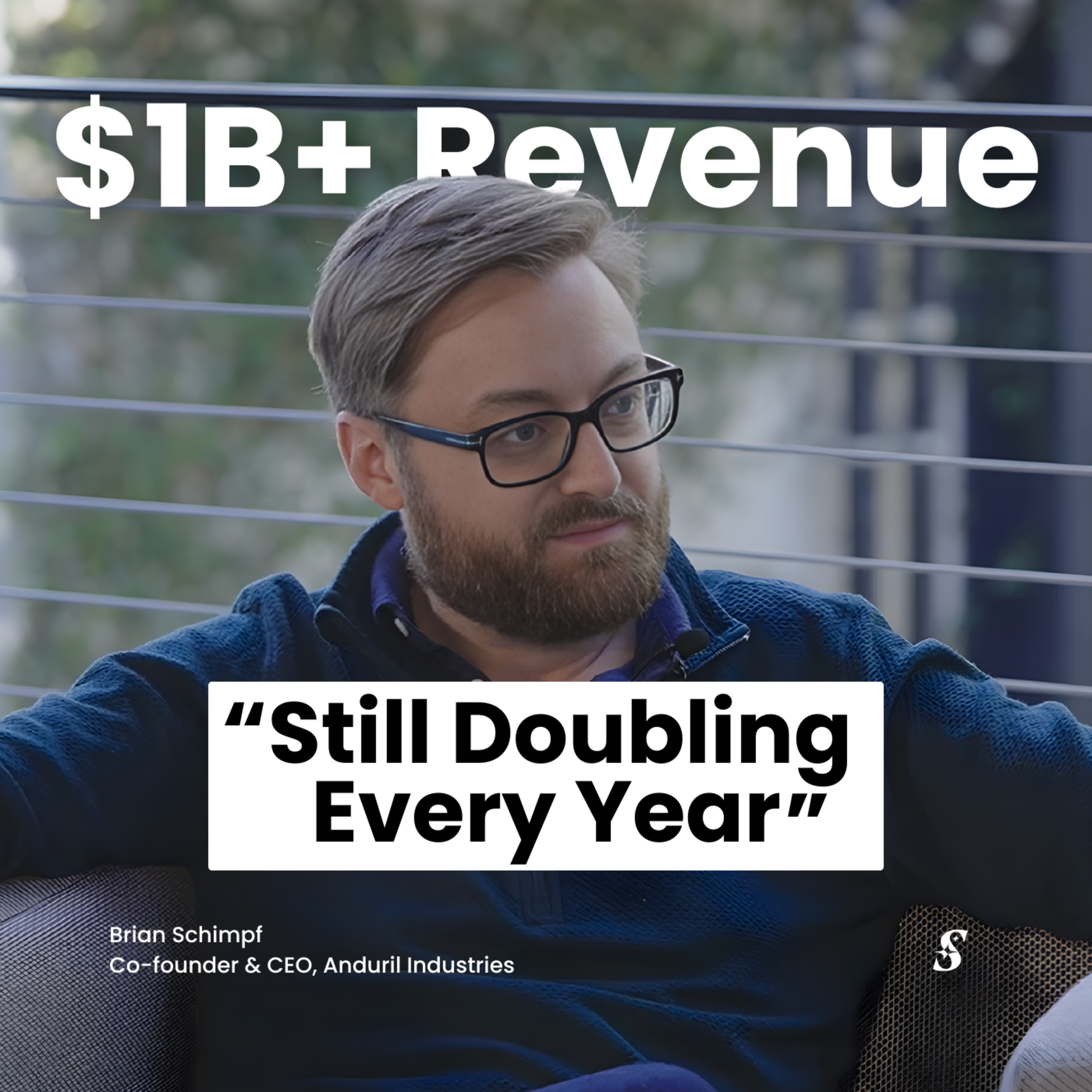
Anduril advocates for performance-based contracts, a controversial model in government where payment is contingent on the product working. This forces internal accountability and aligns their interests with the customer's, contrasting with traditional cost-plus models that place all risk on the government.
Musk's performance-based compensation sets a precedent for other CEOs to approach their boards with ambitious growth targets in exchange for significant equity increases. This challenges the traditional one-way dilution model for founders and executives.
OpenDoor's CEO takes a $1 salary with compensation tied entirely to performance-based stock. He argues this model directly combats the "scam" of executives getting rich while failing. Traditional cash salaries incentivize inaction, risk aversion, and reliance on consultants to avoid getting fired, ultimately destroying shareholder value.
Luckey advises founders to separate personal passions from the problems that need solving for maximum impact. While he enjoyed building Oculus VR headsets, he chose to found defense company Anduril to tackle a more critical, albeit less "fun," problem in national security. This contrasts with the common advice to "follow your passion."
![Palmer Luckey - Inventing the Future of Defense - [Invest Like the Best, CLASSICS] thumbnail](https://megaphone.imgix.net/podcasts/f7c9aa8e-cb8d-11f0-828e-0b281809c10a/image/cc07f91ec47f95abbde771a4956b37b7.jpg?ixlib=rails-4.3.1&max-w=3000&max-h=3000&fit=crop&auto=format,compress)
Contrary to the "brave founder" narrative, Palmer Luckey asserts that starting a company is easiest and least risky when you're young. With minimal responsibilities and opportunity cost, failure has few consequences, whereas waiting until you have a family and a high salary makes it an "irresponsible" gamble.