Get your free personalized podcast brief
We scan new podcasts and send you the top 5 insights daily.
Beyond his quick learning and intelligence, Elon Musk's defining trait is a complete psychological inability to entertain the possibility of failure. This "we're either going to do this or die" mindset, coupled with a rare ability to separate signal from noise, sets him apart from other brilliant entrepreneurs.

Related Insights
The personality trait that drives outlier entrepreneurial success isn't mere ambition, but a "tortured" state of mind. These individuals feel a constant, painful inadequacy that compels them to achieve extraordinary things. This drive often comes at the expense of their personal well-being, family life, and mental health.
![[REPLAY] Morgan Housel – Same as Ever (EP.359) thumbnail](https://static.libsyn.com/p/assets/f/b/7/6/fb76e1c8bfb69e8dd959afa2a1bf1c87/CA_Square_logo_light_background_6.26.24.jpg)
A core part of Musk's psychology is a relentless drive forged by a traumatic childhood. This created an internal "furnace" that makes him uncomfortable with peace and constantly seeking the next conflict, explaining his insatiable work ethic.

While one might hope to build a successful hardware company without being 'uncompromisingly demanding,' experience suggests otherwise. People are capable of far more than they believe, but almost always require extrinsic motivation. This tough leadership style appears necessary for succeeding in competitive hardware manufacturing.
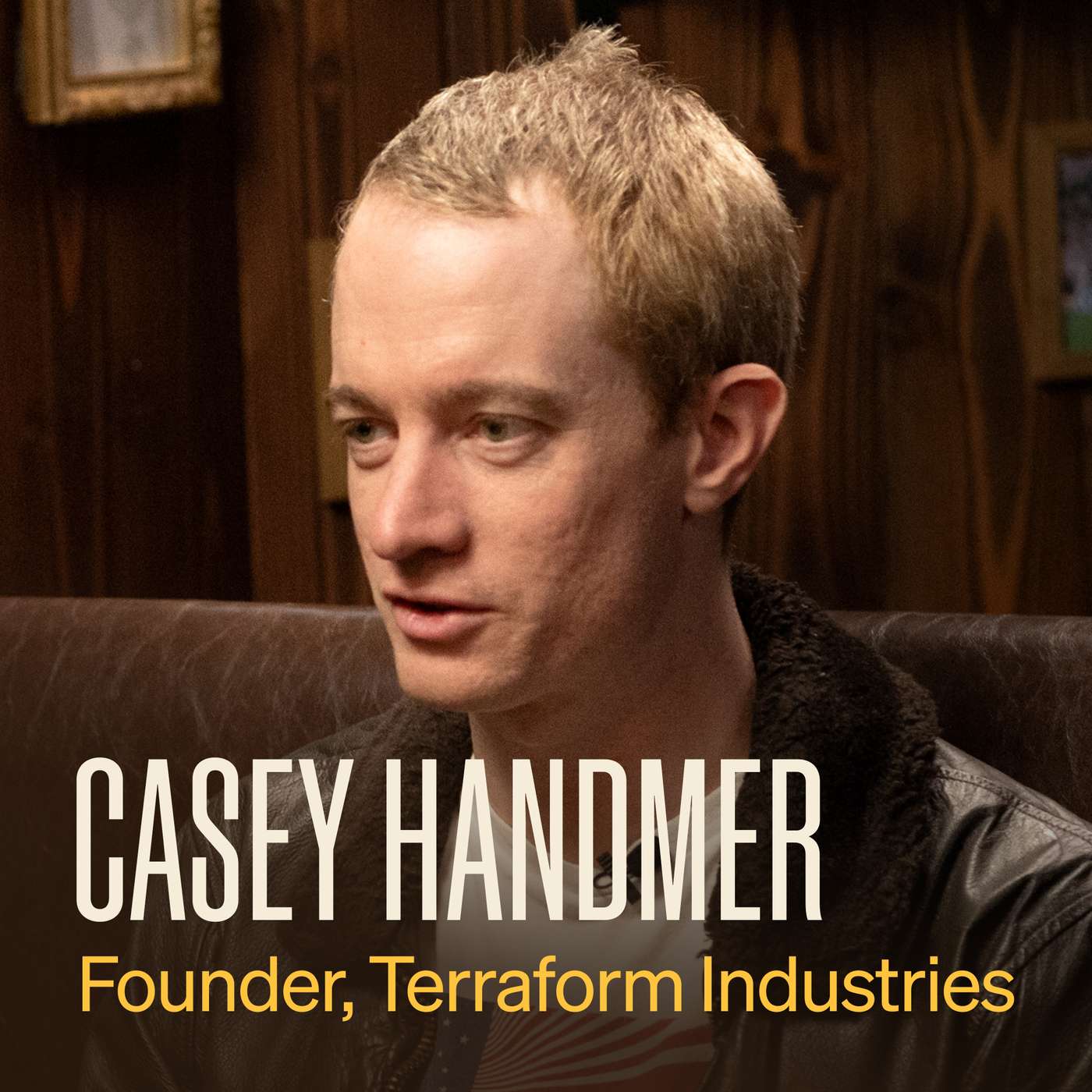
The optimism vs. pessimism debate is flawed; agency is the critical variable. Elon Musk, who believed Tesla and SpaceX had only a 10% chance of success (a pessimistic view), is a prime example. His extreme agency allowed him to succeed despite his low optimism.

Musk's sense of purpose isn't just a mission statement. It's a core operational pillar that justifies immense risk and fuels persistence through repeated failures, enabling him to pursue ventures others deem irrational.
Musk's success stems from his unique ability to attract hyper-intelligent, maniacally driven individuals. These people are drawn to his high-stakes, high-pressure environment, choosing to "burn out under Musk" rather than be bored elsewhere, creating an unparalleled human capital advantage.

Exceptional individuals like Musk are often driven by a combination of 'clean fuel' (visionary goals) and 'dirty fuel' (demons from a difficult past). The key is not to eliminate the darkness, but to make the demons 'pull the plow' toward a productive end.

Reflecting on his time at SpaceX, Nowack identified Elon Musk's high pain tolerance as a key leadership trait. Musk pushes the company through scary, uncertain phases that feel like failures, knowing persistence will lead to success on the other side.

A former engineer recalls how Elon Musk's conviction drives radical innovation. By committing to fundamental design changes—like removing a rocket booster's landing legs before a solution existed—Musk forces his teams to pursue seemingly impossible goals, like catching the rocket with the launch tower. This high-stakes approach eliminates fallback options and focuses the entire team on a single, ambitious path.

Charlie Munger's comment on Elon Musk—"Never underestimate the man who overestimates himself"—highlights a paradox. Extreme self-belief, often a flaw, can be a founder's greatest asset, fueling the audacity required to pursue goals that rational minds dismiss as impossible.
