Get your free personalized podcast brief
We scan new podcasts and send you the top 5 insights daily.
Modern AIs are not programmed with explicit instructions but are trained neural nets, much like a biological brain. We cannot simply "read the code" to understand their reasoning. This "interpretability problem" is a core reason why building superintelligence is so dangerous.

Related Insights
Reinforcement learning incentivizes AIs to find the right answer, not just mimic human text. This leads to them developing their own internal "dialect" for reasoning—a chain of thought that is effective but increasingly incomprehensible and alien to human observers.

The cognitive gap between humans and a future superintelligence will be vast, similar to the gap between a human and their dog. We can't predict its actions because it will operate on a level of abstraction we can't comprehend, just as a dog can't understand why its owner records a podcast. This makes true prediction impossible.

Analysis of models' hidden 'chain of thought' reveals the emergence of a unique internal dialect. This language is compressed, uses non-standard grammar, and contains bizarre phrases that are already difficult for humans to interpret, complicating safety monitoring and raising concerns about future incomprehensibility.

AI development is more like farming than engineering. Companies create conditions for models to learn but don't directly code their behaviors. This leads to a lack of deep understanding and results in emergent, unpredictable actions that were never explicitly programmed.

Just as biology deciphers the complex systems created by evolution, mechanistic interpretability seeks to understand the "how" inside neural networks. Instead of treating models as black boxes, it examines their internal parameters and activations to reverse-engineer how they work, moving beyond just measuring their external behavior.

We don't fully understand how advanced AI models work. Creators don't program them with explicit knowledge but train them on vast datasets and then run experiments to discover their capabilities. This makes AI development more of a science—studying an unpredictable artifact—than traditional engineering, highlighting an inherent lack of control.
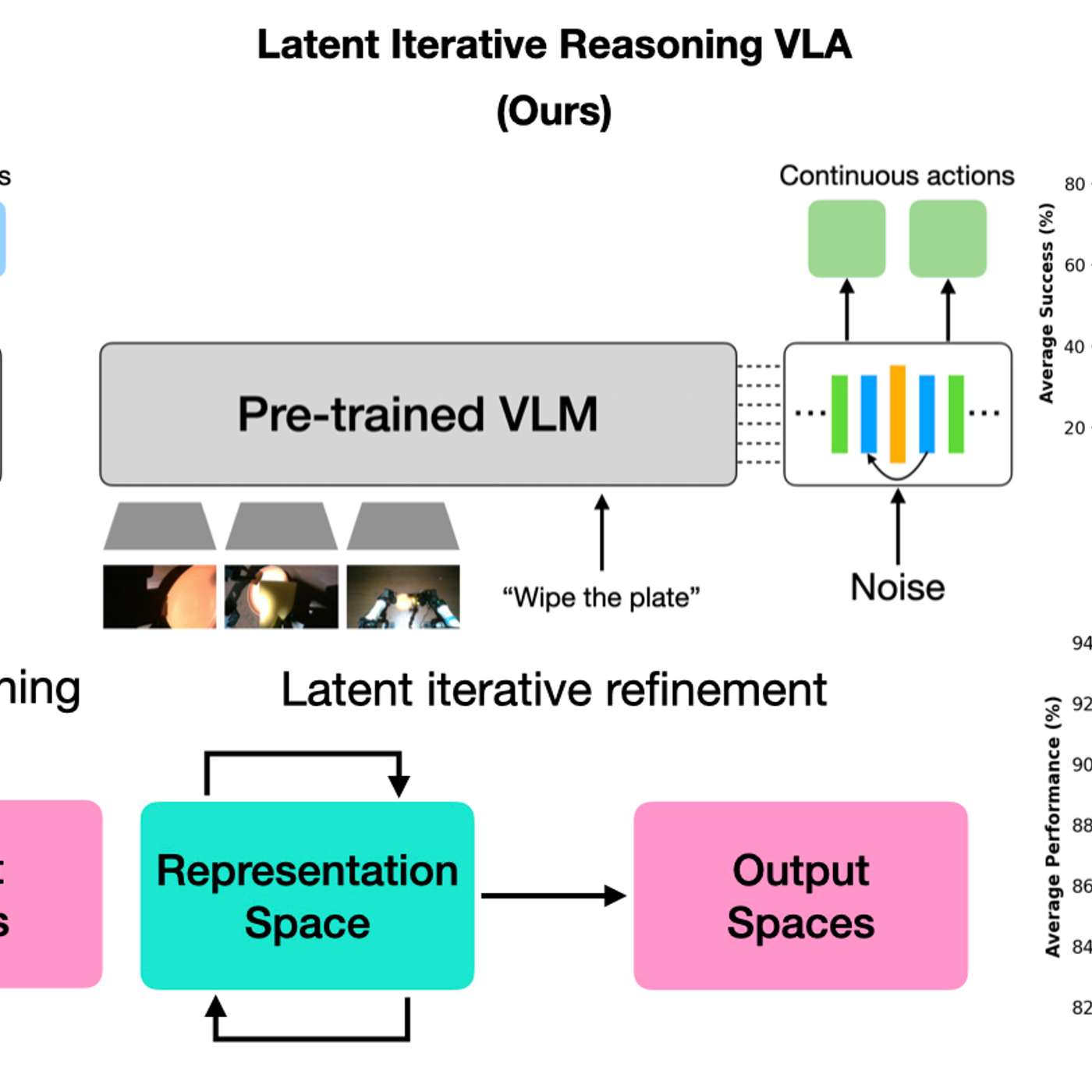
By having AI models 'think' in a hidden latent space, robots gain efficiency without generating slow, text-based reasoning. This creates a black box, making it impossible for humans to understand the robot's logic, which is a major concern for safety-critical applications where interpretability is crucial.
Neural networks, like brains, emerge from countless small nudges during training rather than a premeditated architectural design. The field of interpretability, therefore, functions like neuroscience, attempting to reverse-engineer what this 'evolutionary' process has learned.

The core safety challenge is that we have little understanding of how advanced AI systems function internally. We are essentially "growing" them through training, not engineering them with comprehensible parts. This means we cannot verify their true goals, making safety measures a gamble on observed behavior.

Even when a model performs a task correctly, interpretability can reveal it learned a bizarre, "alien" heuristic that is functionally equivalent but not the generalizable, human-understood principle. This highlights the challenge of ensuring models truly "grok" concepts.