Get your free personalized podcast brief
We scan new podcasts and send you the top 5 insights daily.
Video editing can be automated without technical skill by using an AI as an orchestrator. By giving Claude access to a plugin like Remotion, you can use natural language prompts to direct it to access raw video files and perform complex edits, turning a creative brief into a near-finished video automatically.

Related Insights
Create a hands-off content pipeline by combining two AI tools. Use ChatGPT with specific prompts to generate fully-fleshed-out video scripts. Then, instead of filming them yourself, paste those scripts directly into InVideo.ai to have the final video product generated automatically.

The company built an internal system that triggers when a YouTube video hits a viewership threshold. It feeds the transcript into Claude AI, which is trained to identify viral moments. These suggested clips are then sent to an editor in Descript for quick finalization, dramatically scaling short-form video production.

Tools like Remotion, integrated into AI environments like Claude Code, allow for the programmatic creation of video ads. This eliminates the need for complex video editing software, enabling rapid generation and testing of numerous ad variations directly from the terminal.

Marco Casalaina used natural language to instruct an AI agent to re-encode a 1.7GB video file using the powerful but complex command-line tool FFmpeg. The AI handled the specific command generation, reducing the file to 13MB. This makes highly technical tools accessible for tasks like file manipulation without requiring deep expertise.

Delegate the robotic task of removing filler words and bad takes to an AI tool. This creates the initial rough cut, saving your professional editor's time and budget for higher-value tasks like motion graphics, creative pacing, and strategic storytelling.
The next leap in video generation won't come from monolithic models but from AI agents. These LLM-driven agents will use a suite of tools—including diffusion models, video editors like FFmpeg, and image editors—to iteratively create and refine complex, long-form videos.
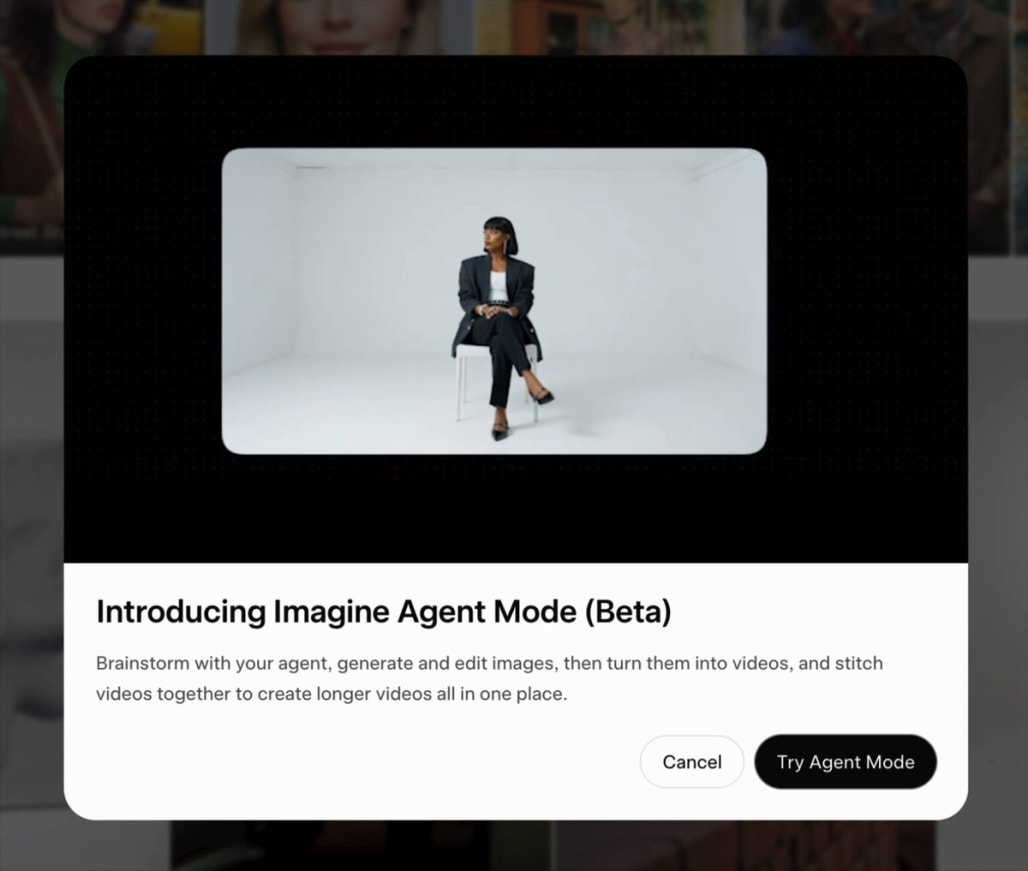
Exceptional AI content comes not from mastering one tool, but from orchestrating a workflow of specialized models for research, image generation, voice synthesis, and video creation. AI agent platforms automate this complex process, yielding results far beyond what a single tool can achieve.
To begin automating work with AI, record yourself performing a task on video (e.g., using Loom) while narrating the process. An AI can then analyze the transcript to identify the repeatable steps and logic, which forms the basis for building a custom, automated "skill" that mirrors your workflow.

Marketers without video editing skills can now produce high-quality videos. By instructing an AI agent to use an open-source library like Remotion, you can generate and edit complex, animated videos entirely through text commands.

Non-coders can create sophisticated AI workflows without technical expertise. You can provide an AI like Claude with a podcast transcript describing a desired automation and ask it to build that system for you. The AI will then provide step-by-step instructions, effectively creating its own operational framework.