Get your free personalized podcast brief
We scan new podcasts and send you the top 5 insights daily.
When an acquisition fails due to regulatory hurdles, the resulting breakup fee can be a strategic financial boon. For example, Figma received a $1 billion fee from Adobe after their deal was blocked, which functioned as non-dilutive capital to help the company re-accelerate its growth.

Related Insights
A board's duty to maximize shareholder value is an expected value calculation. A $100B offer with a 75% chance of closing is valued at $75B, making an $80B offer with 100% certainty more attractive. Boards weigh financing and regulatory risks heavily against the headline price.
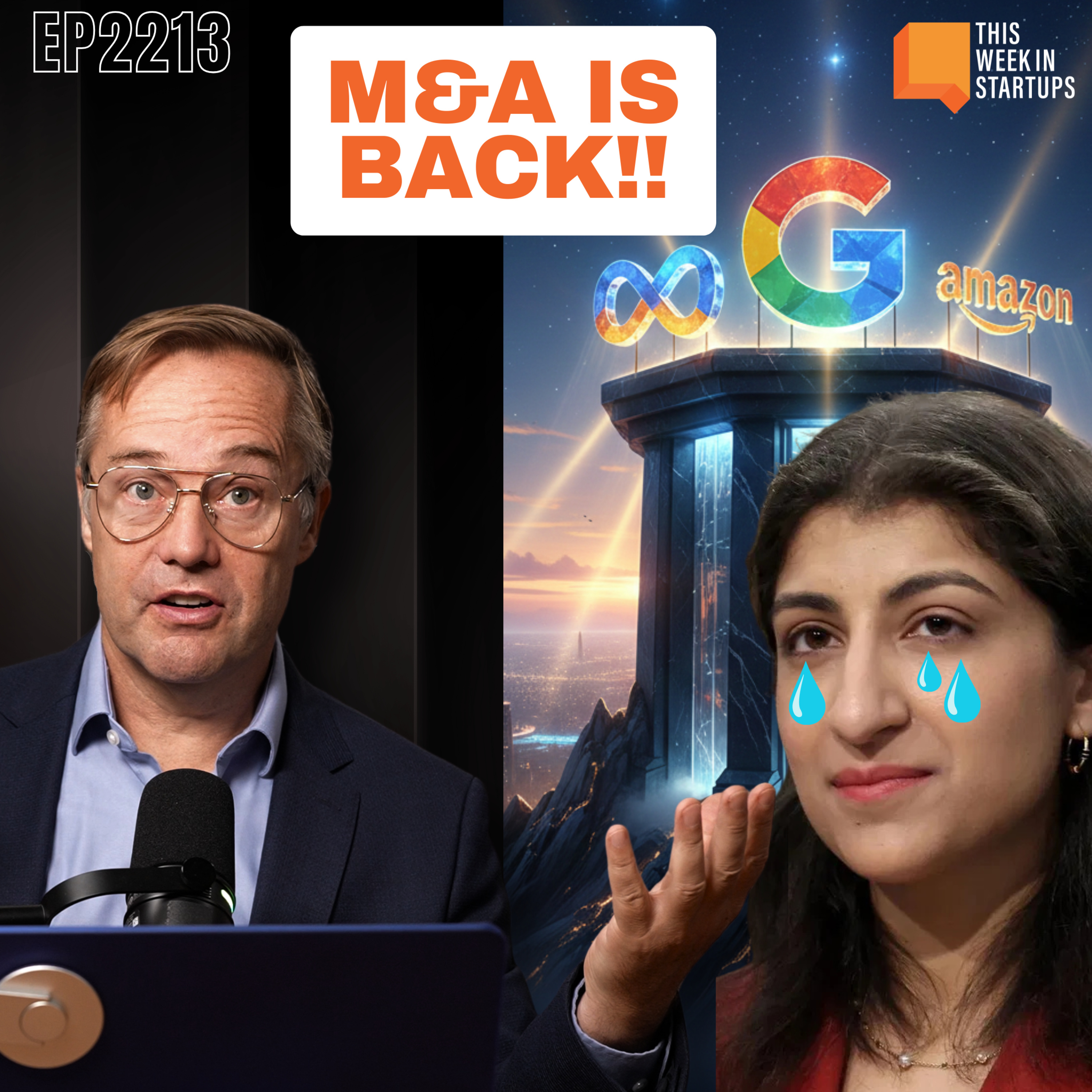
Recent antitrust lawsuits against Meta and Google resulted in minimal consequences ("nothing burgers"), signaling a more permissive regulatory environment. Combined with anticipated economic stimulus, this creates ideal conditions for a wave of large-scale M&A ($25B-$250B) among major tech companies in the coming year.
While deal teams celebrate fast approvals, it can create a crisis for integration leads. Cisco's Splunk deal closed six months sooner than expected, forcing an acceleration of complex integration planning. This compression puts pressure on synergy timelines, as execution must begin immediately at close without the anticipated planning runway.

During the uncertain regulatory review of its Adobe acquisition, Figma's leadership kept its "foot on the gas." Because an acquirer cannot direct a company's activities pre-close, Figma continued executing its independent roadmap, ensuring it remained strong whether the deal succeeded or failed.
Acquiring smaller companies at a 5-6x EBITDA multiple and integrating them to reach a larger scale allows you to sell the combined entity at a 10-12x multiple. This multiple expansion is a powerful, often overlooked financial driver of M&A strategies, creating value almost overnight.

In a competitive M&A process where the target is reluctant, a marginal price increase may not work. A winning strategy can be to 'overpay' significantly. This makes the offer financially indefensible for the board to reject and immediately ends the bidding process, guaranteeing the acquisition.
![Ari Emanuel - The Anti-AI Bet - [Invest Like the Best, EP.448] thumbnail](https://megaphone.imgix.net/podcasts/c5910280-c4dd-11f0-94be-ab6a7a5865b0/image/1e5a2263eb62fcde200846919e24419a.jpg?ixlib=rails-4.3.1&max-w=3000&max-h=3000&fit=crop&auto=format,compress)
The most lucrative exit for a startup is often not an IPO, but an M&A deal within an oligopolistic industry. When 3-4 major players exist, they can be forced into an irrational bidding war driven by the fear of a competitor acquiring the asset, leading to outcomes that are even better than going public.

Meta's victory over the FTC's antitrust challenge is not just a legal footnote; it signals the end of a highly restrictive regulatory era. This will likely trigger a massive wave of M&A, as large tech companies are now emboldened to acquire stagnant, late-stage private "unicorns" that have been stuck without an exit path.

The current M&A landscape is defined by a valuation disparity where smaller companies trade at a discount to larger ones. This creates a clear strategic incentive for large corporations to drive growth by acquiring smaller, more affordable competitors.

When Front Office Sports realized an investor was a "buyer, not a strategic partner," they didn't wait. They proactively found a new, more aligned investor (Jeff Zucker's Redbird IMI) and engineered a deal to buy out the previous firm, providing them a return while freeing the company to pursue a more aggressive growth strategy.