Get your free personalized podcast brief
We scan new podcasts and send you the top 5 insights daily.
Matias says SciMed's podcast and Future Neuro Founders workshop exist to inspire scientists to start companies. The podcast is also a selfish learning tool: he would keep recording even with one listener because he gains so much from the conversations. He calls the effort both selfless and extremely selfish.
Related Insights
Matias says his time at NVIDIA gave him an insider view of AI progress—more compute, better data, better models—converging with neurobiology. That visibility helped convince him a venture fund focused on brain and mental health could work. He calls it one of the lucky breaks behind SciMed's launch.
Gary Vaynerchuk explains that guest appearances serve a dual purpose: selfishly, to reach new audiences and build reputation, and selflessly, to share knowledge out of gratitude. This highlights a balanced growth strategy.

The rigorous training of a scientist—learning how to learn, managing uncertainty, and iterating toward solutions—provides a powerful and directly transferable skill set for the unique challenges of building a company from the ground up.

Content creation doesn't have to be purely about serving an audience. It can be a "selfish project" where the creator uses the platform to explore their own challenges and interests. This authentic, personal journey often resonates deeply with an audience who shares similar struggles, making it a sustainable and fulfilling model.

Instead of asking to "pick someone's brain," start a podcast. It provides a valid reason to invite dream mentors for interviews, granting you an hour of their focused attention. This access offers invaluable coaching that would otherwise be inaccessible or cost a fortune.
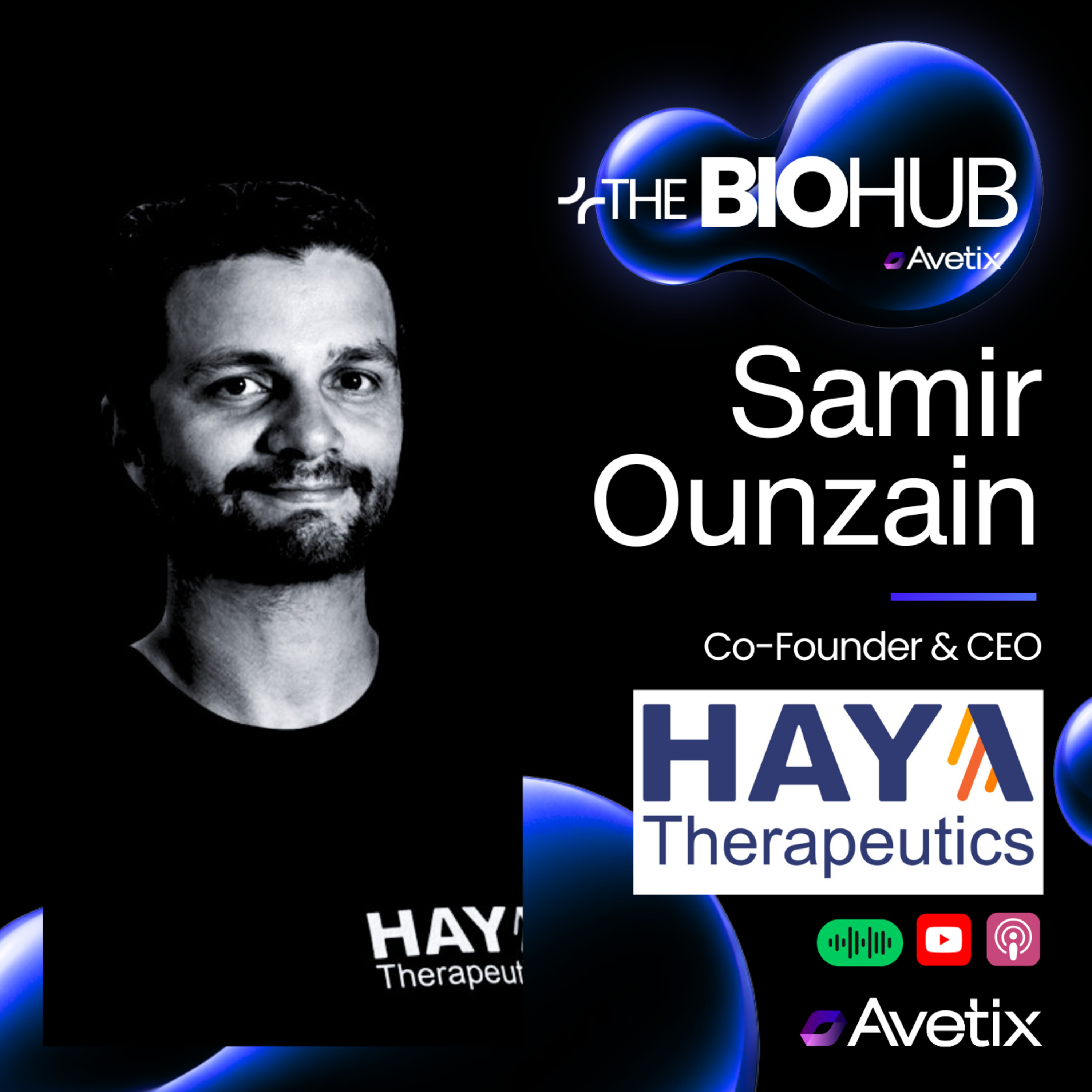
Before founding Haya, Samir Ounzain spent a year and a half consuming podcasts and online content about biotech entrepreneurship. This "crowdsourced mentorship" allowed him to learn from the mistakes of others and frame the company's culture and operating model from day one.
Top professionals receive countless requests for mentorship. A podcast is a strategic tool to manage this demand, allowing them to share knowledge and "give back" to the community at scale when individual time is limited. This is a primary driver beyond simple brand building.

Matias says storytelling is not just for fundraising. Founders must sell constantly to A-plus hires, pharma partners, and public-market analysts, and they need to transfer genuine excitement rather than merely polish slides. He calls it a critical, permanent founder skill because every stakeholder has other options.
The transition from academia to a startup can be viewed as an acceleration of the same mission. While academic grants are written about solving problems for millions, building a company offers a direct, focused, and "freeing" path to actually delivering a solution to those patients, who serve as the consistent "North Star" across both worlds.

Many technically brilliant founders in MedTech struggle because they focus on the scientific details of their innovation. To secure funding and adoption, they must master storytelling, clearly communicating the vision, value, and ultimate benefit for patients and providers in a way that is quickly understood.
