Get your free personalized podcast brief
We scan new podcasts and send you the top 5 insights daily.
A video's "packaging" (its title and thumbnail) is critical and should be developed before production begins. Creating multiple distinct concepts upfront ensures you have a strong, data-informed marketing angle before investing time and money into filming and editing.

Related Insights
The title makes a broad promise (e.g., 'How I motivate myself'). The thumbnail should add intrigue by hinting at the *how* with a named process (e.g., 'The CCC Method'). This makes viewers curious about the proprietary system they'll learn, compelling them to click to uncover the secret.

To create high-performing videos, don't invent from scratch. Find viral content in your niche and replicate its structural elements—the on-screen headline and the first few seconds of the spoken hook. Then, deliver your own unique insights within that proven format.
A common mistake is creating a video and then trying to package it. A more effective workflow is to reverse this process. Start by developing a clickable title and thumbnail concept, and only then script the content to perfectly deliver on the promise of that packaging.

Heike Young outlines a specific formula for high-performing LinkedIn videos. Success requires an integrated approach: a text title superimposed on the video, clear captions, a strong visual hook in the opening seconds, and a compelling hook in the accompanying text post to grab attention in the feed.

Once a YouTube channel is established, the biggest audience growth improvements often come from optimizing thumbnails, headlines, and scripted introductions—the content's "packaging." This is a higher-leverage activity for experienced creators than simply increasing production volume.

Initial hooks like thumbnails and opening lines are the entire battleground for capturing an audience. While the 'one-second economy' is hyperbole, we live in a '10-second economy' where the first few moments determine whether you earn a minute of someone's time or a year of their loyalty.

Dhar Mann believes a video idea isn't viable until a compelling title and thumbnail ("packaging") exist. He frames this not as 80% of success, but as the initial gatekeeper that requires the most effort. If the packaging fails to capture attention, the quality of the video content itself becomes irrelevant because no one will click.
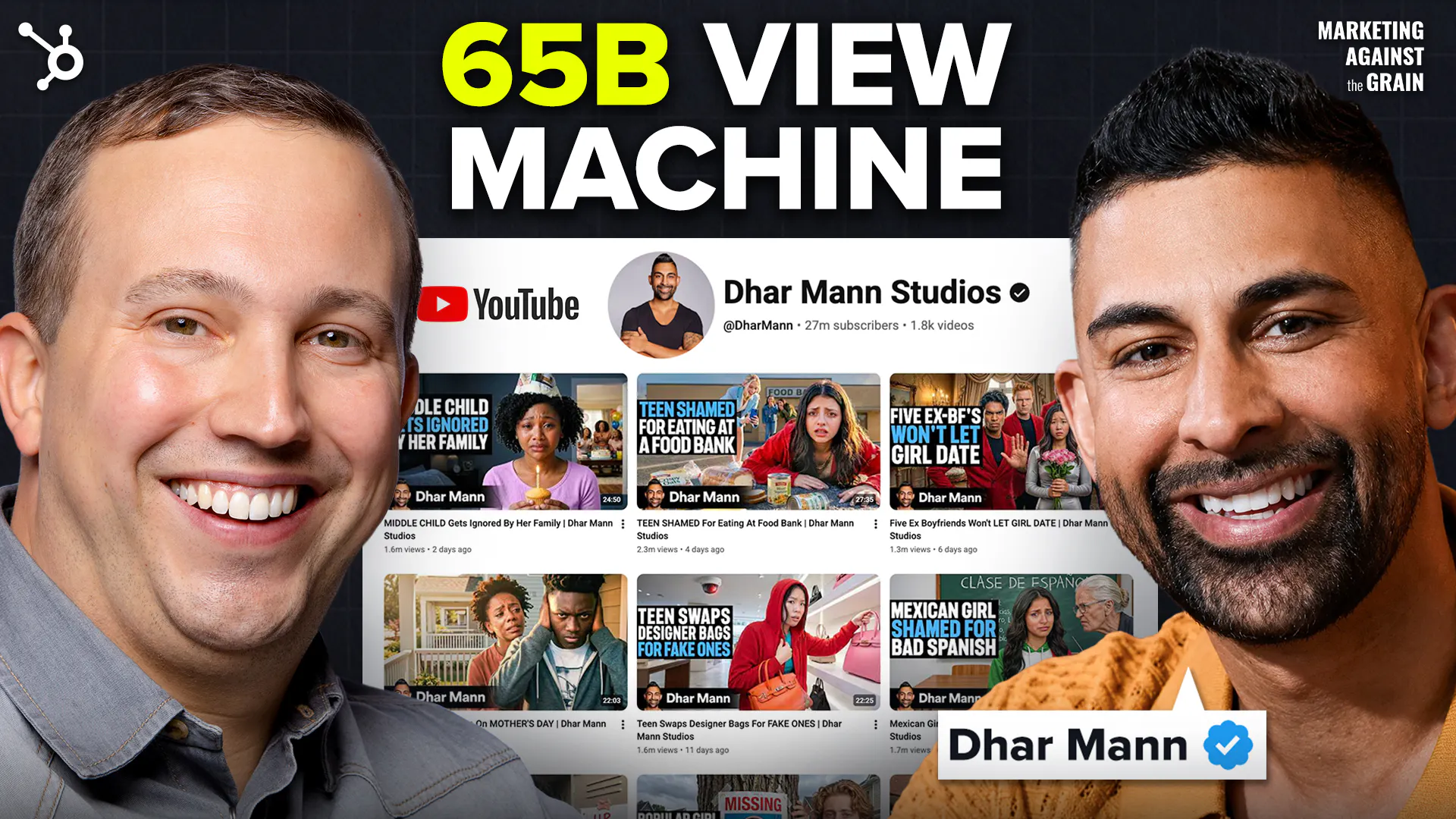
The thumbnail and title must work together as a package. Instead of restating the title's text, the thumbnail should add context, create a visual question, or generate an information gap. This makes the viewer curious to read the title and ultimately click the video.
Amateurs film a video and then struggle to package it. Professionals reverse this. They first craft a compelling promise (the title) and visual hook (the thumbnail concept). Then, they create content specifically designed to fulfill that promise, ensuring perfect alignment and a stronger final product.
Use a "treatment" document, borrowed from Hollywood scriptwriting, for every YouTube video. This pre-production sales page contains the title, thumbnail, and a pitch explaining *why* someone will want to watch, forcing strategic thinking before any filming begins.
