Get your free personalized podcast brief
We scan new podcasts and send you the top 5 insights daily.
Microsoft's integration of OpenAI into Bing was a chance to make Google "dance" and challenge its search dominance. However, they fumbled the execution, pulled back after early stumbles, and ultimately failed to capitalize, ceding the narrative back to Google and OpenAI.

Related Insights
Microsoft's lack of a frontier model isn't a sign of failure but a calculated strategic decision. With full access to OpenAI's models, they are choosing not to spend billions on redundant hyperscaling. Instead, they are playing a long game, conserving resources for a potential late surge, reflecting a more patient and strategically confident approach than competitors.

While OpenAI has strong brand recognition with ChatGPT, it's strategically vulnerable. Giants like Google and Microsoft can embed superior or equivalent AI into existing products with massive user bases and established monetization channels. OpenAI lacks these, making its long-term dominance questionable as technical differentiation erodes.

While OpenAI has a significant head start, its position is precarious. Swisher suggests it mirrors Netscape, which pioneered the web browser but was ultimately crushed by an incumbent (Microsoft). Google, with its vast data and resources, is better positioned to win the AI war in the long run.

Despite its market position, Microsoft Copilot has failed to capture user enthusiasm. This creates a strategic vulnerability. A competitor who delivers a superior natural language interface for productivity tasks could disrupt Microsoft's dominance, potentially reducing it to a "data center company."
OpenAI is now reacting to Google's advancements with Gemini 3, a complete reversal from three years ago. Google's strengths in infrastructure, proprietary chips, data, and financial stability are giving it a significant competitive edge, forcing OpenAI to delay initiatives and refocus on its core ChatGPT product.
Satya Nadella reveals that the initial billion-dollar investment in OpenAI was not an easy sell. He had to convince a skeptical board, including a hesitant Bill Gates, about the unconventional structure and uncertain outcome. This highlights that even visionary bets require navigating significant internal debate and political capital.

Despite its early dominance, OpenAI's internal "Code Red" in response to competitors like Google's Gemini and Anthropic demonstrates a critical business lesson. An early market lead is not a guarantee of long-term success, especially in a rapidly evolving field like artificial intelligence.

Microsoft's early OpenAI investment was a calculated, risk-adjusted decision. They saw that generalizable AI platforms were a 'must happen' future and asked, 'Can we remain a top cloud provider without it?' The clear 'no' made the investment a defensive necessity, not just an offensive gamble.
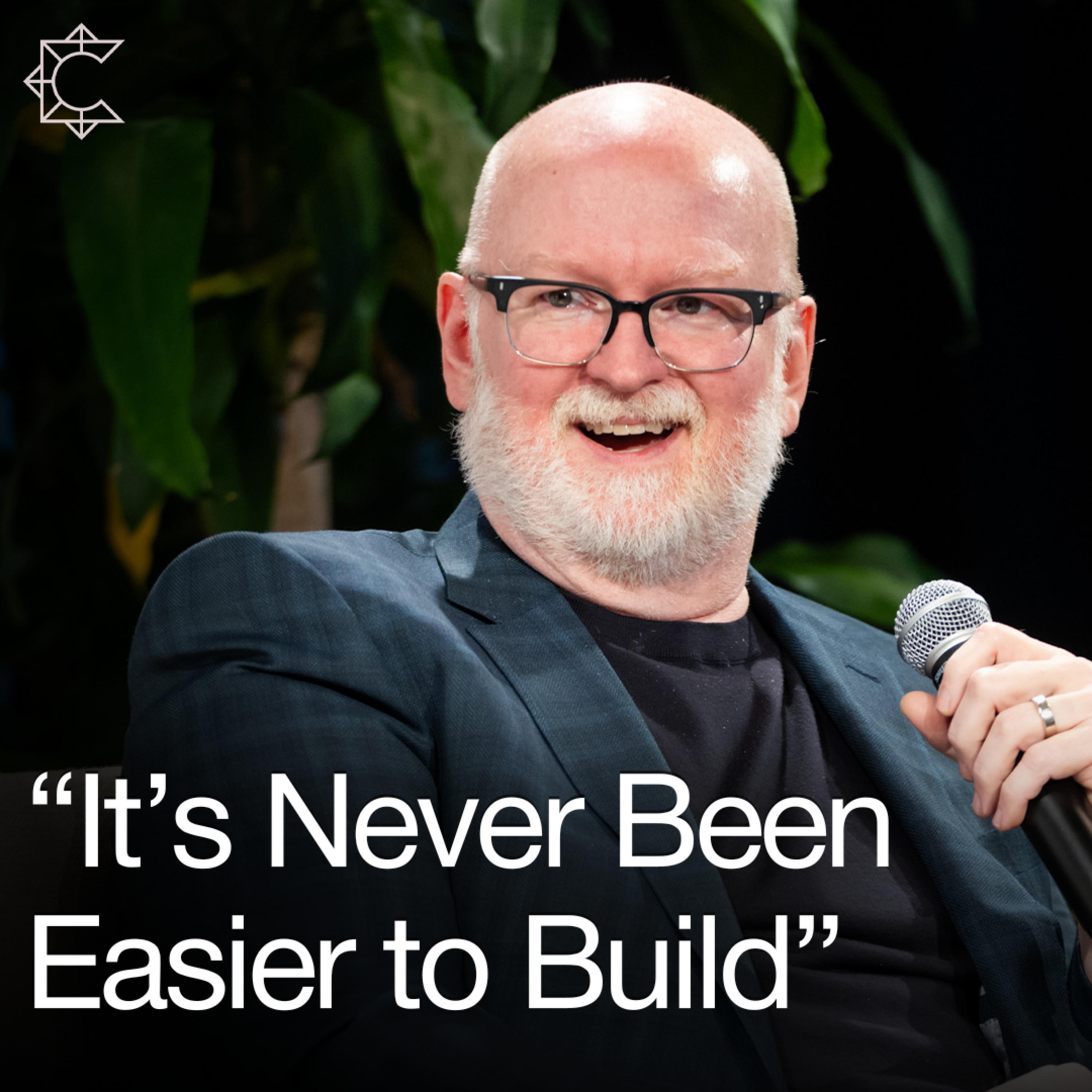
Satya Nadella reveals that the first $1 billion investment in OpenAI was considered a high-risk bet with a high probability of failure. Bill Gates himself told Nadella he expected him to "burn this billion dollars," underscoring the extreme risk tolerance required for the deal.

Despite massive spending and partnerships, Microsoft, Amazon, Apple, and Meta have failed to launch a defining, consumer-facing AI product. This surprising lack of execution challenges the assumption that incumbents would easily dominate the AI space, leaving the door open for native AI startups.