Get your free personalized podcast brief
We scan new podcasts and send you the top 5 insights daily.
Google's investment and AI partnership with artsy film studio A24 could be a strategic PR move. By aligning with a respected tastemaker, Google can improve AI's reputation among skeptical creative professionals, a practice the podcast dubs 'taste washing.'

Related Insights
High-profile data acquisitions by AI labs, like OpenAI's with the NYT, may be less about the data's intrinsic value and more about securing positive press. A $20 million deal can be a cheap price for incredible media coverage, effectively a bribe for favorable narratives.

Disney is pursuing a dual strategy: partnering exclusively with OpenAI for AI-generated content while simultaneously taking legal action against Google for copyright infringement. This indicates Disney is not just licensing IP, but actively choosing its AI partner to create a competitive moat and pressure rivals.

As AI democratizes the technical aspects of content creation, the ability to guide it with unique perspective, craft, and taste becomes the key differentiator. AI is a powerful tool for experts to scale their vision, but it cannot replace the vision itself.

As consumers become wary of "AI," the winning strategy is integrating advanced capabilities into existing products seamlessly, like Google is doing with Gemini. The "AI" branding used for fundraising and recruiting will fade from consumer-facing marketing, making the technology feel like a natural product evolution.

By tackling a philosophically charged topic like "taste," Taste Labs generated massive online debate and over a million views. The controversy acts as a powerful lead-generation engine, attracting AI labs and hyperscalers who face the very real problem of improving their models' aesthetic outputs.

Netflix's acquisition of Interpositive, an AI startup, focuses on automating post-production tasks like lighting and reframing, not generating new scenes. This massive deal proves the most valuable and accepted use of AI in entertainment is as a high-end efficiency and cost-cutting tool that keeps creative control with humans.

Initially dismissing AI for creative tasks, media companies now recognize its inevitability. The key to adoption is framing AI's value around revenue generation (making more money), which is a far more compelling business case than simply cost-saving (e.g., reducing producer headcount).

OpenAI's acquisition of a podcast network was likely an acqui-hire for its talent in creating positive storytelling, not for its content. This move addresses a key weakness: OpenAI's poor public perception. The goal is to apply the network's "immaculate vibes" playbook to improve the company's overall brand image.

Products like video generator Flow and research tool NotebookLM are not built in a vacuum. Google Labs actively seeks input from creatives like filmmakers and authors to shape experimental AI tools, ensuring they solve real-world problems for non-technical users from the start.
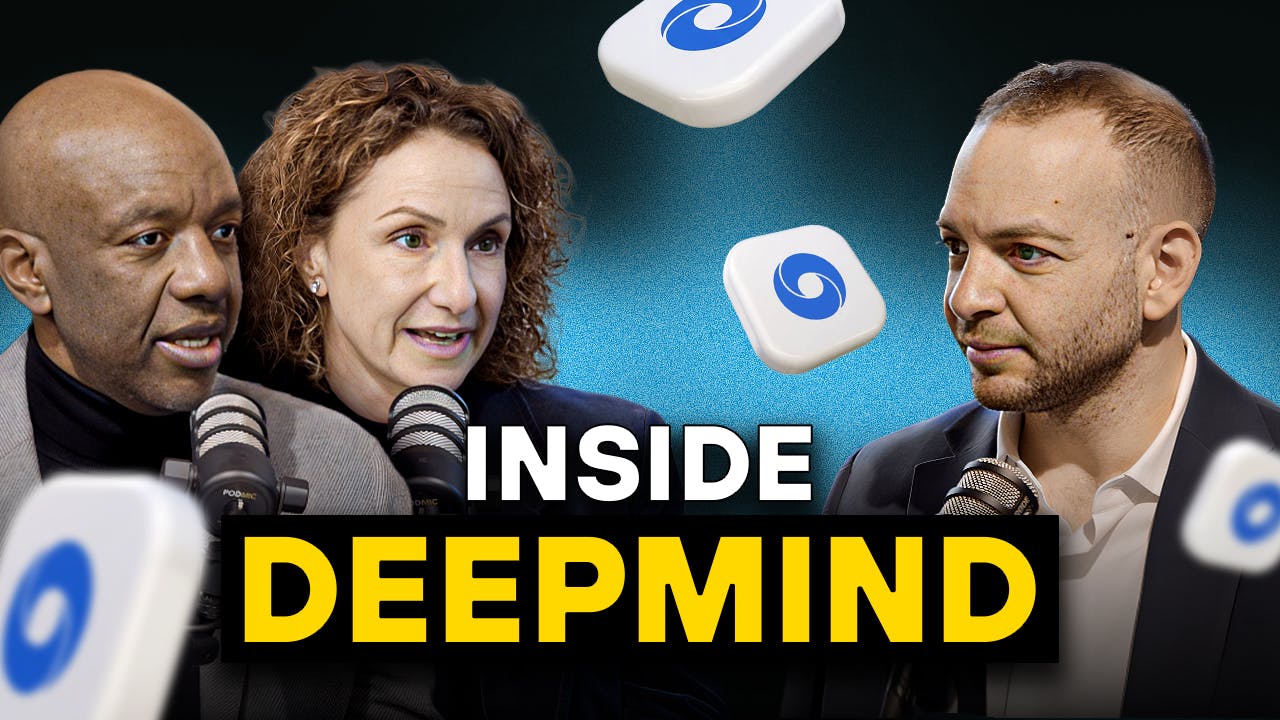
Public concern over AI in film often overlooks its long-standing use as a production tool. For years, machine learning pipelines have been used to enhance CGI character performances, like Thanos in 'Avengers'. This suggests audiences accept AI when it's an 'invisible' tool for enhancing quality, rather than a replacement for creative direction.