Get your free personalized podcast brief
We scan new podcasts and send you the top 5 insights daily.
As consumers become wary of "AI," the winning strategy is integrating advanced capabilities into existing products seamlessly, like Google is doing with Gemini. The "AI" branding used for fundraising and recruiting will fade from consumer-facing marketing, making the technology feel like a natural product evolution.

Related Insights
Don't view AI as just a feature set. Instead, treat "intelligence" as a fundamental new building block for software, on par with established primitives like databases or APIs. When conceptualizing any new product, assume this intelligence layer is a non-negotiable part of the technology stack to solve user problems effectively.
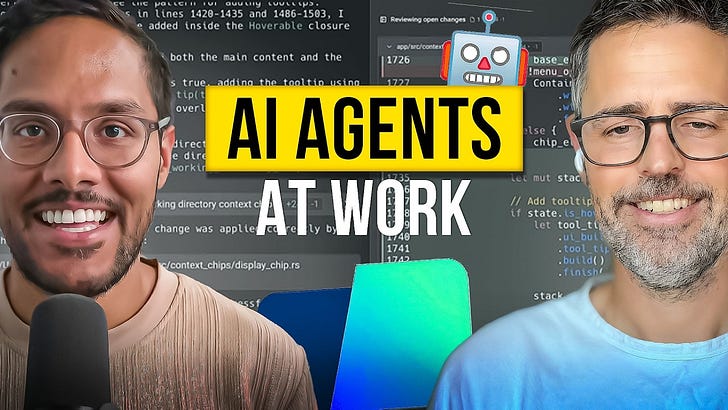
Don't feel pressured to label every AI-powered enhancement as an "AI feature." For example, using AI to generate CSS for a new dark mode is simply a better way to build. The focus should be on the user benefit (dark mode), not the underlying technology, making AI an invisible, powerful tool.

Don't just sprinkle AI features onto your existing product ('AI at the edge'). Transformative companies rethink workflows and shrink their old codebase, making the LLM a core part of the solution. This is about re-architecting the solution from the ground up, not just enhancing it.

Previous technology shifts like mobile or client-server were often pushed by technologists onto a hesitant market. In contrast, the current AI trend is being pulled by customers who are actively demanding AI features in their products, creating unprecedented pressure on companies to integrate them quickly.

Google's strategy of integrating its AI, Gemini, directly into its widely-used Chrome browser gives it a massive distribution advantage over standalone tools like ChatGPT. By making AI a seamless part of the user's existing workflow, Google can make its tool the default choice, which marketers must optimize for.

Contrary to popular narrative, Google's AI products have likely surpassed OpenAI in monthly users. By bundling AI into its existing ecosystem (2B users for AI Overviews, 650M for the Gemini app), Google leverages its massive distribution to win consumer adoption, even if user intent is less direct than visiting ChatGPT.

SMB owners are not asking for technologies like AI by name. They are asking for outcomes and efficiency. B2B marketers should position advanced features not as 'AI' or 'video tools,' but as embedded, invisible solutions that make a marketing hour more impactful. The goal is to provide tools that a business owner can naturally use to get a return, without needing to become a technology expert.
Unlike mobile or internet shifts that created openings for startups, AI is an "accelerating technology." Large companies can integrate it quickly, closing the competitive window for new entrants much faster than in previous platform shifts. The moat is no longer product execution but customer insight.

The killer feature for AI assistants isn't just answering abstract queries, but deeply integrating with user data. The ability for Gemini to analyze your unread emails to identify patterns and suggest improvements provides immediate, tangible value, showcasing the advantage of AI embedded in existing productivity ecosystems.
To get mainstream users to adopt AI, you can't ask them to learn a new workflow. The key is to integrate AI capabilities directly into the tools and processes they already use. AI should augment their current job, not feel like a separate, new task they have to perform.
