Get your free personalized podcast brief
We scan new podcasts and send you the top 5 insights daily.
When creating a fundamentally new product like Cerebras's wafer-scale chip, supporting vendors don't exist. This forces you to own the full stack, from chip to software. The expertise gained by building this ecosystem yourself becomes a powerful, hard-earned competitive advantage.

Related Insights
The founders initially feared their data collection hardware would be easily copied. However, they discovered the true challenge and defensible moat lay in scaling the full-stack system—integrating hardware iterations, data pipelines, and training loops. The unexpected difficulty of this process created a powerful competitive advantage.

Tesla's most profound competitive advantage is not its products but its mastery of manufacturing processes. By designing and building its own production line machinery, the company achieves efficiencies and innovation cycles that competitors relying on third-party equipment cannot match. This philosophy creates a deeply defensible moat.

Beyond its CUDA software, NVIDIA's most powerful competitive advantage is its ability to use its massive balance sheet to secure the entire component supply chain. By locking up supply for TSMC wafers, HBM memory, and optical parts, it effectively starves competitors of critical resources.

New chip fab ventures face immense hurdles because fabrication is less like following a manual and more like mastering a recipe through decades of trial and error. This accumulated, non-transferable knowledge, likened to "cooking," creates a significant moat for incumbents like TSMC.

As software becomes commoditized by AI and bot coding, the most durable competitive advantage will shift to companies that can master complex, real-world manufacturing and build tangible hardware.

Simply using AI provides no competitive advantage, as it's a widely available tool. A true, defensible moat is created by combining AI's capabilities with your unique domain expertise, proprietary processes, and established relationships. AI should augment your existing strengths, not replace them.

The defensibility of complex hard tech companies doesn't rely on a single patent or technology. Instead, their moat is "novel in the aggregate"—the difficult-to-replicate integration of dozens of complex systems across design, manufacturing, supply chain, and regulation. This holistic execution is the true barrier to entry.
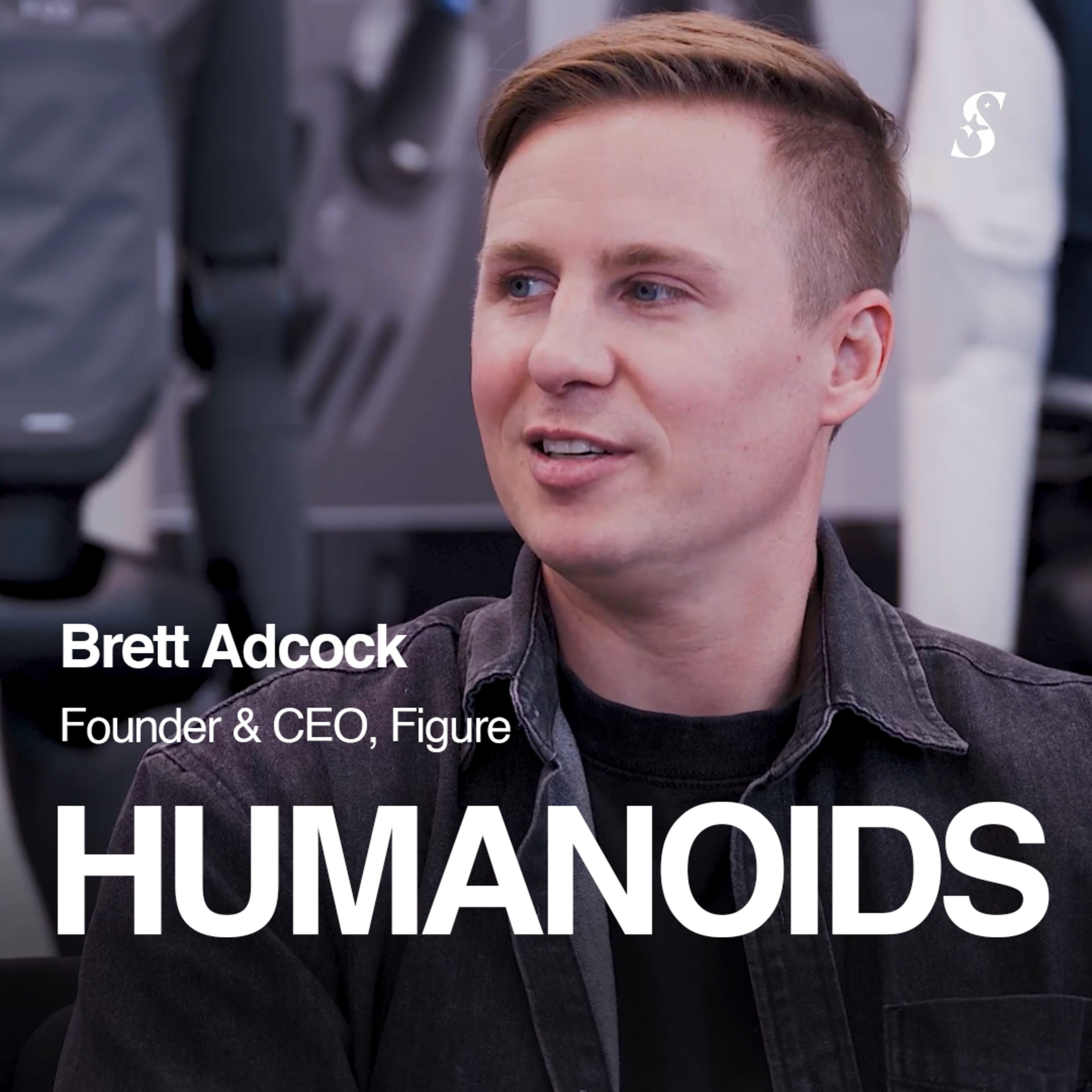
Figure designs nearly every component of its robots in-house, from motors to batteries. This extreme vertical integration, though costly upfront, prevents being at the mercy of third-party vendor timelines, code problems, or supply chain issues, enabling faster iteration and deeper system control.
Drawing from Verkada's decision to build its own hardware, the strategy is to intentionally tackle difficult, foundational challenges early on. While this requires more upfront investment and delays initial traction, it creates an immense competitive barrier that latecomers will struggle to overcome.

Etched builds its own chips, boards, cold plates, interconnects, and even its own racks. This full-stack ownership allows for extreme parallelization and iteration speed, a key advantage over startups that rely on a fragmented supply chain and multiple vendors.
![Etched - Building AI Hardware to Make Inference Faster and Cheaper - [Invest Like the Best, EP.480] thumbnail](https://megaphone.imgix.net/podcasts/532910c4-743d-11f1-b7dc-b31915c88b79/image/810c9e3a23b5c4ea0a56e5e4cc8d7e47.jpg?ixlib=rails-4.3.1&max-w=3000&max-h=3000&fit=crop&auto=format,compress)