Get your free personalized podcast brief
We scan new podcasts and send you the top 5 insights daily.
When approached by large labs for licensing deals, GI's founder advises against simply selling the data. He argues the only way to accurately value a unique dataset is to model it yourself to understand its true capabilities. Without this, founders risk massively undervaluing their core asset, as its potential is unknown.

Related Insights
The notion of building a business as a 'thin wrapper' around a foundational model like GPT is flawed. Truly defensible AI products, like Cursor, build numerous specific, fine-tuned models to deeply understand a user's domain. This creates a data and performance moat that a generic model cannot easily replicate, much like Salesforce was more than just a 'thin wrapper' on a database.

Instead of building AI models, a company can create immense value by being 'AI adjacent'. The strategy is to focus on enabling good AI by solving the foundational 'garbage in, garbage out' problem. Providing high-quality, complete, and well-understood data is a critical and defensible niche in the AI value chain.

Instead of simply adding AI features, treat your AI as the product's most important user. Your unique data, content, and existing functionalities are "superpowers" that differentiate your AI from generic models, creating a durable competitive advantage. This leverages proprietary assets.

Enterprises struggle to get value from AI due to a lack of iterative, data-science expertise. The winning model for AI companies isn't just selling APIs, but embedding "forward deployment" teams of engineers and scientists to co-create solutions, closing the gap between prototype and production value.

The future of valuable AI lies not in models trained on the abundant public internet, but in those built on scarce, proprietary data. For fields like robotics and biology, this data doesn't exist to be scraped; it must be actively created, making the data generation process itself the key competitive moat.

The true enterprise value of AI lies not in consuming third-party models, but in building internal capabilities to diffuse intelligence throughout the organization. This means creating proprietary "AI factories" rather than just using external tools and admiring others' success.
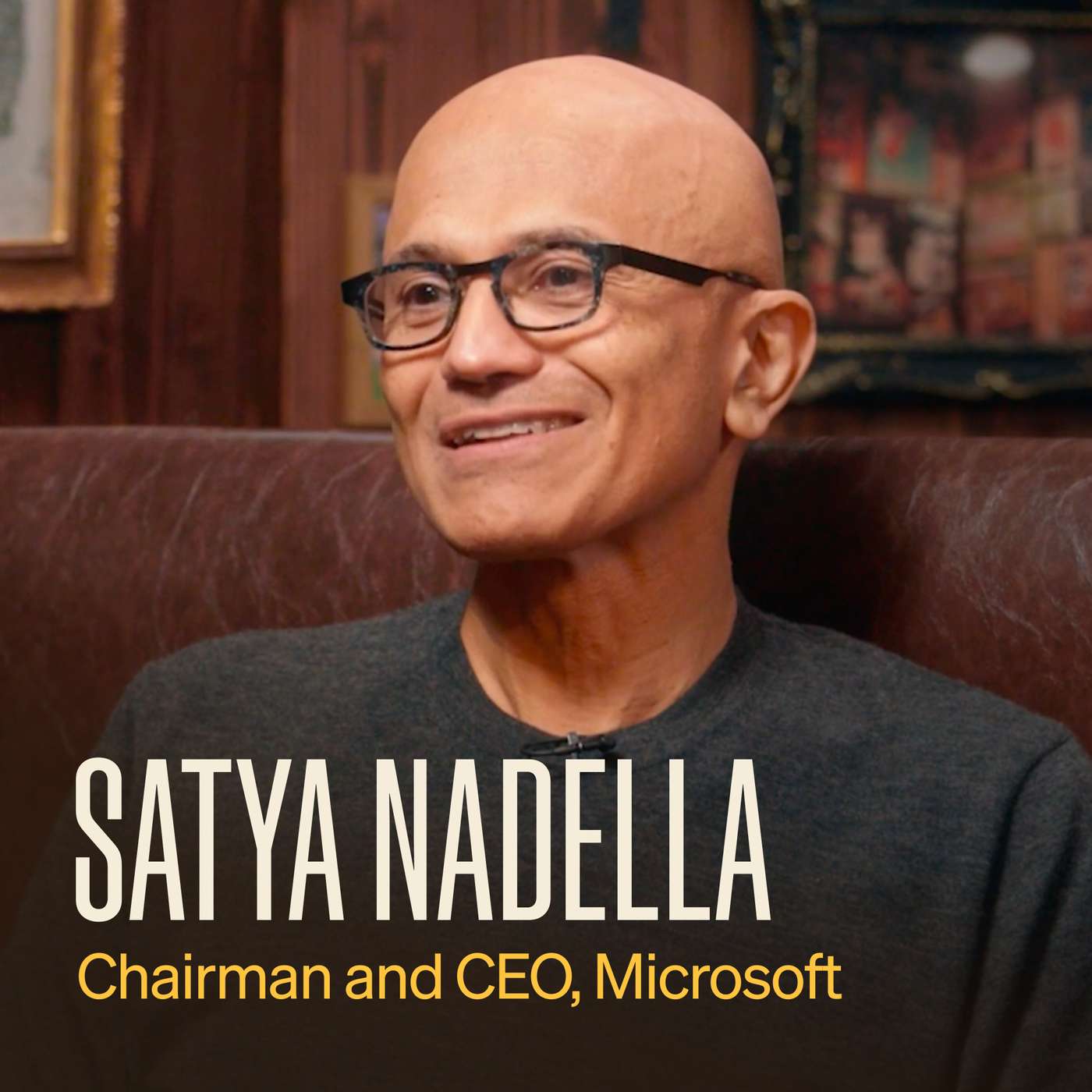
The enduring moat in the AI stack lies in what is hardest to replicate. Since building foundation models is significantly more difficult than building applications on top of them, the model layer is inherently more defensible and will naturally capture more value over time.
If a company and its competitor both ask a generic LLM for strategy, they'll get the same answer, erasing any edge. The only way to generate unique, defensible strategies is by building evolving models trained on a company's own private data.

Companies are becoming wary of feeding their unique data and customer queries into third-party LLMs like ChatGPT. The fear is that this trains a potential future competitor. The trend will shift towards running private, open-source models on their own cloud instances to maintain a competitive moat and ensure data privacy.

The concept of "sovereignty" is evolving from data location to model ownership. A company's ultimate competitive moat will be its proprietary foundation model, which embeds tacit knowledge and institutional memory, making the firm more efficient than the open market.