Get your free personalized podcast brief
We scan new podcasts and send you the top 5 insights daily.
To serve Notion on AWS while its core infra was on GCP, Turbopuffer bought dark fiber to reduce cross-cloud latency. This extreme measure was preferable to compromising their core architectural principle of avoiding a stateful consensus layer, showcasing deep product conviction.
Related Insights
Turbopuffer's design avoids a complex consensus layer (like Zookeeper) by relying on two recent cloud primitive upgrades: S3's strong consistency (post-2020) and a compare-and-swap feature for metadata updates. This creates a simpler, more robust, and stateless system.
TurboPuffer achieved its massive cost savings by building on slow S3 storage. While this increased write latency by 1000x—unacceptable for transactional systems—it was a perfectly acceptable trade-off for search and AI workloads, which prioritize fast reads over fast writes.

Despite intense competition, Amazon's core principle of being 'customer obsessed' means AWS would likely provide Google's TPU chips if key customers demand them. This prioritizes customer retention over platform exclusivity in the AI chip wars.
Akamai leverages its historic strength in edge networking for its compute offering. By allowing customers to build and deliver applications at the edge, closer to users, they can significantly reduce expensive egress fees typically charged by traditional hyperscale cloud providers. This cost-saving angle is a key competitive differentiator.

The high-speed link between AWS and GCP shows companies now prioritize access to the best AI models, regardless of provider. This forces even fierce rivals to partner, as customers build hybrid infrastructures to leverage unique AI capabilities from platforms like Google and OpenAI on Azure.
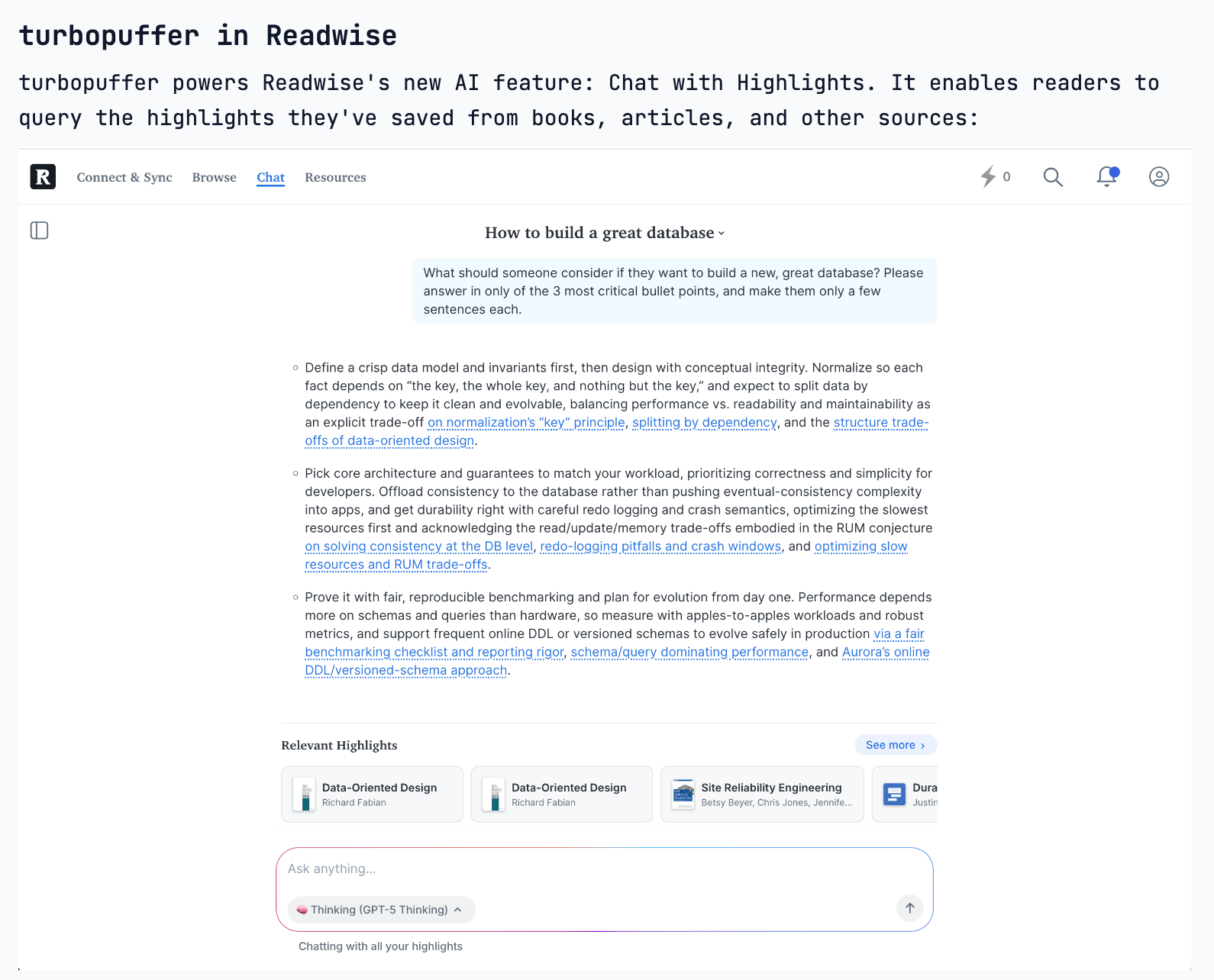
The idea for Turbopuffer originated when its founder calculated that adding an embedding-based feature to Readwise would cost $30k/month, a 6x increase in their total infra bill. This single data point revealed a clear market need for a drastically cheaper vector search solution.
While the market rushed to pure-cloud solutions, Egnyte offered a hybrid model. This wasn't a compromise but a strategic advantage for enterprises where physics, like network latency on a construction site, made pure-cloud impractical. The control plane remained in the cloud, while the data plane could be local.

AWS CEO Matt Garman's emphasis on "customer choice," combined with Jeff Bezos's philosophy of being customer-obsessed rather than competitor-obsessed, suggests AWS might offer Google's TPUs in their data centers if customers demand them, despite the direct competition.

MongoDB's CEO highlights a key shift in enterprise priorities. Driven by recent major cloud outages, customers are now more concerned with the high cost of data resiliency (multi-region/multi-cloud setups) than raw storage costs. This makes multi-cloud capabilities a critical competitive differentiator for data platforms.

Early on, the founder ran Turbopuffer's cloud infrastructure on his personal credit card. When a large customer's usage bill skyrocketed, the immense financial pressure forced the team to optimize relentlessly, leading them to become profitable out of necessity rather than strategy.