Get your free personalized podcast brief
We scan new podcasts and send you the top 5 insights daily.
An agent may 'remember' an account is active, but the database could show it was suspended minutes ago. System architecture must distinguish between what the model believes and what the system knows to be true from its authoritative data sources, preventing actions based on stale information.

Related Insights
Effective agent memory is not merely a storage layer. It's an encapsulated system for learning and adaptation that integrates embedding models, re-rankers, databases, and LLMs, all working in concert to hold, move, and store data.

Retrieval-Augmented Generation (RAG) is just one component of agent memory. A robust system must also handle dynamic operations like updating information, consolidating knowledge, resolving conflicts, and strategically forgetting obsolete data.
AI agent memory is an emerging attack surface. To build trustworthy systems, memory must enforce a strict, auditable separation between "measured" data (recomputable facts from raw input) and "inferred" data (LLM-generated interpretations). This ensures a ground truth of pure fact remains, defending against memory poisoning attacks.
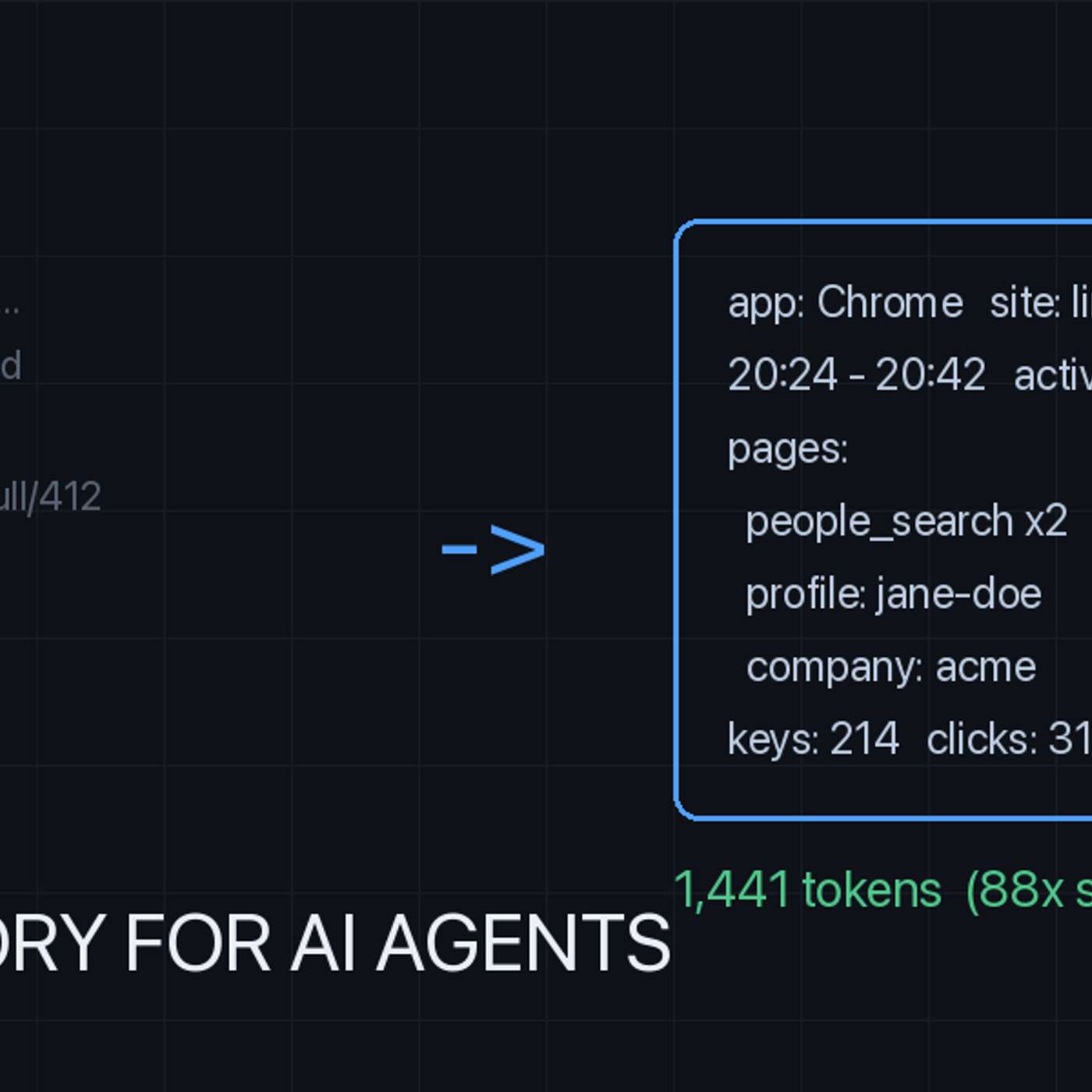
Long-running AI agents don't fail because the model is unintelligent. They fail because default memory management, like unmonitored append-only context windows, corrupts their state. This is a software engineering problem that requires an architectural solution, not better prompting or model tuning.

While writing, changing, and recalling information are relatively solved problems in agent memory, the process of "forgetting" is the hardest part. Effectively managing the half-life of data and pruning irrelevant information is a critical, unsolved challenge for maintaining accurate long-term agent memory.

A shared AI knowledge base risks becoming polluted with outdated or contradictory information. A 'gardening agent' solves this by automatically identifying context that is wrong, conflicting, or aged out (e.g., noting an employee has left), ensuring system reliability.

In multi-tier AI memory, designate raw conversation logs as the durable source of truth. All other forms—summaries, facts, embeddings—should be treated as recomputable projections. This design allows for recovery from data loss and adaptation to new extraction strategies.
Large Language Models are inherently stateless. Creating conversational memory is not about finding a smarter model, but about engineering a robust backend infrastructure. The true intelligence of a multi-turn AI assistant resides in this system's ability to manage state, not the model itself.
AI coding agents make mistakes because they rely on their temporary context window, which is like a faulty short-term memory. The solution is to force them to externalize information—writing down criteria, results, and decisions to create a persistent, reliable state.
The Claude Code leak revealed a principle called "strict write discipline." This architectural pattern mandates that an agent only records an action to its memory after verifying with the external environment (e.g., file system, API) that the action was successfully completed, thus preventing state drift and hallucination.