Get your free personalized podcast brief
We scan new podcasts and send you the top 5 insights daily.
To fix inconsistent performance assessments, Ocado's Product Ops built a standardized skills framework. The framework's success was so evident that engineering, UX, and data teams voluntarily adopted and adapted it, creating a unified approach to career development across a 3,000-person tech organization.

Related Insights
In large companies, promotions often depend on a manager's advocacy skills. Implementing a consistent skills matrix creates a common language for evaluation, making the promotion process more transparent and fair by removing subjectivity and leveling the playing field for all employees, regardless of who their manager is.
To maintain its culture across 5,000+ employees, Canva identified 12 skills embodying success. These are codified and woven into every part of the employee lifecycle, from onboarding to performance reviews, ensuring consistent cultural alignment as the company grows.

To make AI adoption tangible, Zapier built rubrics defining "AI fluency" for different roles and seniority levels. By making these skills a measurable part of performance reviews and rewards, you create clear incentives for employees to invest their time in developing them, as behavior follows what gets measured.
Distinguish between candidates with 20 years of evolving experience versus those with one year of experience repeated 20 times. True expertise comes from continuous learning and development, not just tenure. This framework helps identify stagnant performers who may appear qualified on paper.

To upskill a product team in AI, avoid creating a separate, intimidating new skill category. Instead, frame AI as a tool to augment existing competencies like execution (writing user stories), customer insight (synthesizing research), and strategy (brainstorming).

To shift its culture from just shipping features to delivering value, Ocado's Product Ops team embedded "Product Adoption" as a core competency in its skills framework. This move explicitly redefined the PM role, making it clear their responsibility extends beyond delivery to ensuring customers actually use and benefit from new features.
A product team's effectiveness is not just about skills (competencies). It's equally dependent on the right behaviors (mindsets) and the supportive environment, culture, and leadership backing (resources). A full assessment must cover all three areas.
To accelerate company-wide skill development, Shopify's CEO mandated that learning and utilizing AI become a formal component of employee performance evaluations. This top-down directive ensured rapid, broad adoption and transformed the company's culture to be 'AI forward,' giving them a competitive edge.

To transform a product organization, first provide universal access to AI tools. Second, support teams with training and 'builder days' led by internal champions. Finally, embed AI proficiency into career ladders to create lasting incentives and institutionalize the change.
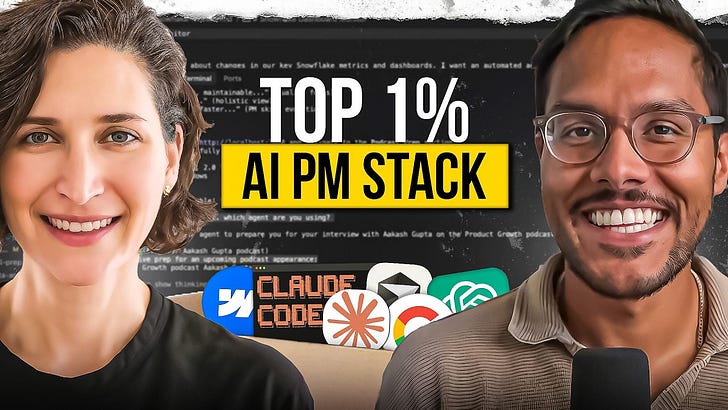
The creator of Claude Code prioritizes hiring generalists who possess skills beyond coding, such as product sense and a desire to talk to users. This 'full-stack' approach, where even PMs and data scientists code, fosters a more effective and versatile team.