Get your free personalized podcast brief
We scan new podcasts and send you the top 5 insights daily.
Fully legged bipedal humanoids consume significant energy, fall over easily, and lack certified upright stability guarantees in active production. Using a wheeled base paired with an articulated humanoid upper body retains manipulation dexterity while minimizing mechanical failure risks.

Related Insights
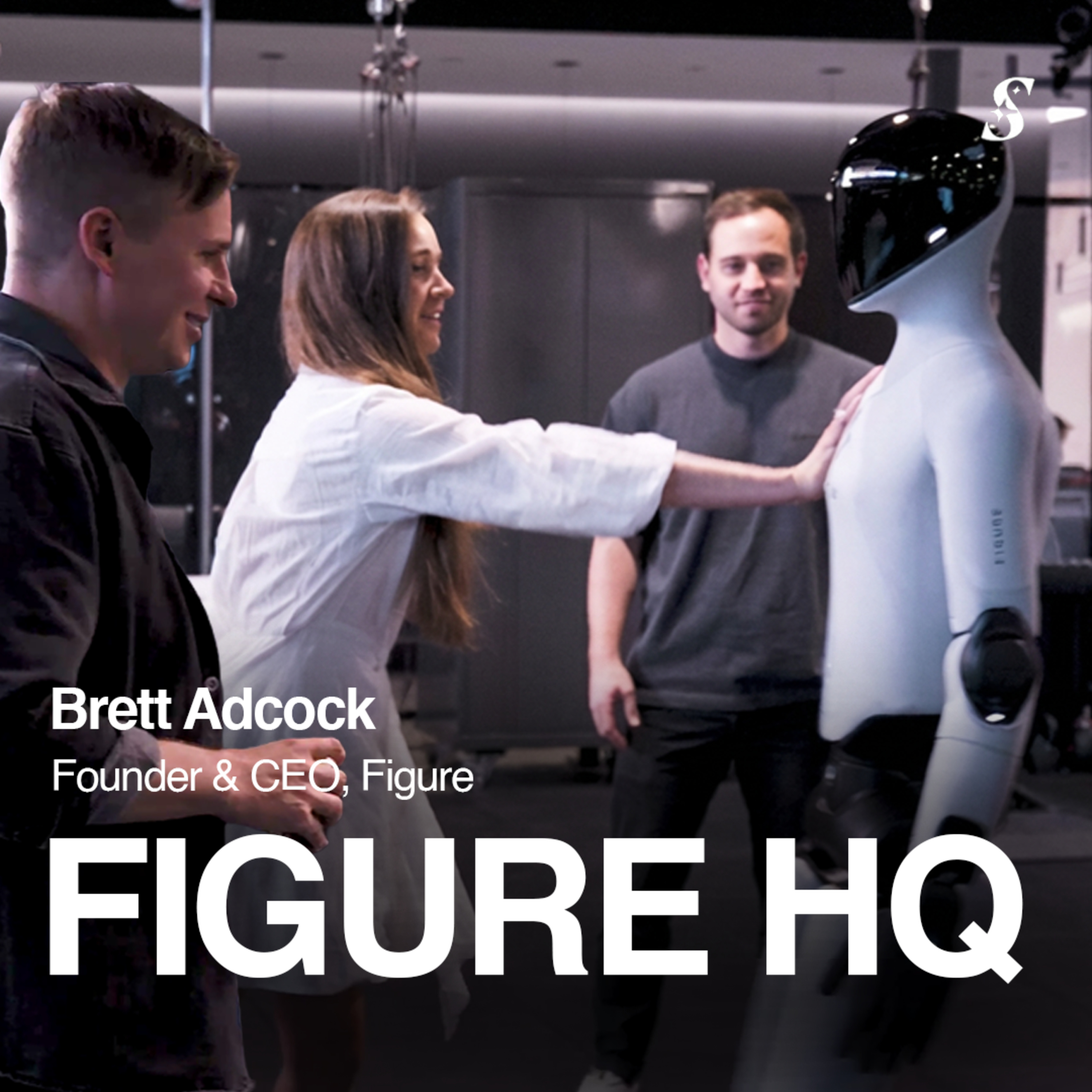
Brett Adcock argues that designing humanoid robots for extreme feats like backflips creates expensive, heavy, and unsafe machines. The optimal design targets the "fat part of the distribution" of human tasks—laundry, dishes, companionship—to build a practical, general-purpose robot for the mass market.

Despite impressive demos, an insider at Gecko Robotics found that even the best general-purpose mobile robots (like Boston Dynamics' Spot) provide very little practical ROI in industrial settings. The complexity and effort to deploy them currently outweighs the value of the data or tasks they perform.

The humanoid form factor presents significant safety hazards in a home, such as a heavy robot becoming a “ballistic missile” if it falls down stairs. Simpler, specialized, low-mass designs are far more cost-effective and safer for domestic environments.

A critical inflection point for deploying humanoid robots at scale is enabling them to work safely alongside humans without physical barriers. Agility Robotics' Digit v5 is designed from the ground up to meet this requirement, a complex engineering feat that is essential for real-world applications in warehouses and factories.

The adoption of humanoid robots will mirror that of autonomous vehicles: focus on achievable, single-task applications first. Instead of a complex, general-purpose home robot, the market will first embrace robots trained for specific, repeatable industrial tasks like warehouse logistics or shelf stocking.

Unlike fixed industrial robots, a simple emergency power-off is unsafe for humanoids. They require constant energy to balance, so an emergency stop would cause them to fall over, creating a new and unpredictable hazard. This fundamental difference requires an entirely new set of safety protocols for the industry.

The true economic advantage of a humanoid robot is not outperforming specialized automation at a single, repetitive task. Instead, its value lies in its versatility—the ability to perform a wide range of tasks in environments designed for humans, justifying its form factor for multi-purpose workflows rather than hyper-optimized ones.
The main risk to humanoid robotics adoption isn't a lack of impressive capabilities, but the failure to achieve near-perfect reliability. Unlike an LLM where a human can simply re-prompt, a robot's value is in its autonomy. Bridging the gap from 95% to 100% reliability for autonomous tasks is the critical, unsolved challenge.

Generalist CEO Pete Florence argues that dexterity—the ability for a robot to use its "hands" for complex manipulation—is the real holy grail of robotics. Solving challenges like wire harnessing, which is impossible for programmed robots, unlocks far more commercial value than simply creating humanoids that can walk.

To prevent catastrophic failures, Figure's 'Vulcan' project trains its AI to handle hardware failures gracefully. If a robot loses power to a knee joint, it automatically locks the joint and begins hobbling on the remaining leg, allowing it to move to safety or await replacement without falling.