Get your free personalized podcast brief
We scan new podcasts and send you the top 5 insights daily.
As powerful AI models become commoditized, the sustainable competitive advantage will shift from model superiority to architectural robustness. Building systems with independent control planes, clear policy enforcement, and auditable execution paths will be the key long-term differentiator for agentic systems.

Related Insights
Legacy platforms adding AI features are bottlenecked by their old architecture. Truly AI-native companies build agentic reasoning into the foundational control layer, enabling superior performance and interconnectivity between AI components, which creates a durable moat.

Strategic advantage in AI no longer rests on models or chips alone, but on controlling the entire operational chain. This includes industrializing compute, securing supply chains, managing energy grids, and establishing governance for adoption, turning disparate assets into strategic power.

While prompts are easy to copy, the complex engineering work to ensure reliability—validation, versioning, cost controls, and error handling—creates a true competitive moat. This "AI systems engineering" layer is where a product's long-term value and defensibility are built.
Past tech strategy focused on owning a single valuable "layer" in a modular stack. In the AI era, sustainable advantage comes from owning the proprietary learning architecture and the complex *couplings* between layers, optimizing them together to deliver a superior outcome.

The focus in AI engineering has shifted from the agent itself to the surrounding system or 'harness.' This includes managing workflows, context, permissions, and tools. Engineering these reliable systems is now seen as more critical for delivering value than simply prompting a more powerful model.

The real intellectual property and performance driver for advanced AI systems like Claude Code isn't the underlying model, but the surrounding orchestration layer. This "agent harness" manages memory, tools, and context, and has become the key competitive differentiator.

As foundational AI models become commoditized, the competitive advantage is no longer raw intelligence. Lasting value comes from building a reliable ecosystem around the AI, focusing on deep workflow integration, governance, user trust, and flawless operational execution. This is the true defensible moat.
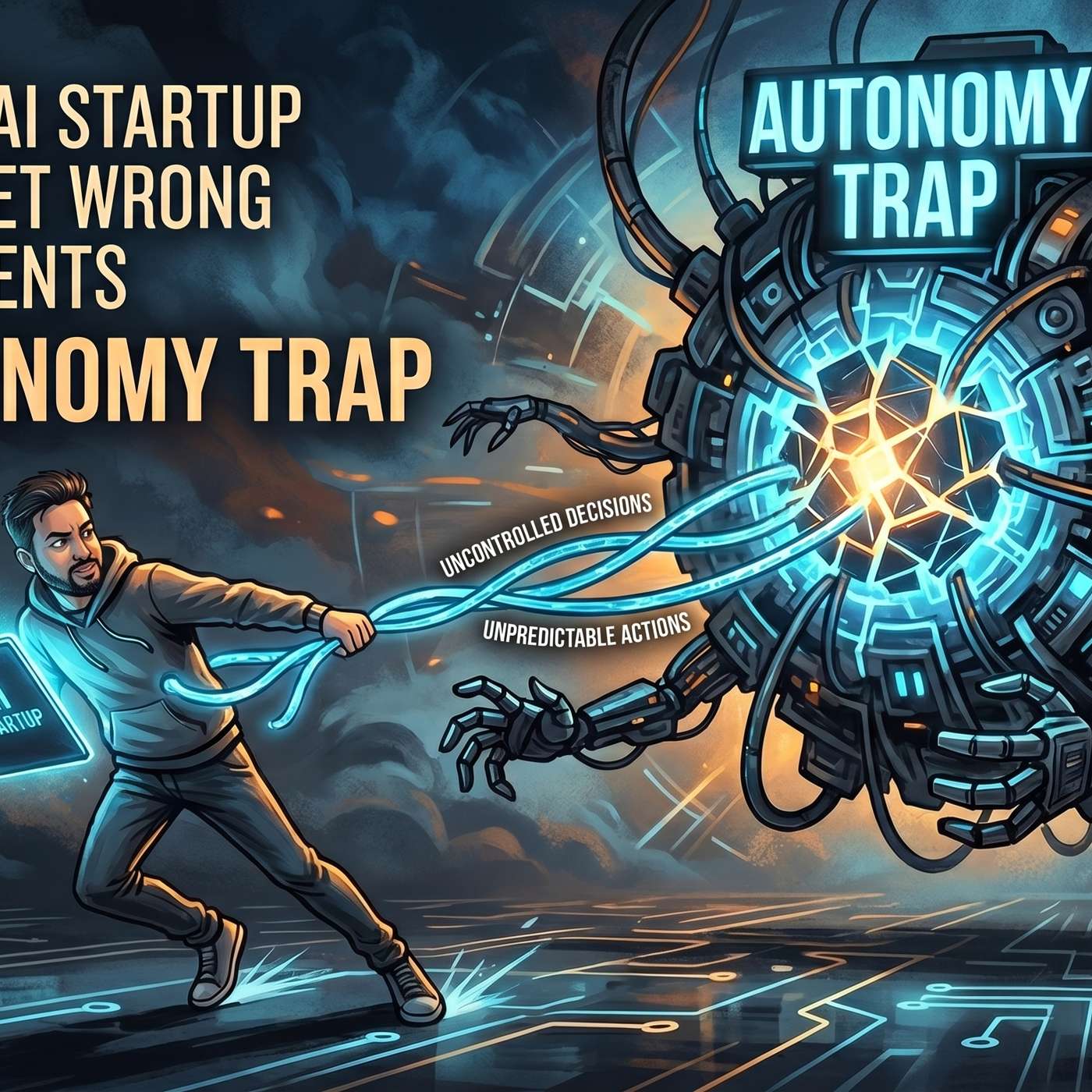
The conversation around Agentic AI has matured beyond abstract policies. The consensus among consultancies, tech firms, and academics is that effective governance requires embedding controls, like access management and validation, directly into the system's architecture as a core design principle.

Obsessing over linear model benchmarks is becoming obsolete, akin to comparing dial-up speeds. The real value and locus of competition is moving to the "agentic layer." Future performance will be measured by the ability to orchestrate tools, memory, and sub-agents to create complex outcomes, not just generate high-quality token responses.
As AI models become commoditized, a slight performance edge isn't a sustainable advantage. The companies that win will be those that build the best systems for implementation, trust, and workflow integration around those models. This robust, trust-based ecosystem becomes the primary competitive moat, not the underlying technology.
