Get your free personalized podcast brief
We scan new podcasts and send you the top 5 insights daily.
As foundational AI models become commoditized, the competitive advantage is no longer raw intelligence. Lasting value comes from building a reliable ecosystem around the AI, focusing on deep workflow integration, governance, user trust, and flawless operational execution. This is the true defensible moat.
Related Insights
With AI commoditizing technology, the sustainable advantage for startups is the speed and discipline of their experimentation. Founders who leverage AI to operate 10x faster will outcompete those with static tech advantages, as execution velocity is far harder to replicate than a feature.

The most defensible AI companies don't just have superior models; they embed themselves deeply into customer workflows. The primary barrier to adoption is change management, so overcoming that hurdle creates a durable competitive advantage that is difficult to displace.

With AI commoditizing the tech stack, traditional technical moats are disappearing. The only sustainable differentiator at the application layer is having a unique insight into a problem and assembling a team that can out-iterate everyone else. Your long-term defensibility becomes customer love built through relentless execution.
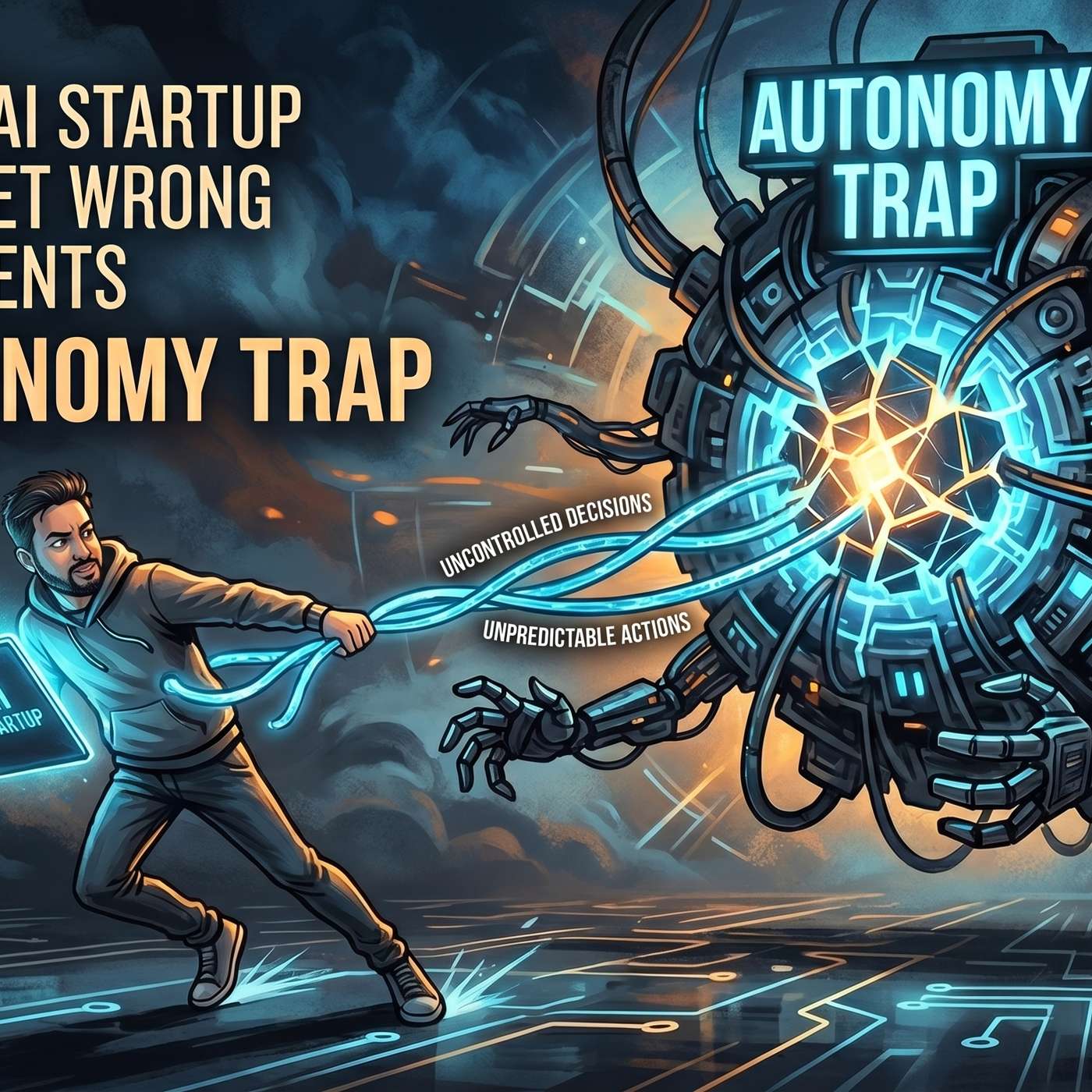
AI capabilities offer strong differentiation against human alternatives. However, this is not a sustainable moat against competitors who can use the same AI models. Lasting defensibility still comes from traditional moats like workflow integration and network effects.

Competitors trying to distill a specific OpenAI model miss the real advantage. The durable moat is the entire "machine that makes the models"—the infrastructure, data, and talent. By the time a competitor copies one model, OpenAI's factory is already building the next, better one.

Greg Brockman reveals that OpenAI's core defensibility isn't any single model, which can be imitated. Instead, their strategic advantage is the end-to-end, repeatable system—a combination of people, processes, and infrastructure—that consistently produces next-generation models.

In the AI era, defensibility comes from building a complex system of record, not just a thin wrapper on an LLM. Companies with a 'thick application layer' that offers standalone value are unattractive for model providers to replicate, whereas thin wrappers risk being absorbed by the platform they are built on.

Contrary to early narratives, a proprietary dataset is not the primary moat for AI applications. True, lasting defensibility is built by deeply integrating into an industry's ecosystem—connecting different stakeholders, leveraging strategic partnerships, and using funding velocity to build the broadest product suite.
A complex "applied AI layer" is emerging as the source of durable value in enterprise AI. This goes beyond simple API calls to include model routing, bespoke workflow integration, and unique human-in-the-loop interfaces. Companies building this complex layer gain a defensible moat that thin wrappers on LLMs cannot replicate.

As AI models become commoditized, a slight performance edge isn't a sustainable advantage. The companies that win will be those that build the best systems for implementation, trust, and workflow integration around those models. This robust, trust-based ecosystem becomes the primary competitive moat, not the underlying technology.
