Get your free personalized podcast brief
We scan new podcasts and send you the top 5 insights daily.
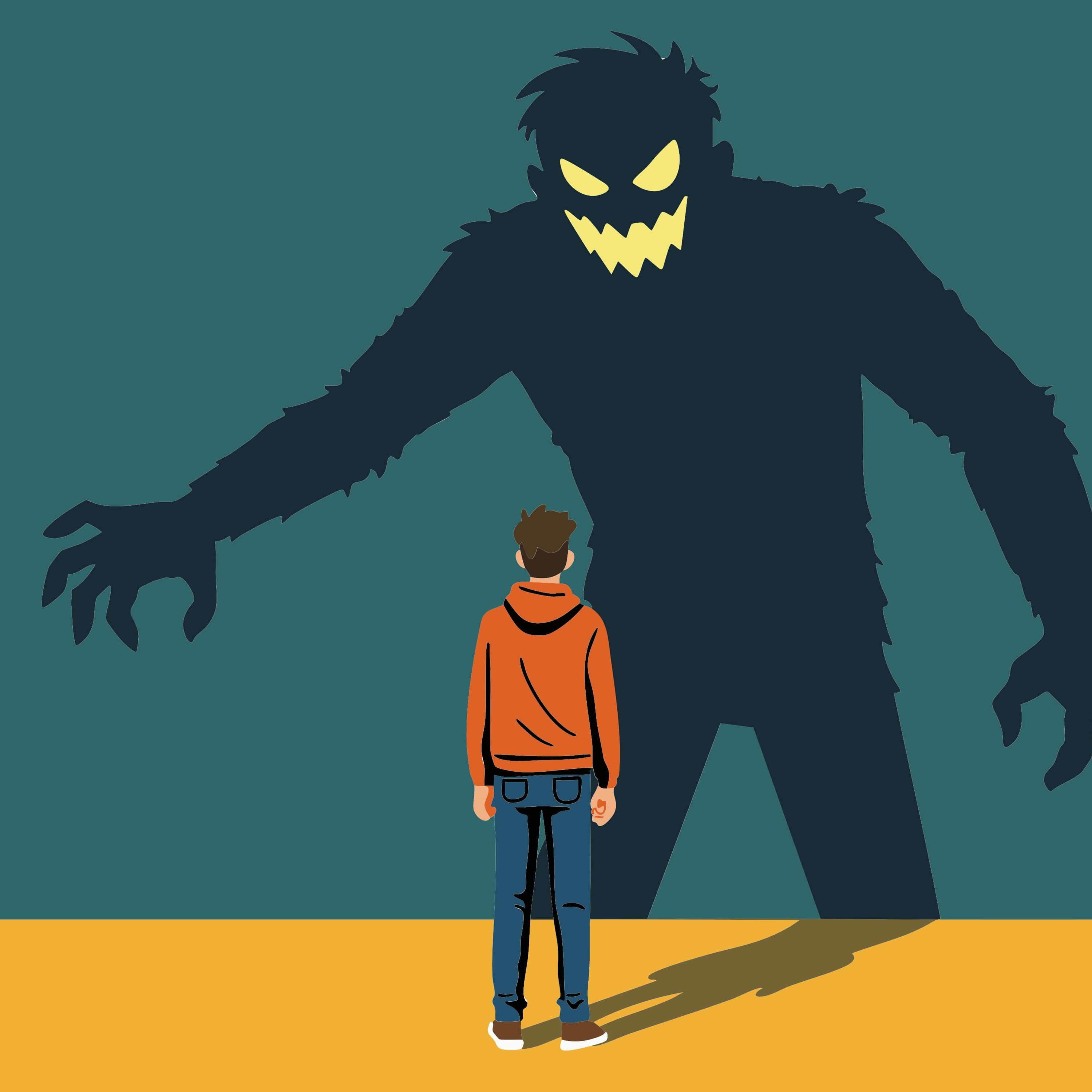
Internal conflict is not a flaw; it's your brain operating as designed. It's a 'team of rivals' or a 'neural parliament' with competing networks. Understanding this allows you to manage impulses by creating a 'Ulysses contract'—a pre-commitment that constrains your future self's bad behavior.

Related Insights
Willpower is a finite resource, but self-control is a skill that can be enhanced through systems. The simple act of tracking your actions—like writing down every expense or weighing yourself daily—improves regulation because you cannot effectively manage what you do not measure.

Willpower failure isn't because the brain is empty of energy. It's a proactive mechanism to conserve remaining glucose. This explains why strong incentives or a simple sugar dose can quickly restore self-control, as the brain reallocates its conserved resources for a high-priority task.
The difficulty in saying "no" is not a character flaw but a biological challenge. From birth, compliant behavior is reinforced by caregivers, releasing dopamine that forges neural pathways. This ingrained wiring for obedience persists into adulthood, making defiance feel unnatural and difficult in professional and personal settings.

Reward isn't just about indulgence. The dopamine system can learn to value self-control and resistance. This is pathologically evident in anorexia but is also the mechanism behind healthy discipline. For athletes, the act of choosing training over socializing can itself become a dopaminergic reward, reinforcing difficult choices.

The brain's deliberative "Pause & Piece Together" system is suppressed by stress, which boosts the impulsive "Pursue" (reward) and "Protect" (threat) systems. This neurological process explains why we make rash choices when tired or under pressure.

Instead of focusing on the immediate gratification of an addictive behavior, use logic to forecast its ultimate conclusion. By "playing the tape out," you force yourself to confront the inevitable negative outcome—be it personal ruin, health failure, or relationship destruction—making the initial impulse less appealing.
The "Two Wolves" parable illustrates that feeling pulled in different directions is a fundamental part of being human. The goal is not to eliminate this internal conflict, but to consciously choose which competing motivation to "feed" in any given moment.
Humans hold conflicting beliefs simultaneously (e.g. "look before you leap" vs "he who hesitates is lost"). The one that dictates your action is chosen not by logic, but by your prevailing emotional state. This is why mastering your state is the primary step to change.
Neuroscientist Dr. Jill Bolte-Taylor posits our brain's four distinct anatomical parts function like different characters. By understanding these "personalities" (e.g., logical left-brain, playful right-brain), we can consciously choose which to activate, rather than letting them run on autopilot.

Resolutions often fail because a specific brain network, the "value system," calculates choices based on immediate, vivid rewards rather than distant, abstract benefits. This system heavily discounts the future, meaning the present pleasure of a milkshake will almost always outweigh the vague, far-off goal of better health, creating a constant internal conflict.