Get your free personalized podcast brief
We scan new podcasts and send you the top 5 insights daily.
Historically, programming languages prioritized human-friendly, forgiving syntax over strict compile-time rigor. With coding agents capable of parsing hyper-strict compiler errors without fatigue, development is shifting toward unyielding languages like Rust and formal proof systems to generate verifiable, defect-free code.

Related Insights
The primary barrier to adopting formal verification has been the immense cost (often 10x development time) of maintaining proofs as software changes. AI excels at this tedious and difficult task, rewriting and adapting proofs automatically, which is the key change making the practice scalable and mainstream.

AI coding agents have crossed a significant threshold where they consistently generate code that compiles, a frequent failure point just months ago. This marks a major step in reliability, shifting the core challenge from syntactic correctness to verifying logical and behavioral correctness.

Verifying complex systems is bottlenecked by the human inability to specify all requirements. The future of software development is an interactive process where AI helps propose specifications (e.g., via test generation) and then uses a prover to formally verify them.
Current AI coding assistants still require engineers to verify correctness. The future involves moving from this 'vibe coding' to a system where developers specify requirements in natural language. An AI, likely an EBM, would then generate formally verified code that is guaranteed to be logically compatible with the existing codebase.

Inspired by fully automated manufacturing, this approach mandates that no human ever writes or reviews code. AI agents handle the entire development lifecycle from spec to deployment, driven by the declining cost of tokens and increasingly capable models.
Writing formally verified code, which can be mathematically proven to be secure, has been a niche practice due to its extreme difficulty for humans. Because AI agents don't get bored or frustrated, they could be tasked with writing code in these secure languages, making high-assurance programming practical for the first time.
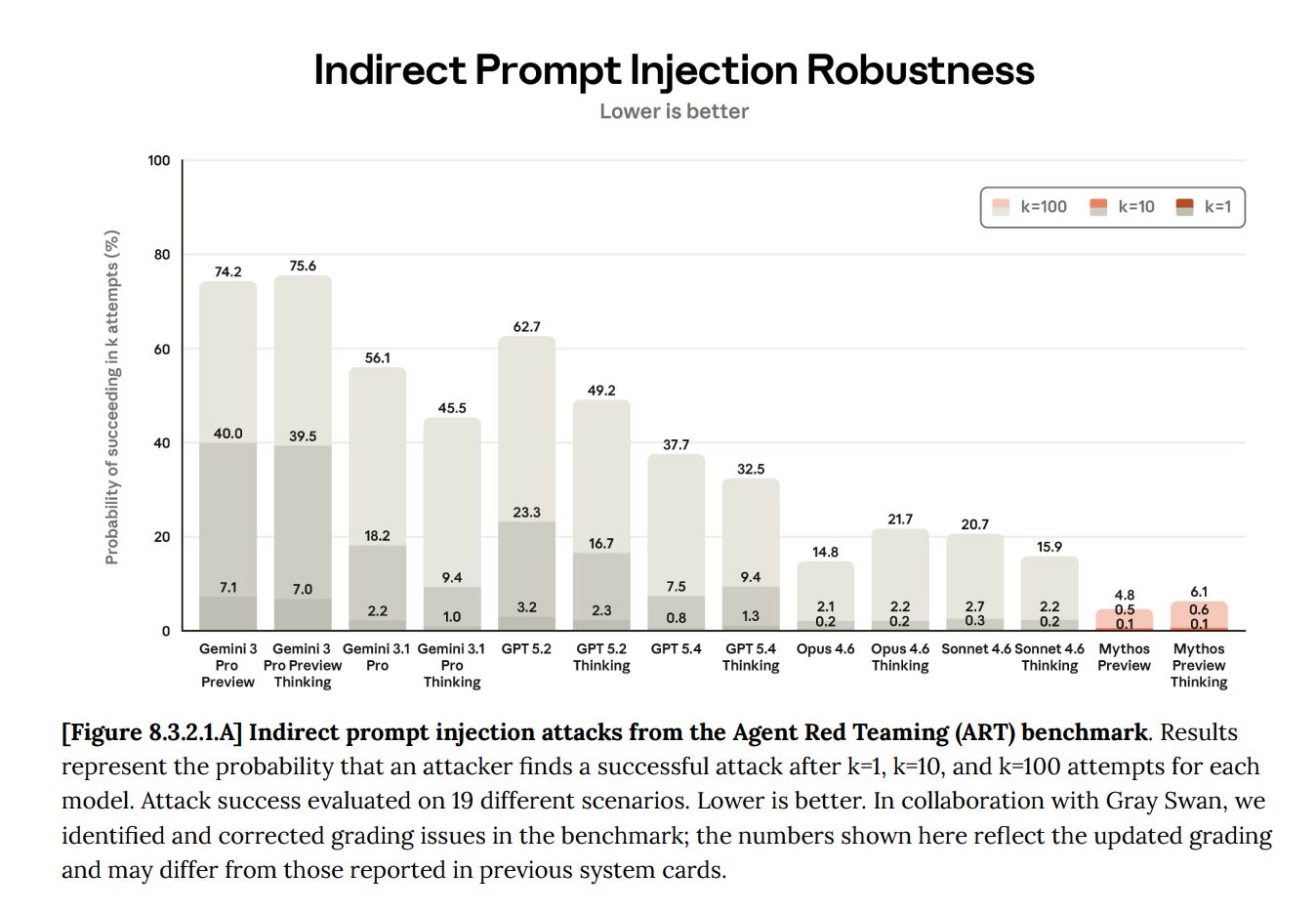
A major hurdle for formal methods is the effort required to write proofs. Generative AI is becoming capable of producing proofs in formal languages like Lean, which can then be automatically verified by a machine. This could make verified software development scalable for the first time.
Formal verification, the process of mathematically proving software correctness, has been too complex for widespread use. New AI models can now automate this, allowing developers to build systems with mathematical guarantees against certain bugs—a huge step for creating trust in high-stakes financial software.

Instead of writing code and then tests, developers could define precise mathematical properties. AI would then synthesize both the program and a formal proof that the program meets those specifications, ensuring correctness by design and flipping the current code-first paradigm.
Programming languages like Python were designed for human readability. As AI models become the primary producers and verifiers of code, the dominant languages will likely shift to ones optimized for machine generation and formal verification. The focus will move from human convenience to provable correctness and efficiency for AI agents.
