Get your free personalized podcast brief
We scan new podcasts and send you the top 5 insights daily.
Foster stresses that great design anticipates an unpredictable future. By building in flexibility, as he did with the Hong Kong bank which later accommodated unforeseen trading floors, a structure can adapt to major technological and organizational shifts, preserving its long-term value.

Related Insights
Gensler intentionally avoids a singular design style. Instead, they operate as a "constellation of stars," empowering diverse designers with a shared purpose—enhancing human experience—rather than a top-down aesthetic. This flexibility is key to their ability to serve a vast range of clients and scale globally.

Norman Foster debunks the myth that high quality requires a high budget. He asserts that quality is an 'attitude of mind' and a result of how wisely money is spent. A noble building can be achieved on a tight budget, while fortunes can be wasted on poor design.
Norman Foster reframes project resources beyond time and money. He identifies 'creative energy' as the third and most valuable input, as it ultimately determines the quality and value derived from the other two. This creative capital is the true driver of a project's success.
In biology, hyper-specialization leads to fragility and extinction when conditions change. The most resilient model is the human hand—optimized for nothing, but adaptable to countless tasks. Organizations should pursue flexible adequacy rather than rigid optimization to ensure long-term survival.

Traditional "flexible" lab design pre-engineers for every possible future scenario, which is expensive and rigid. A smarter approach is "adaptability": consciously designing pathways and leaving space for future technology without over-investing in systems that may quickly become obsolete.
Inspired by architect Christopher Alexander, a designer's role shifts from building the final "house" to creating the "pattern language." This means designing a system of reusable patterns and principles that empowers users to construct their own solutions tailored to their unique needs.

Contrary to the stereotype of being 'dusty' or resistant to change, companies that last for centuries are masters of adaptation. Their longevity is direct evidence of their forward-thinking ability to navigate crises, from wars and pandemics to technological disruption.

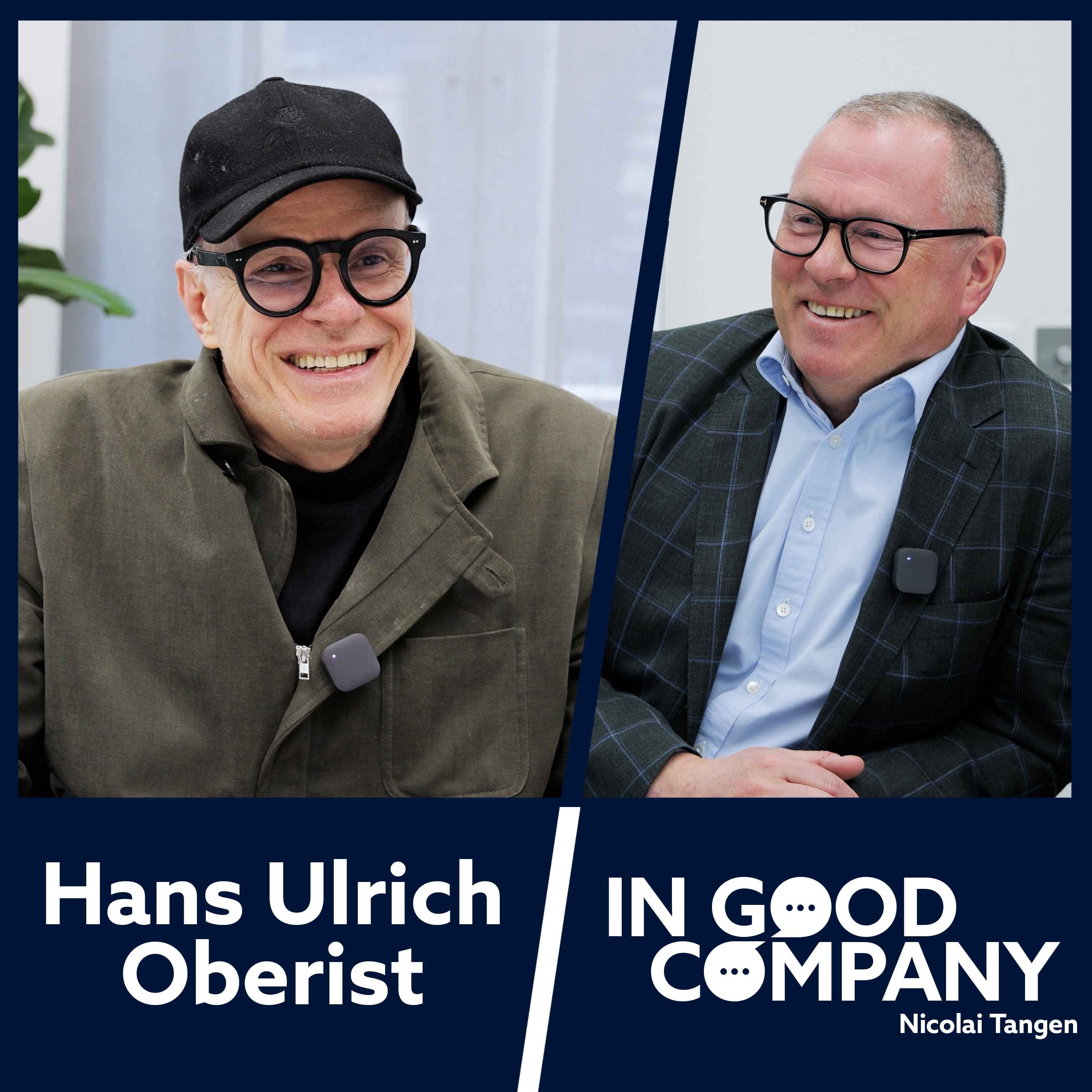
Resisting short-termism, Hans Ulrich Obrist designs projects that can evolve for decades. His "Do It" exhibition, running for 33 years, constantly learns and adapts. This model treats a project not as a static outcome but as a dynamic system designed for longevity and continuous learning.
Norman Foster argues that privately funded buildings exist in the public domain and must serve the community. Design should be approached simultaneously from the 'inside out' for occupants and the 'outside in' for the public, enhancing the surrounding neighborhood rather than creating an isolated island.
Foster argues against the traditional sequential process where architects hand off designs to engineers. He advocates for a collaborative model where all experts work together from the outset. This 'systems thinking' leads to better, more efficient designs by capturing feedback opportunities lost in a siloed process.