Get your free personalized podcast brief
We scan new podcasts and send you the top 5 insights daily.
Platforms like Shopify have an outsized role in shaping public perception of AI. By providing free, accessible tools like "Tinker" that directly increase revenue for small business entrepreneurs, they create a powerful, positive narrative that counteracts common fears about job displacement and resource consumption.

Related Insights
The primary benefit of AI sales automation for small businesses isn't just increased efficiency or revenue. It's about handling the relentless sales tasks that consume owners' lives, allowing them to focus on their core service and reclaim personal time away from the business.

Contrary to job destruction theories, AI could fuel job creation by making it cheaper to launch a business. By automating marketing, logistics, and transactions, AI agents could remove traditional barriers to entry, enabling a new wave of small businesses and services to emerge.

While large enterprises remain cautious about ceding creative control to AI, small and mid-sized businesses see a breakthrough. AI overcomes the economic barriers to content production, enabling them to execute personalization and campaigns at a scale that was previously out of reach.

Entrepreneurs are advised to resist the hype of using AI for a complete operational overhaul. Instead, the most effective starting point is to apply AI to small, specific tasks, like writing marketing copy. This approach minimizes risk and ensures a tangible, immediate ROI before committing to larger, more complex transformations.

Shopify's Harley Finkelstein argues agentic commerce will make SEO obsolete. Instead of brands gaming search rankings, AI will recommend products based on merit and a user's personal context history. This shift could level the playing field, allowing smaller, high-quality brands to be discovered more easily.

Shopify's new SimGym tool, which uses AI agents to simulate how customers interact with a store, points to a new standard in marketing. Soon, launching a campaign, redesign, or product without first running it through a sophisticated AI simulation will be considered archaic and reckless.
AI lowers the barrier to building products, empowering students to pursue entrepreneurship over traditional jobs. They can leverage AI to create ventures without needing large engineering teams, reframing the "AI will take jobs" fear into an "AI will create entrepreneurs" opportunity.

The true advantage for new AI-native companies lies not in simply using AI tools, but in building entirely new business models around them. This mirrors how Direct-to-Consumer brands leveraged Shopify not just to sell online, but to fundamentally change distribution, marketing, and customer relationships, thereby outmaneuvering incumbents.
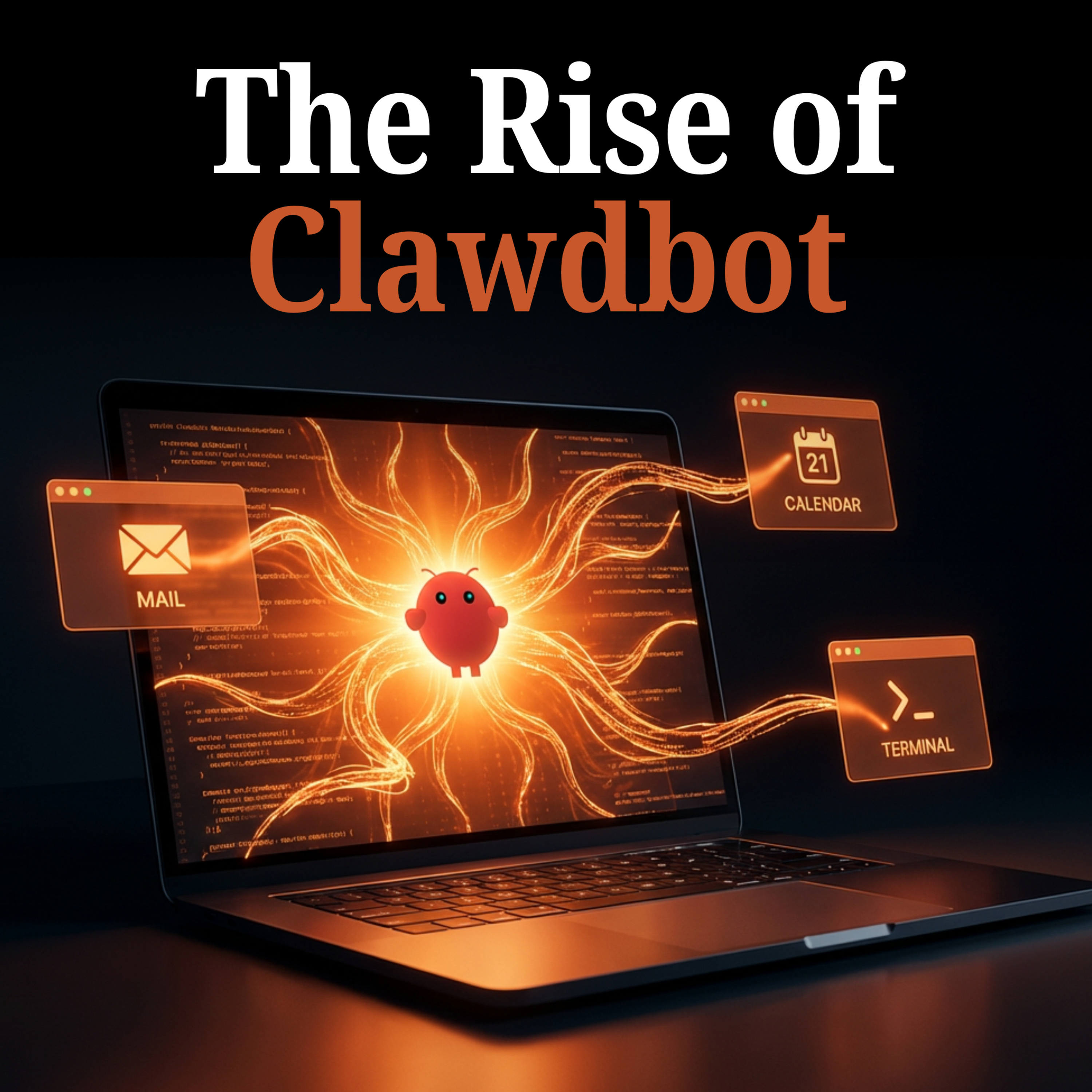
By connecting to APIs for platforms like Shopify, AI agents like Clawdbot can automate complex, manual workflows such as inventory, ordering, and employee scheduling for non-tech small businesses, saving significant time and money.
The barrier to entry for entrepreneurship has collapsed. Anyone, regardless of technical skill or capital, can now use tools like ChatGPT and Replit to create a formal business plan and a functional app, effectively democratizing innovation.