Get your free personalized podcast brief
We scan new podcasts and send you the top 5 insights daily.
Open Evidence employs a two-step process that distinguishes it from general LLMs. First, its AI, trained by human subspecialists, identifies the most relevant scientific references for a query. Only then is an answer generated from this curated evidence, prioritizing source credibility over speed.

Related Insights
Humans rely on lossy proxies like journal prestige and citation counts to judge research. AI enables a shift to evaluating the work's content directly—methodology, sample size, and logical coherence—for a more accurate assessment of evidence quality tailored to a specific question.

LLMs frequently cite sources that rank poorly on traditional search engines (page 3 and beyond). They are better at identifying canonically correct and authoritative information, regardless of backlinks or domain authority. This gives high-quality, niche content a better chance to be surfaced than ever before.

To maintain clinical reliability, Open Evidence restricts its knowledge base to a 'walled garden.' This includes PubMed abstracts (excluding predatory journals), guidelines, and full-text content from licensed publishers. This prevents the model from citing unreliable internet sources or 'hallucinating' references, building clinician trust.
By analyzing millions of queries from clinicians, Open Evidence identifies high-frequency topics. It then cross-references these with its literature database to pinpoint areas that are both clinically relevant and poorly supported by existing evidence, effectively mapping the frontier of medical knowledge and research opportunities.
M&A Science's "intelligence hub" differentiates from generalist AI like ChatGPT by grounding answers in a closed ecosystem of 400+ expert interviews. It provides sourced, experiential intelligence rather than generic internet-scraped guesses, making it a reliable tool for high-stakes professional work.

Retrieval Augmented Generation (RAG) uses vector search to find relevant documents based on a user's query. This factual context is then fed to a Large Language Model (LLM), forcing it to generate responses based on provided data, which significantly reduces the risk of "hallucinations."
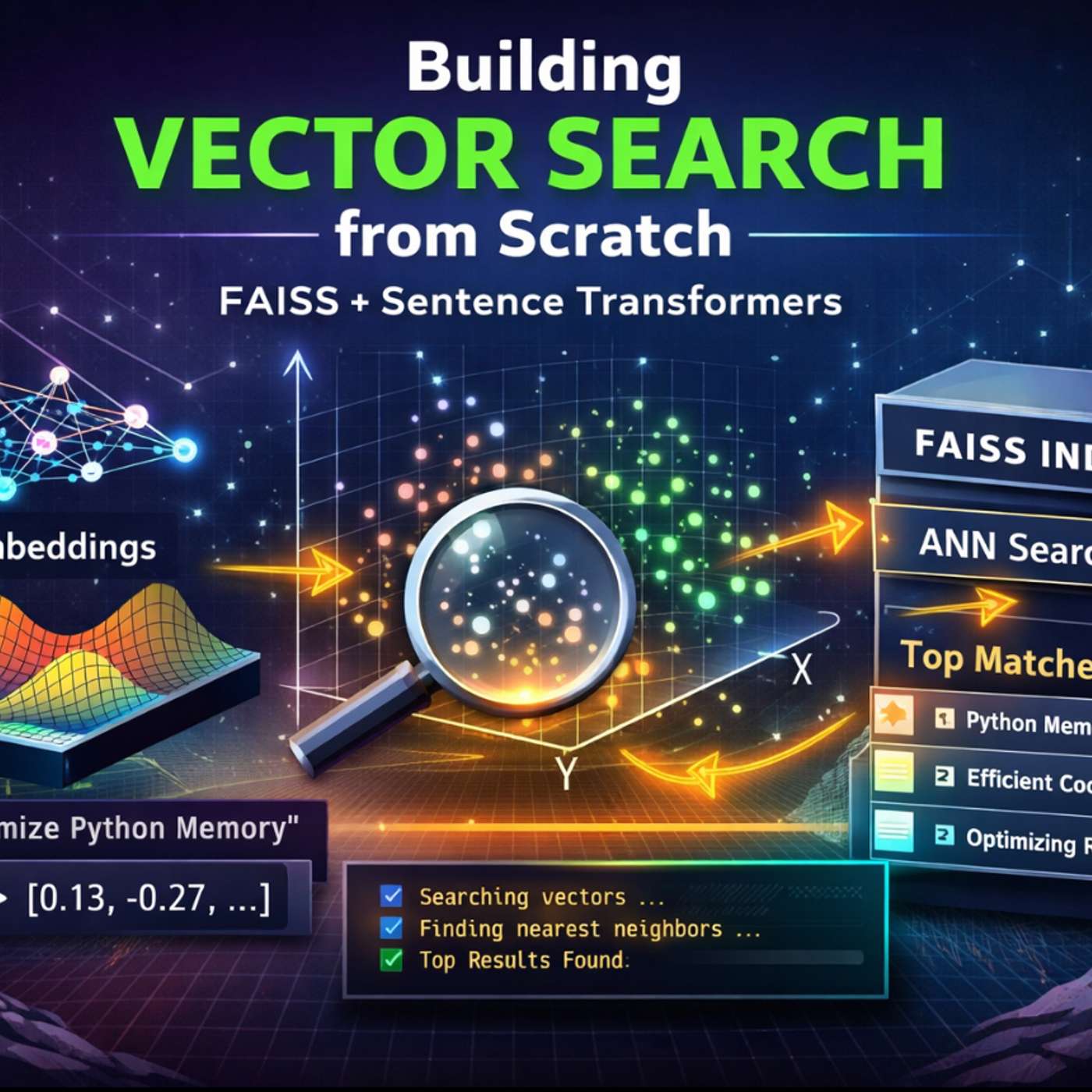
AI tools like Notebook LM produce superior, more factually dense content when fed a curated set of user-provided sources. This demonstrates that the quality of generative AI output is directly proportional to the quality and specificity of its input knowledge base, outperforming models that use a general web index.

Unlike consumer chatbots, AlphaSense's AI is designed for verification in high-stakes environments. The UI makes it easy to see the source documents for every claim in a generated summary. This focus on traceable citations is crucial for building the user confidence required for multi-billion dollar decisions.

Recognizing that different specialists have unique information needs, Open Evidence develops distinct AI models for each role. For example, a surgeon's query about a procedure can surface peer-reviewed surgical videos—a feature irrelevant to a medical oncologist—thus enhancing the tool's utility through deep specialization.
The platform uses machine learning to combat the rapid obsolescence of medical guidelines. It systematically reviews every paragraph of ingested guidelines against new publications weekly, identifying and flagging specific sections that may be deprecated by more recent evidence, a critical function in fields like oncology.