Get your free personalized podcast brief
We scan new podcasts and send you the top 5 insights daily.
When top AI vendors have near-parity technology, the competitive differentiator becomes human presence and partnership. The company willing to go on-site, conduct training, and actively participate in the customer's workflow builds a level of trust and value that a marginal tech advantage cannot overcome.

Related Insights
As AI provides customers with unprecedented information, the ability to build genuine trust and relationships—akin to doing business on a handshake—will become the key competitive advantage. AI provides the information (the yin), but human connection provides the authenticity and trust (the yang) needed to close deals.

As AI handles data analysis, the human-to-human relationship becomes the most critical and defensible skill in enterprise sales. For complex, high-stakes purchases, buyers feel uncomfortable making a final decision without a trusted human guide to consult, a role that technology cannot fully replace.
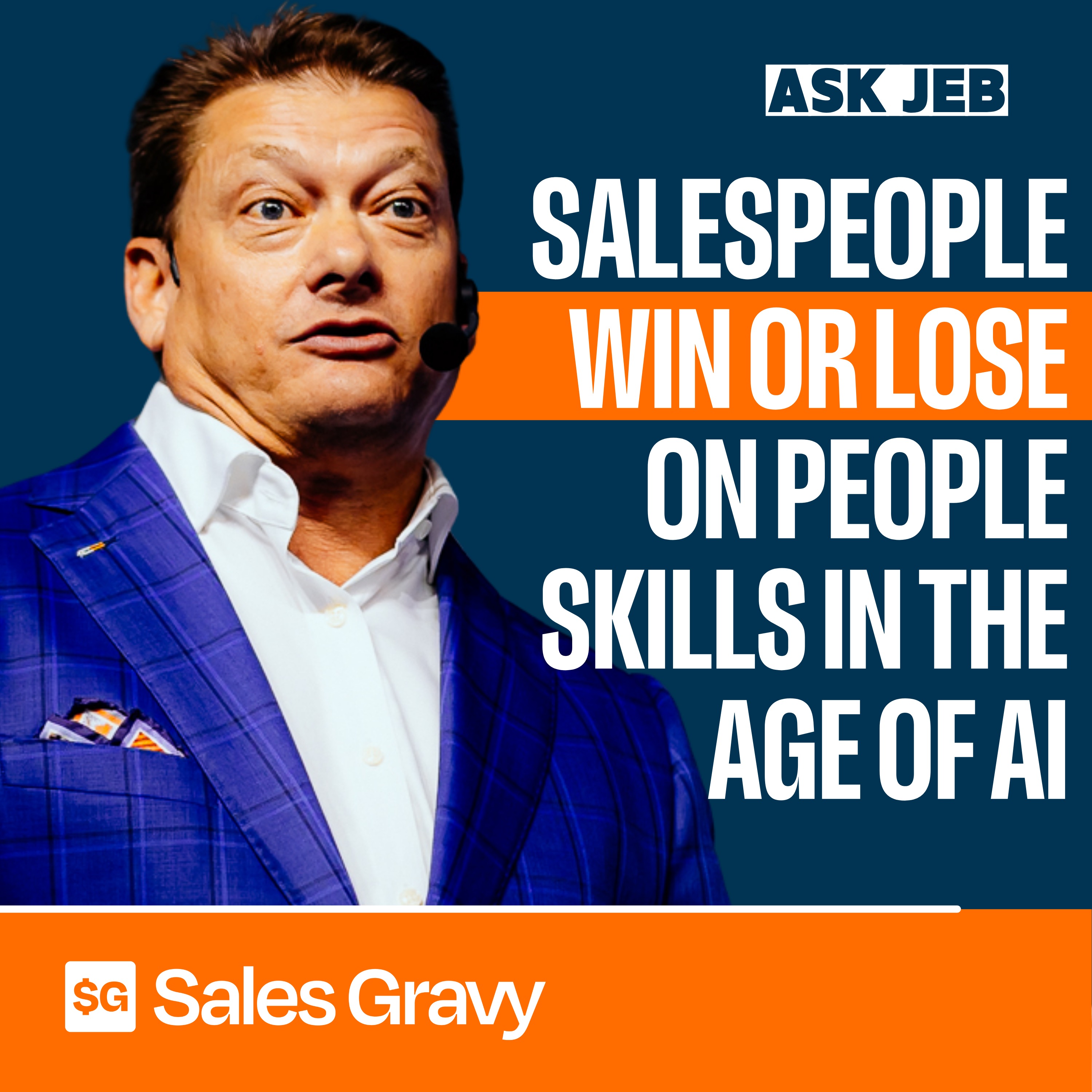
As buyers increasingly use AI as a research partner, the uniquely human aspects of a brand—trust, relationship, and service—become the most critical competitive advantage. When AI can compare features and pricing, the human experience is what will ultimately sway the decision.

AI agent tools require significant training and iteration. Success depends less on software features and more on the vendor's commitment to implementation. Prioritize vendors offering a dedicated "forward-deployed engineer" who will actively help you train and deploy the agent.

Unlike traditional SaaS, AI agents require weeks of hands-on training. The most critical factor for success is the quality of the vendor's forward deployed engineer (FDE) who helps implement, not the product's brand recognition or feature superiority.

Once companies achieve scale and efficiency through AI, the strategic conversation will pivot. The new competitive advantage will be intelligently deploying human employees at critical moments to provide a valuable 'human touch,' ensuring customers don't feel they are in a 'robot wasteland.'

For high-stakes enterprise sales in a crowded, opaque market like AI, traveling to meet clients in person is a powerful differentiator. It signals serious commitment, cuts through the noise of automated outbound, and builds the personal trust necessary to close large deals.

In the AI era, large enterprises still prefer vendors who act as partners, offering on-site training and change management support. This "old-school" approach builds trust and ensures successful adoption, often trumping a purely tech-driven or product-led growth (PLG) motion.
While many teams use AI to accelerate product development, a key advantage lies in using it to improve customer interactions. Providing customized deployment plans and deep technical answers shows customers you understand their specific needs, building trust and positioning your team as a superior partner.

In the rapidly evolving AI space, technologies and models are easily commoditized and swapped. The enduring competitive advantage isn't the tech itself, but the trusted relationships and business problem-solving capabilities provided by a world-class sales team.
