Get your free personalized podcast brief
We scan new podcasts and send you the top 5 insights daily.
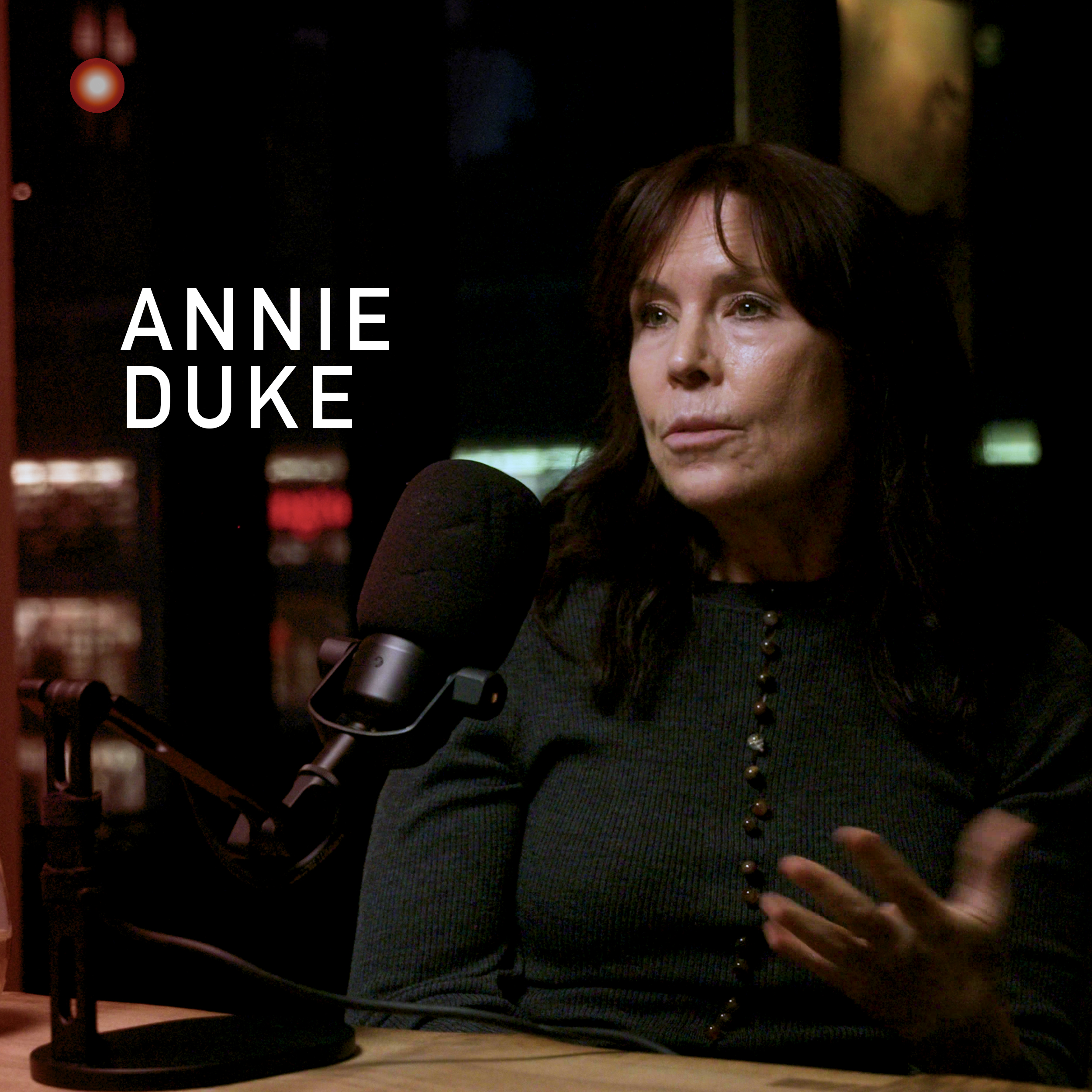
Instead of teaching decision-making in isolation, education should integrate skills like counterfactual thinking directly into core subjects. Analyzing literature by asking, "What if Macbeth had chosen a different option?" makes the material more engaging and teaches critical thinking simultaneously.
Related Insights
Schools ban AI like ChatGPT fearing it's a tool for cheating, but this is profoundly shortsighted. The quality of an AI's output is entirely dependent on the critical thinking behind the user's input. This makes AI the first truly scalable tool for teaching children how to think critically, a skill far more valuable than memorization.

Like basketball coaches who make players analyze game film to spot momentum shifts, business leaders can use 'what-if' teams. By regularly gaming out hypothetical market shifts or competitor actions, they train the organization to recognize and seize real opportunities when they arise.

The standard math curriculum is misaligned with real-world needs. Core rationality concepts, like Bayesian reasoning and distinguishing correlation from causation, are far more valuable for everyday decisions and citizenship than more abstract topics like trigonometry.

True learning requires "transcendent thinking"—the natural drive to find deeper meaning beyond surface details. This involves grappling with a subject's history, hidden intentions, values, and alternative future possibilities, connecting concrete information to bigger ideas and stories.

While studying cognitive biases (like Charlie Munger advises) is useful, it's hard to apply in real-time. A more practical method for better decision-making is to use a Socratic approach: ask yourself simple, probing questions about your reasoning, assumptions, and expected outcomes.

'Risky Business' posits that analytical frameworks used to dissect complex systems like politics (e.g., game theory, expected value) are equally applicable to optimizing personal decisions. The show bridges the gap between macro-level strategic thinking and the micro-level choices that contribute to personal well-being.
To combat misinformation, present learners with two plausible-sounding pieces of information—one true, one false—and ask them to determine which is real. This method powerfully demonstrates their own fallibility and forces them to learn the cues that differentiate truth from fiction.

Instead of allowing AI to atrophy critical thinking by providing instant answers, leverage its "guided learning" capabilities. These features teach the process of solving a problem rather than just giving the solution, turning AI into a Socratic mentor that can accelerate learning and problem-solving abilities.
To gain clarity on a major decision, analyze the potential *bad* outcomes that could result from getting what you want. This counterintuitive exercise reveals hidden motivations and clarifies whether you truly desire the goal, leading to more robust choices.

Instead of banning AI, educators should teach students how to prompt it effectively to improve their decision-making. This includes forcing it to cite sources, generate counterarguments, and explain its reasoning, turning AI into a tool for critical inquiry rather than just an answer machine.