Get your free personalized podcast brief
We scan new podcasts and send you the top 5 insights daily.
The hosts deconstruct an HBR article, revealing its authors are consultants promoting their own paid frameworks. Readers should treat such articles not as objective analysis but as marketing content designed to generate leads for the authors' firms.

Related Insights
Medium's CEO revealed the company providing data for a critical Wired article about "AI slop" was simultaneously trying to sell its AI detection services to Medium. This highlights a potential conflict of interest where a data source may benefit directly from negative press about a target company.
The massive capital influx into AI means much of the discourse is marketing disguised as education. To find the signal, analyze the speaker's incentives. Are they trying to raise capital and justify valuations, or are they providing a grounded, factual perspective on the technology's actual capabilities?

There is emerging evidence of a "pay-to-play" dynamic in AI search. Platforms like ChatGPT seem to disproportionately cite content from sources with which they have commercial deals, such as the Financial Times and Reddit. This suggests paid partnerships can heavily influence visibility in AI-generated results.

The HBR article rebrands the core principle of Scrum ("owning outcomes") as a new concept called "autonomous scrum." This creates a false dichotomy with "traditional scrum," positioning the authors' services as the solution to a manufactured problem.
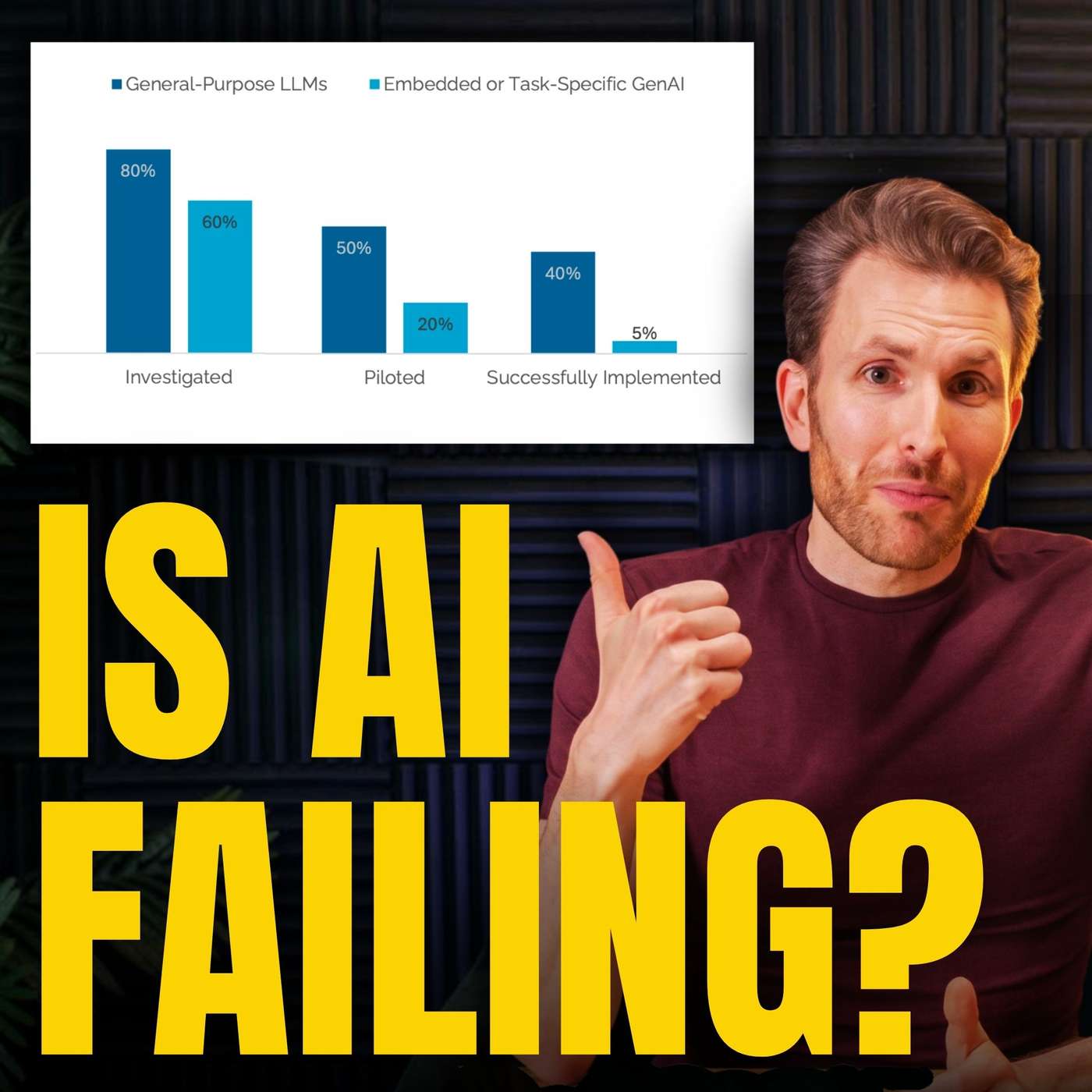
An "MIT study" on AI failures concluded the solution was "agentic AI frameworks," precisely the technology the authors were building and selling. This demonstrates how research, especially when not peer-reviewed, can function as sophisticated content marketing with an undisclosed conflict of interest, using institutional credibility to generate commercial leads.
Research shows that in professional services, third-party listicles receive four times more AI citations than self-promotional ones. When a company's own product is ranked first in their 'best of' list, AI models identify it as biased promotional material and are less likely to cite it. Honest positioning and acknowledging competitor strengths is more credible.
Backtests and research from asset management firms that sell the related product are inherently biased. Similar to drug studies sponsored by pharmaceutical companies, the incentive is to create a favorable outcome. Investors should heavily discount such research and seek less biased evidence from sources like academic journals.

Consultants use the hype around AI to push pre-existing, often irrelevant, management frameworks. The HBR article uses "the AI era" to justify a decision model derived from a 2002 airline bankruptcy, a clear mismatch of context and solution.
The podcast critiques an anecdote about firing a "peacetime" CEO. Lacking names, dates, or outcomes, the story serves as a rhetorical device to flatter the reader into agreeing with the author's worldview, rather than as a legitimate case study.
Don't just accept an author's title at face value. Instead, analyze their byline to understand their incentives. Ask: Who is this person? Who pays them? What service do they sell? Does the article conveniently recommend that exact service? This reframes reading from passive acceptance to active analysis.