Get your free personalized podcast brief
We scan new podcasts and send you the top 5 insights daily.
Data from the MAJESTIC three trial shows bispecific antibodies achieving progression-free survival rates comparable to CAR-T therapy. This creates a new clinical dilemma, forcing a choice between an immediate, off-the-shelf option for rapid progression versus a one-time therapy with a longer track record, making treatment an individualized decision.

Related Insights
The sequence of therapies like bispecifics and CAR-T critically impacts future options and outcomes. This necessitates early, strategic collaboration between community oncologists and academic centers to plan a patient's entire treatment journey, not just the next immediate step.

For third-line follicular lymphoma, where both CAR-T and bispecifics are approved, experts are leaning towards CAR-T. The long-term follow-up data for CAR-T suggests a potential for cure, making it a more compelling option for eligible patients despite logistical challenges.

Data from J&J's Majestic 3 trial suggests its off-the-shelf bispecific combination could rival the efficacy of its own blockbuster CAR-T, Carvykti. This sets up an internal competition where a more accessible therapy could challenge a complex, personalized one in earlier lines of treatment.

In follicular lymphoma, the treatment goal is durable remission with manageable toxicity, not necessarily a cure. Therefore, clinicians frequently prefer using a bispecific antibody first, reserving the more complex and toxic CAR-T cell therapy for transformed disease or after a bispecific fails.
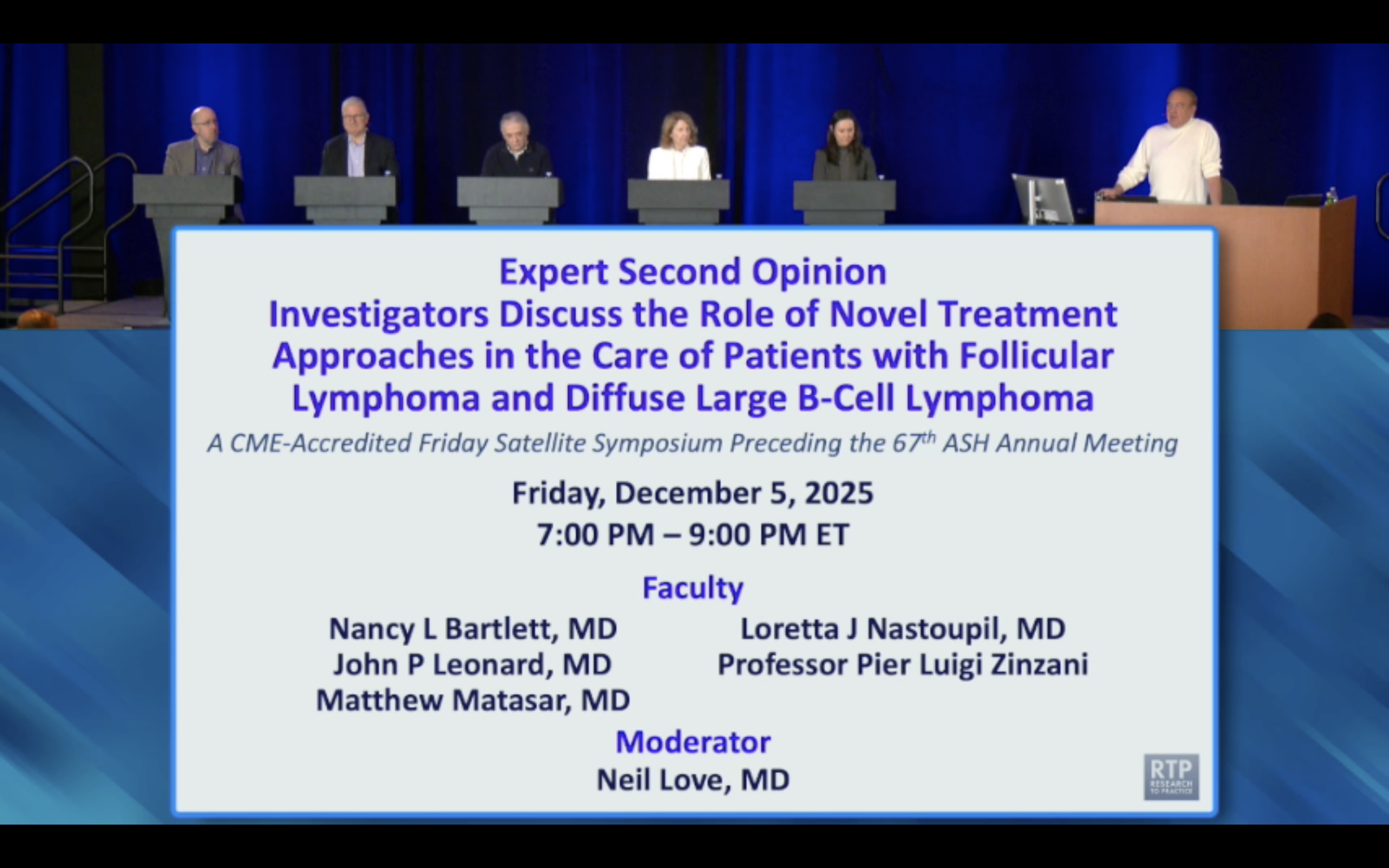
With highly effective treatments like CAR-T and bispecifics moving into earlier lines of therapy for multiple myeloma, the clinical focus must evolve. While efficacy benchmarks have been met, the next advancement requires vigilant attention to safety, particularly infection risks and other side effects of new paradigms.
A convergence of data from pivotal trials (MAJESTIC, CARTITUDE) establishes that BCMA-directed therapies, including CAR-T and bispecifics, provide superior outcomes in early relapse. This marks a paradigm shift, making them the new standard of care after initial therapy failure, even in patients refractory to prior common treatments.
Using a BCMA bispecific antibody first can exhaust a patient's T-cells or cause tumors to lose the BCMA target, rendering a subsequent BCMA-targeted CAR-T therapy ineffective. The optimal sequence is CAR-T first, which preserves T-cell function and BCMA expression, leaving bispecifics as a viable later-line option.

Bispecific antibodies are "off-the-shelf" therapies with manageable side effects that don't require specialized manufacturing centers like CAR T. This allows community practices to administer highly effective T-cell redirecting therapies, equalizing access for patients far from major academic institutions.

CARTITUDE-IV trial data challenges the idea of reserving CAR-T therapy for high-risk myeloma. In early relapse, standard-risk patients treated with siltacel had a longer progression-free survival than even high-risk patients on the same therapy. This suggests standard-risk patients may gain the most relative benefit from earlier CAR-T intervention compared to standard of care.
Clinicians report significant and durable responses using Belantamab in patients who have relapsed after BCMA-targeted CAR-T. This success may be due to Belantamab's immunogenic mechanism, which doesn't rely on endogenous T-cells and may favorably interact with the post-CAR immune environment.
