Get your free personalized podcast brief
We scan new podcasts and send you the top 5 insights daily.
Bispecific antibodies are "off-the-shelf" therapies with manageable side effects that don't require specialized manufacturing centers like CAR T. This allows community practices to administer highly effective T-cell redirecting therapies, equalizing access for patients far from major academic institutions.

Related Insights
Previously underperforming cancer targets like TIGIT and LAG-3 are seeing renewed interest. Innovative antibody engineering, such as creating bispecific antibodies that target multiple pathways simultaneously, is giving these 'failed' targets new life and potential for clinical success.

An investigational in vivo CAR-T therapy uses viral particles infused directly into the patient to convert their T-cells into CAR-T cells. This approach eliminates the complex steps of apheresis, lymphodepletion, and ex vivo manufacturing, effectively creating an off-the-shelf product that becomes an autologous treatment inside the body.
A therapeutic approach called "T-cell engagers" or "BiTEs" uses engineered antibodies with two different heads. One side binds to a cancer cell, while the other binds to a nearby T-cell. This effectively brings the killer cell and the target together, leveraging the body's existing immune cells without genetic modification.

An innovative strategy for solid tumors involves using bispecific T-cell engagers to target the tumor stroma—the protective fibrotic tissue surrounding the tumor. This novel approach aims to first eliminate this physical barrier, making the cancer cells themselves more vulnerable to subsequent immune attack.

The rapid and successful rollout of complex bispecific therapies into community settings is primarily driven by enhanced nursing staff skills and protocols for risk stratification. This combination allows for safe outpatient administration, preventing hospital admissions and broadening patient access beyond large academic centers.
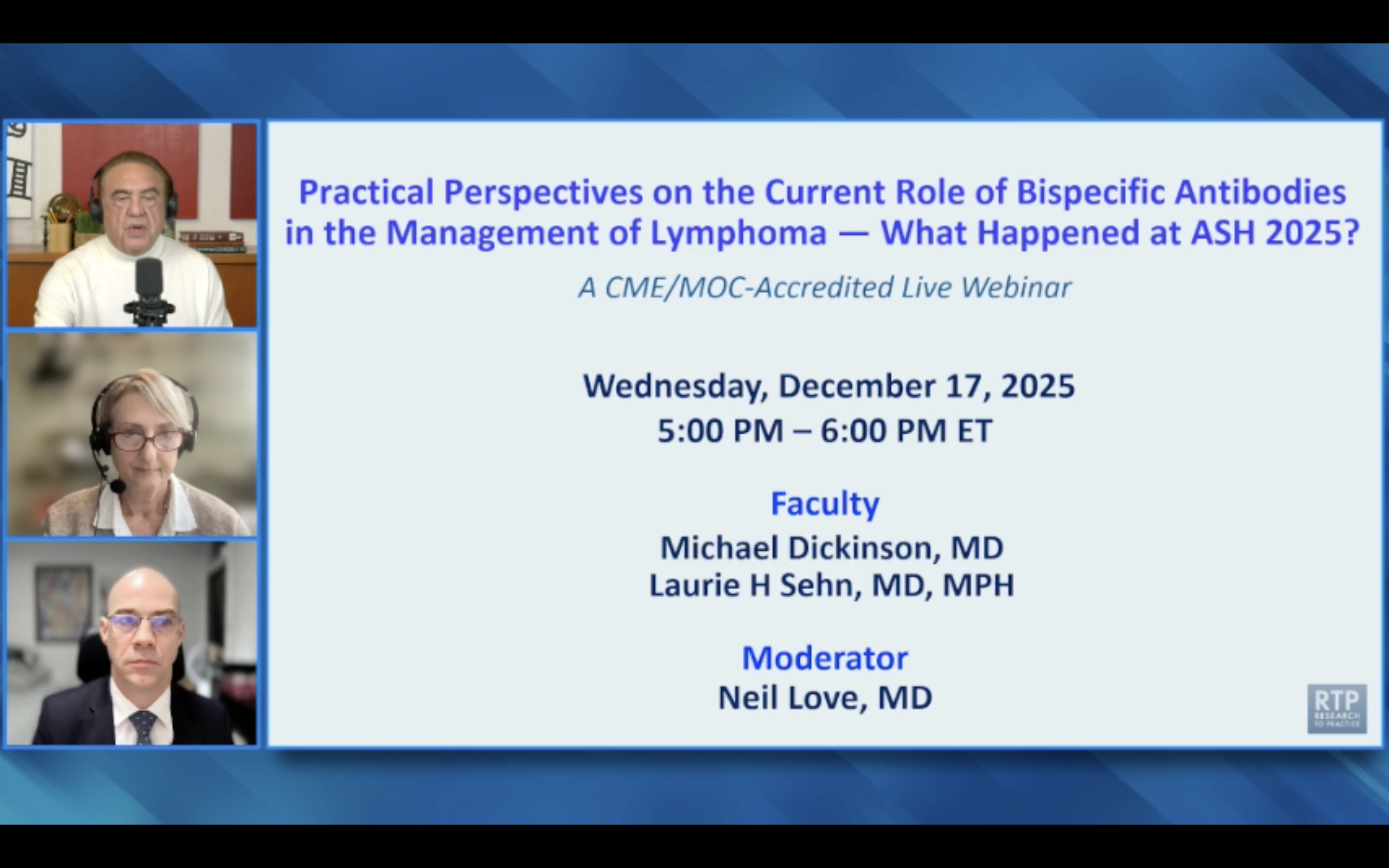
In follicular lymphoma, the treatment goal is durable remission with manageable toxicity, not necessarily a cure. Therefore, clinicians frequently prefer using a bispecific antibody first, reserving the more complex and toxic CAR-T cell therapy for transformed disease or after a bispecific fails.
While scientifically novel, the primary advantage of in vivo CAR-T therapy is its potential to overcome the significant logistical barriers of traditional CAR-T. By simplifying the process to a single injection, it could democratize access for patients far from specialized academic medical centers.

The future of medicine isn't about finding a single 'best' modality like CAR-T or gene therapy. Instead, it's about strategic convergence, choosing the right tool—be it a bispecific, ADC, or another biologic—based on the patient's specific disease stage and urgency of treatment.

Unlike older IMiDs where T-cell effects are secondary, CELMoDs have a powerful, independent pro-T-cell mechanism. This dual action is so significant that in the future, CELMoDs will be prescribed not just for their direct anti-myeloma effects, but specifically to enhance the efficacy of T-cell therapies like CAR-T and bispecific antibodies.
A key breakthrough in Colonia Therapeutics' early data is achieving profound CAR-T cell expansion without lymphodepleting chemotherapy. This dramatically improves the safety profile and patient experience, potentially moving CAR-T therapy from major academic centers to more accessible community oncology settings, thereby "democratizing" the treatment.